Oil price spike: who in the Middle East is better off?

On the first day of trading after the start of a large-scale military conflict between Israel and the United States and Iran, in which other Middle Eastern oil-producing countries were also involved, oil prices predictably jumped. Sergey Pigarev, Senior Analyst at Freedom Finance Global, wrote for Oninvest about who in the Middle East was in a more favorable position and how long the period of high oil prices will last.
Beneficiaries in the Middle East
In the first hours of trading on Monday, the price of Brent crude oil jumped by 13% to $82 per barrel, later prices corrected. In the afternoon on Monday, March 2, May futures traded at $78.4.
This is the market's reaction to the start of the Israeli and US military operation against Iran.
The growth of oil quotations is associated with an increase in the geopolitical premium due to the conflict in the Middle East. The main risks that are put into prices are: the closure of the Strait of Hormuz, through which a fifth of the sea transportation of oil and 20% of LNG exports pass, and strikes by the Islamic Revolutionary Guard Corps on oil and gas infrastructure of neighboring countries.
The Strait of Hormuz is one of the largest shipping routes for oil from the Middle East region. But it is not the only one.
Saudi Arabia can deliver oil by an alternative route - through the Red Sea and the Gulf of Aden (although there is a risk factor there - attacks by the Yemeni Houthis). The UAE also has such an opportunity to deliver oil and oil products by an alternative route to the Strait of Hormuz - through the port of Fujairah, a major port for oil storage and trade and one of the three largest bunkering hubs in the world.
This means that theoretically these two countries are in a more favorable position and are able to continue supplying oil and oil products when oil prices are high.
How long will it last?
But according to our forecast, the price increase will be short-lived. There are several reasons for this:
- We do not expect Israel and/or the US to strike the region's oil and gas infrastructure.
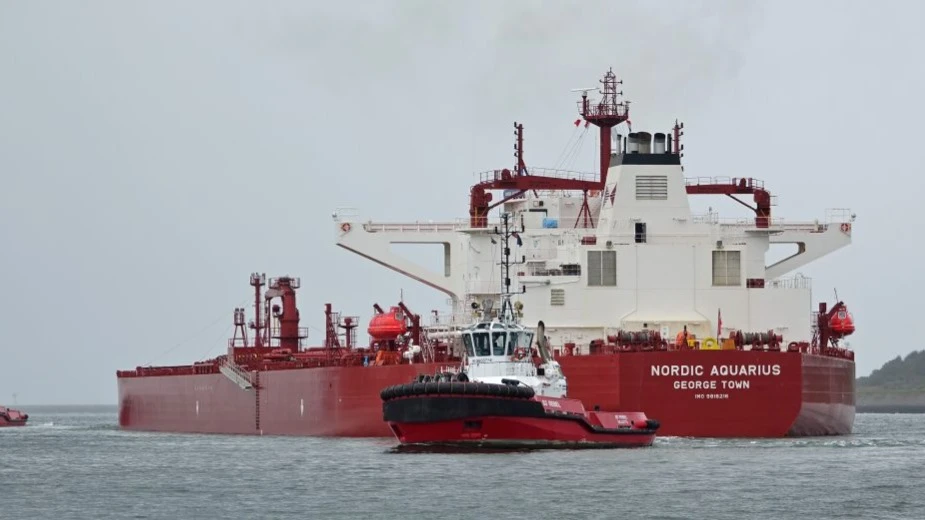
Yes, Iran attacked several tankers near the Strait of Hormuz. It also struck the Saudi Aramco refinery in Ras Tanur in Saudi Arabia, and its operations were temporarily suspended. Saudi Arabia is the largest oil producer in OPEC.
The situation is similar for gas supplies - QatarEnergy said on March 2 that it had suspended LNG production following the Iranian attack on its Ras Laffan complex.
- We believe that all ships and most of the boats and infrastructure of the Iranian Navy, as well as anti-ship missile launchers and stockpiles, will be destroyed in the near future. This will reduce Iran's ability to strike oil and LNG tankers.
In the coming days, the main challenge for Israel and the U.S. will be to destroy Iran's stockpiles of missiles and drones, launchers, missile and drone production facilities, and missile fuel. If successful, this will significantly limit the Islamic Republic's ability to strike outside its borders. And the large number of air tankers and refuelers in the region means that Israeli and U.S. air control will be maintained continuously and for a long time.
- The increase in production in OPEC+ countries should not be discounted. At a meeting on March 1, eight countries that are members of this association - Saudi Arabia, Russia, Iraq, UAE, Kuwait, Kazakhstan, Algeria and Oman - decided to increase quotas for oil production in April by 206 thousand barrels per day. The countries may continue to increase quotas at this pace up to and including September 2026, and increase production quotas by 1.2 million bpd.
- The calendar factor - lower demand for oil in spring - does not play into the hands of oil producers either. As a rule, refineries, which buy crude oil for processing, undergo maintenance in April-May, which reduces demand for crude.
A correction in the US oil and gas sector ahead
In conclusion, we expect that US oil and gas stocks may also go down - by 20-30% in the next few months - following the decline in oil prices.
This is indicated by the performance of the State Street Energy Select Sector SPDR Oil & Gas ETF (XLE). It tracks quotes of the largest U.S. oil and gas companies, including Exxon Mobil, Chevron and ConocoPhillips.
As of the market close on February 27, its quotations exceeded the previous historical maximum of June 2014 by 10.4%. At that time (June 23, 2014), the price of North American WTI oil exceeded $106 per barrel. On March 1, North American oil WTI with delivery in April jumped by 7.5% to $72, that is, even after the jump, the price is now 32% below the level of 2014.
This article was AI-translated and verified by a human editor