Oil prices soar to highest in more than a year due to Iranian attacks on tankers
Oil is an asset of trust, and trust starts to fracture when oil tankers become strike targets, says Stephen Innes, managing partner of SPI Asset Management

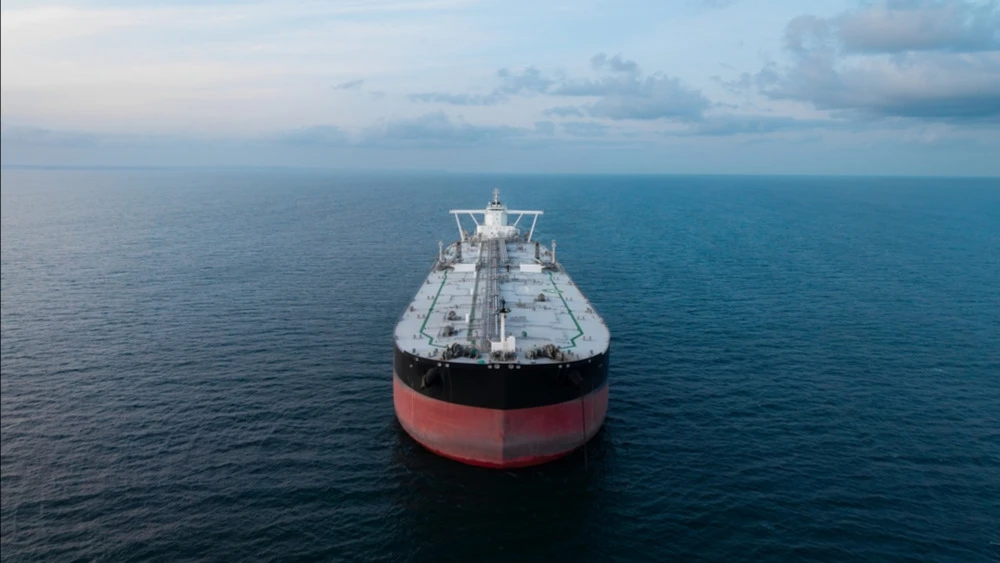
At least two tankers reportedly attacked at anchorages in the Persian Gulf on Thursday / Photo: Clare Louise Jackson/ Shutterstock.com
Oil prices in the U.S. on Thursday, March 5, hit their highest since January 2025, after Iran said it had struck an oil tanker, CNBC reported . Bloomberg reported earlier that a ship linked to Angola's national oil company Sonangol was damaged in an explosion in the northern Persian Gulf port of Iraq. Reuters wrote about another attacked tanker near the port of Kuwait: the explosion caused an oil spill.
Details
Futures for U.S. WTI crude oil jumped 8%, breaking the $80 per barrel mark. This is the highest level since January last year. In April, when the U.S. and Israel were also striking Iranian nuclear facilities, WTI was cheaper. The Mark rose more than 17% during that week. The price of Brent crude oil rose more than 5% to over $85 per barrel, but by the time this text was published, the rally had slowed slightly.
State Street's SPDR S&P Oil & Gas Exploration & Production ETF, which tracks oil and gas companies, added more than 2% on Thursday, rising to its highest level since June 2022.
What sparked the rally
Iran said it hit an oil tanker with a missile, the country's state news agency reported, quoted by CNBC. Earlier this week, the Islamic Revolutionary Guard Corps ordered the closure of the Strait of Hormuz and threatened to attack ships passing through it.
According to Bloomberg, the tanker Sonangol, associated with the national oil company of Angola, suffered an explosion near the Iraqi port of Khor-ez-Zubair, located far north of the Strait of Hormuz. A small boat approached the vessel, after which an explosion was heard and the tanker began to lose water from the ballast tank - a compartment that provides stability, Bloomberg reports citing the ship's operator Sonangol Marine Services. The company specified that there was no information about pollution of the water area, and there was no cargo on board. Reuters specifies that the tanker was traveling under the flag of the Bahamas and was attacked by an Iranian remote-controlled boat.
The incident with Sonangol Namibe occurred in one of the most remote locations where attacks on ships have been recorded since the start of hostilities in the Middle East in late February, indicating that the geography of the conflict is expanding deep into the Persian Gulf, explains Bloomberg. According to the agency, the affected tanker is also the largest tanker attacked in the six days since the Iranian crisis began.
Another tanker anchored 30 nautical miles (56 km) southeast of the Kuwaiti port of Mubarak al-Kabir in the Persian Gulf reported a powerful explosion on its left side, the British service United Kingdom Maritime Trade Operations said, Reuters reported. The tanker's captain spotted a small vessel leaving the area after the explosion. "There is oil in the water leaking from the cargo tank, which could have environmental implications. The vessel is taking on water, no fire has been recorded and the crew is safe," the service said in a statement. Kuwait's Interior Ministry said the incident occurred outside the country's territorial waters, the agency wrote.
Shipping through the Strait of Hormuz has come to a virtual halt since the U.S.-Israeli war against Iran began. President Donald Trump on Tuesday promised to provide risk insurance for tankers. The vessels will be escorted by US Navy ships if necessary, he said. A White House spokeswoman on Wednesday declined to give an exact timeline for when the strait would become safe for traffic.
What the analysts are saying
- "Oil leaking into the sea from a damaged cargo tank may end up being more symbolic than catastrophic in terms of the volume of the spill. But for markets, symbolism matters," MarketWatch quoted SPI Asset Management managing partner Stephen Innes as noting. - Oil is not just a commodity. It's an asset of trust. And trust starts to fray the moment traders see tankers being targeted."
Innes said the market is "gradually shifting from assessing the risk of supply disruptions to assessing the risk of the duration of those disruptions." "The difference is huge. A disruption means a temporary supply squeeze. A prolonged disruption means a structural premium built into the price curve," he said.
- "A sustained $10 increase in oil prices would increase the retail price of regular gasoline by about 28 cents per gallon, reduce U.S. real GDP by 0.1%, and keep the Fed's preferred inflation target above 3% in 2026," Bernard Jaros, lead U.S. economist at Oxford Economics, told MarketWatch. - "However, none of these likely negative side effects alone is likely to derail current economic growth.
- If the war lasts long, Niles Investment Management founder and portfolio manager Dan Niles expects oil prices to spike above $100 a barrel, which could lead to a global recession, he told CNBC, but he doesn't see that scenario as the most likely because he predicts an operation against Iran would take about a month.
This article was AI-translated and verified by a human editor