One of Intel’s last bears gives up negative rating amid stock’s plunge
The company has lost almost a quarter of its market value in a month

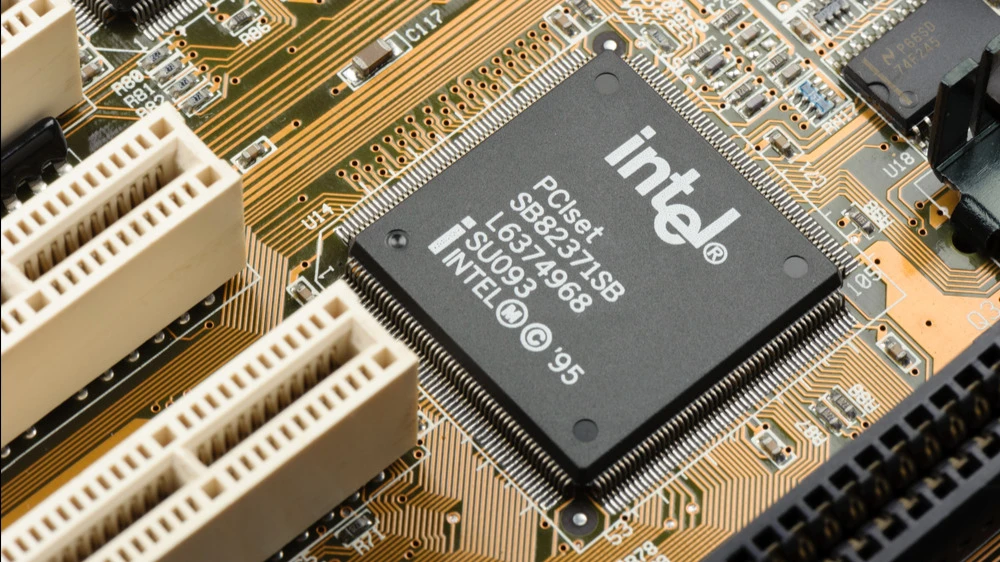
A JPMorgan analyst has upgraded Intel to a neutral rating / Photo: Nor Gal / Shutterstock.com
JPMorgan analyst Harlan Sur dropped his bearish call on Intel on Sunday after four years, upgrading the stock to “neutral” from “underweight,” MarketWatch reports. The chipmaker’s market value has fallen around 36% from its June peak, which makes its valuation more attractive in his view. He is not ready to recommend buying Intel, but he no longer expects the stock to underperform the market.
Details
Intel lost more than 14% of its market capitalization, or $78.5 billion, last week alone, which brought the stock's decline since June 30 to $226.8 billion, according to Barron’s calculations. Sur sees a silver lining in the selloff: with Intel approaching JPMorgan’s target price, the risk/reward profile “is much more balanced.” Sur has maintained his target price of $85 per share. Even after the sharp decline, however, that remains 5.4% below Friday's closing price.
“Despite near-term concerns on AI infrastructure spending sustainability, we believe increasing agentic AI workloads (CPU intensive) and a very tight supply chain for leading edge silicon should drive continued positive EPS revisions in the upcoming earnings season and through CY27,” Sur wrote in a note cited by Barron’s. JPMorgan’s 2028 earnings-per-share estimate for Intel is around 15% above the Wall Street consensus, he noted.
Sur believes Intel’s execution and competitiveness have improved since the appointment of CEO Lip-Bu Tan, who joined with a mandate to lead the company out of a prolonged crisis and regain lost ground in the processor market. JPMorgan sees progress in next-generation chip manufacturing: Intel has reduced defect rates on its production lines, improved the readiness of new manufacturing processes for mass production, and is now ready to take on contract manufacturing orders, Yahoo Finance writes. Sur also highlighted Intel’s progress in custom ASIC chips, where the company draws on its own intellectual property.
Intel shares rose 4.4% on Monday after tumbling 5.8% on Friday. Investors sold off tech stocks last week amid doubts about returns on multibillion-dollar investments in AI infrastructure and data-center operators’ ability to finance further expansion.
Other chipmakers, including Nvidia, Micron Technology, and Advanced Micro Devices, also rose alongside Intel on Monday. The iShares Semiconductor ETF gained 3.3%, which put it on course to snap a nine-day losing streak.
What other analysts say
Intel was one of four chip stocks KeyBanc analyst John Vinh recommends picking up ahead of earnings season, Barron’s writes. The list also included Nvidia, memory maker Micron, and power-management chip designer Monolithic Power Systems.
Last week’s market moves showed that, despite persistently strong demand, further expansion of AI infrastructure depends far more heavily on debt markets than previously thought, William Blair analyst Richard de Chazal reckons. Rising interest rates could constrain borrowing by chipmakers’ major customers. That poses a risk for Intel: if data-center construction outside of the largest tech companies slows, growth in demand for server processors, which is helping drive its recovery, could also lose momentum.
“In our minds, it is like a landlord borrowing heavily to build an office block, with three anchor tenants taking most of the space. The leases look secure, but if one tenant moves out at renewal or demands a lower rent, the landlord is still on the hook for the mortgage. As a result, investors are now demanding extra compensation for taking on that risk,” de Chazal said, as quoted by Barron’s.
Wall Street remains cautious on Intel stock overall: 32 of the 52 analysts covering the chipmaker rate it a "hold," while 19 advise "buy." Only one bear remains, an analyst at Rosenblatt, according to MarketWatch data. The average target price still implies 33% upside over the next 12 months.