OPay IPO: One of Nigeria's Leading Digital Banking Platforms Goes Public

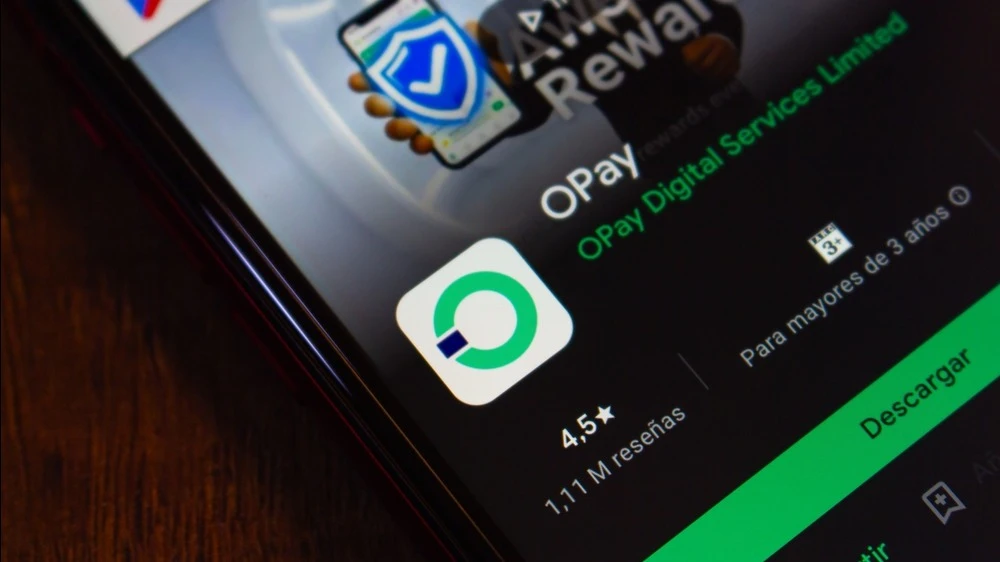
The company went public on the NYSE under the ticker symbol OPAY. Photo: Koshiro K / Shutterstock
Pre-market trading in shares of OPay Limited, a digital financial platform focused on the Nigerian market, has begun on the Freedom client trading platform. The company is listing on the New York Stock Exchange to raise capital for further expansion amid the growth of its digital wallet and lending services in emerging markets, notes Seeking Alpha. According to Bloomberg, OPay’s IPO will serve as a benchmark for African tech startups facing a shortage of investment and reduced market activity in the wake of the COVID-19 pandemic. Later on October 30, OPay shares will begin trading on the NYSE under the ticker symbol OPAY.
Details
OPay Limited raised $304 million through its IPO. It sold 16 million American Depositary Receipts (ADRs) at $19 per ADR, which is at the lower end of the previously announced price range. Each ADR is equivalent to 10 common shares of OPay. Based on the IPO results, the company’s total valuation can be estimated at $4 billion, notes the IPOScoop portal.
The offering was organized by Citigroup, Deutsche Bank, Standard Bank, and CICC. Anchor investors, including Redwheel, Coronation Investment Management International, and Sundt AS, agreed to purchase ADRs at the IPO price for a total of up to $270 million, according to the prospectus filed by the company with the U.S. Securities and Exchange Commission (SEC). In addition, concurrently with the IPO, the Standard Bank financial group, through a subsidiary, will purchase OPay common stock in a private placement worth up to $200 million.
In 2021, OPay raised $400 million at a valuation of $2 billion, according to Bloomberg. The round was led by SoftBank Group’s SoftBank Vision Fund 2, with participation from HSG (the former Chinese arm of Sequoia Capital) and Long-Z Capital—the venture capital arm of the Chinese food delivery service Meituan.
What makes the company notable?
The fintech service OPay was founded in 2018 by Chinese billionaire Zhou Yahui, the founder of Beijing Kunlun Tech, which previously owned the dating app Grindr, according to Reuters. The company is registered in the Cayman Islands and headquartered in Singapore, but Nigeria remains OPay’s main market: in the first half of 2026, it accounted for 89.5% of the company’s revenue, Business Insider Africa reports. The service also operates in Egypt, Pakistan, and Indonesia. According to Bloomberg, the company is becoming one of Africa’s most valuable fintech companies.
According to the company’s prospectus, in the first half of 2026, OPay was the No. 1 financial app in Africa and the Middle East, with a 9.9% share of monthly active users, and in Nigeria, as of July 31, 2026, it ranked second among all apps in terms of daily active users (according to Frost & Sullivan).
OPay provides basic financial services: payments, money transfers, savings accounts, and loans. As of the end of July 2026, the platform’s monthly user base stood at approximately 50 million. According to the IPO prospectus, in the first half of 2026, OPay increased its revenue by 137% year-over-year to $467.1 million, and its net income more than quadrupled to $90.9 million.
OPay plans to use the funds raised through its IPO and a parallel private placement to develop technologies, launch new products, expand its distribution network and market presence, as well as for potential acquisitions and strategic investments, according to Reuters.
What Analysts Are Saying
Nigeria, Africa's most populous country, has already produced several fintech unicorns, including Flutterwave, Moniepoint, and Interswitch, according to Bloomberg.
Donovan Jones, an expert at the analytics firm IPO Edge, cites OPay’s rapid growth and profitability, its well-known brand, and the prospects of the Nigerian fintech market as the company’s strengths. At the same time, he notes that transaction volume on the platform grew by 143% in the first half of 2026, reaching $339 billion, but fee revenue grew at a significantly slower pace. Among the company’s risks, the analyst highlights OPay’s growing reliance on Nigeria for revenue, the need to subsidize payment terminals for small merchants as the network expands, as well as a sharp increase in bad debt write-offs—from $18.2 million in the first half of 2025 to $113.2 million during the same period in 2026. In addition, OPay relies on a small number of partners, Jones notes: four banks account for 81% of its off-balance-sheet financing.
Freedom Finance analyst Alem Bektemirov estimates the fair value of OPay shares at $23.32 each. He bases this on an industry-average P/S ratio (market capitalization to revenue) of 6.1 and the company’s revenue over the past 12 months of $805.8 million. This valuation is approximately 23% higher than the final offering price. Among the company’s strengths, the analyst highlights its market leadership. Bektemirov identified competition, technical glitches, and differences in legislation across the countries where the company operates as the main risks to the business.
___________________
Freedom clients will be able to access OPay Limited shares before the main trading session opens. Trading will begin in the early pre-market session 2–3 hours before the U.S. markets open (from 3:30 p.m. to 4:30 p.m. Astana time). To participate, click on the OPAY ticker.
This article was AI-translated and verified by a human editor