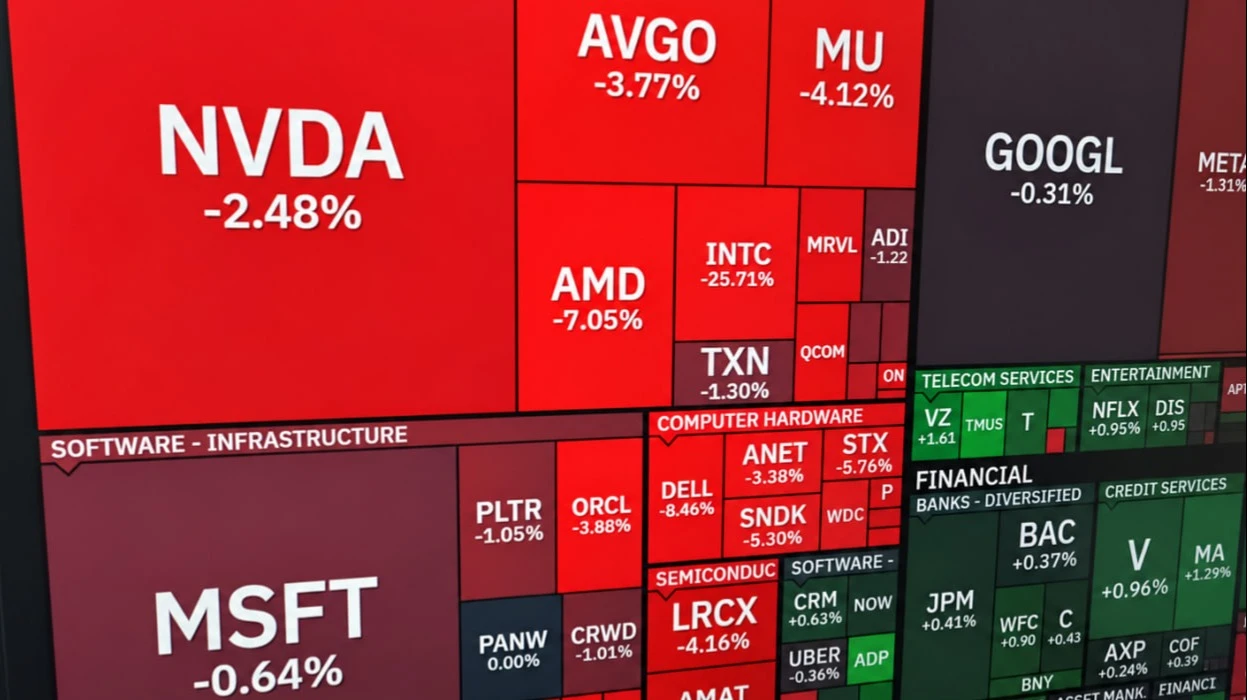
From South Korea to China: The Asian AI Bubble Is Bursting. Should You Buy Stocks?

Goldman Sachs has added CXMT to its updated list of recommendations for Chinese AI companies. To date, the country’s STAR50 technology index has fallen more than 45% from its July peak. Photo: Poetra.RH / Shutterstock.com
This is the second AI bubble to burst worldwide. Following South Korea’s tech sector, China’s has “crashed” by nearly half since the summer. Chinese authorities had previously deployed state-run investment funds to stabilize the market. Will the rules of the game change for Chinese AI developers, and should investors buy the now-cheaper stocks?
"The Mad Bull"
China's STAR50 index, which includes stocks of leading companies in the AI and semiconductor sectors, plummeted this week. On Friday, October 30, it hovered near its lowest levels of the year and had lost more than 45% from its July peak, wiping out about $500 billion in market capitalization of the companies in the index. Prior to that, the index had doubled over the course of a year starting in mid-2025; in June and July of this year, it twice attempted to break through the 2,200-point mark but then plummeted.
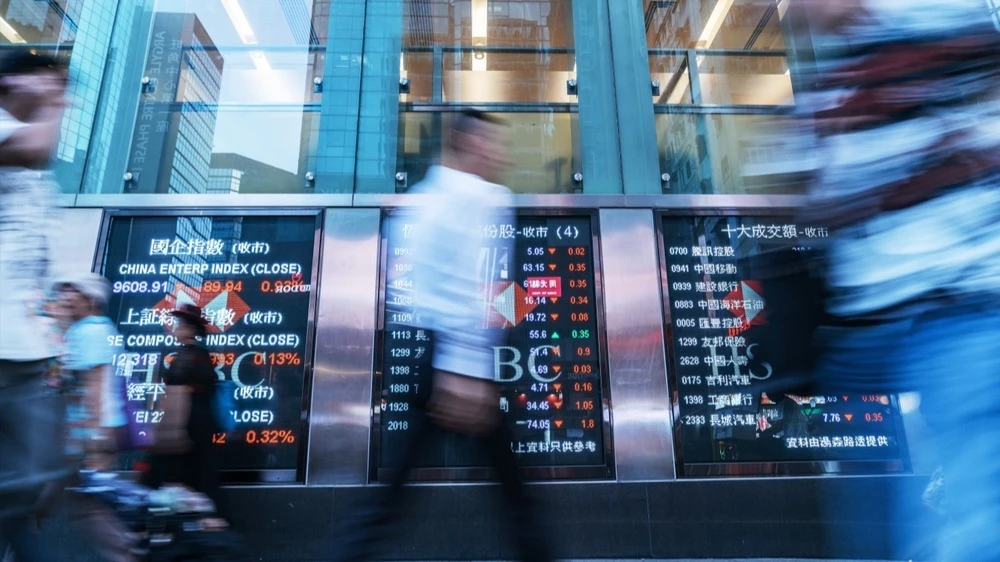
The crash brought an end to a bull market that had lasted about two years and had caused China’s broad-market CSI 300 index to rise by more than 1.5 times; since its June peak, the index has fallen by more than 20%.
"Before the crash, the market 'turned into a speculative, frenzied bull run, and now we're watching the bubble burst,'" said Don Bao Zhen, a fund manager in Beijing.
Over the past couple of years, companies tied to the AI boom have been actively going public. The “crazy bull” market was on full display during these IPOs. The number of applications for shares in the robot manufacturer Unitree exceeded the number of shares offered by 8,000 times. But after trading began in August, the market “bear” reared its head, and the stock price fell by half.
In the clutches of the "bears"
Shares of chipmakers MetaX Integrated Circuits and Moore Threads Technology have also fallen by half since July, after initially rising 700% and 800%, respectively, following their IPOs last year.
Shares of CXMT, China’s largest and the world’s fourth-largest memory chip manufacturer, surged 466% on the first day of trading following its IPO in late July—rising from 8.66 yuan to 49 yuan. As a result, the company’s market capitalization reached $547 billion. In their first report, Nomura analysts even set a target price of 116 yuan.
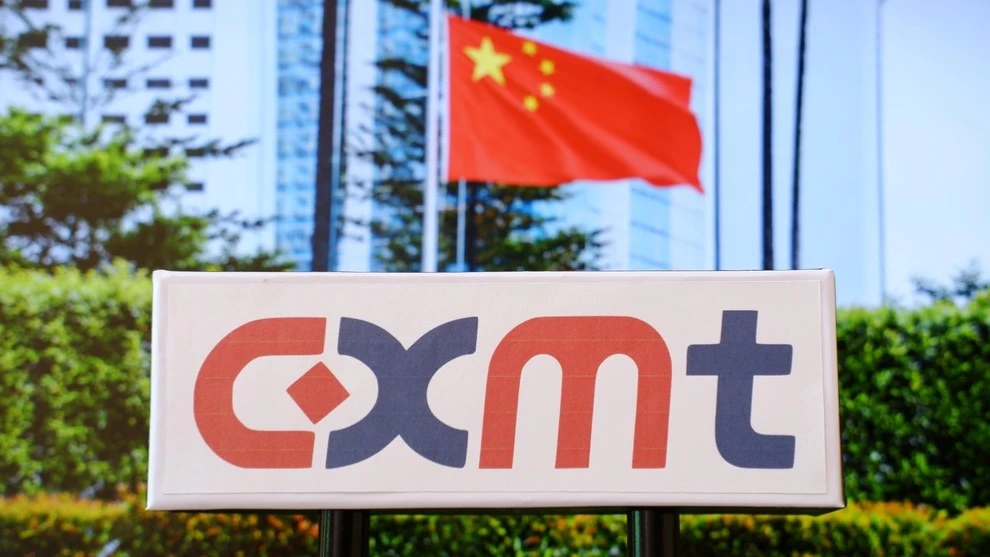
But investor enthusiasm lasted only about three weeks, during which time the stock rose above 60 yuan. It is now trading below 42.
MiniMax Group, a developer of AI models, became another investor favorite after going public in January. Its stock peaked as early as March, soaring 650%. But then, fierce competition in the sector, difficulties with product commercialization, and high costs forced investors to reassess their view of the company, Bloomberg notes. Chinese competitors such as DeepSeek began releasing more affordable models, and U.S. leaders—OpenAI and Anthropic—significantly lowered their prices.
In June, MiniMax had to cut the price of its flagship M3 model in half. And the most recent sell-off, which drove the stock price down to its initial public offering price, occurred after October 19, when the new model unveiled by the company failed to impress market participants.
They were also unimpressed by the results of a company on an entirely different level—the American tech giant Alphabet—which once again underscored the uncertainty that businesses and investors face when assessing the prospects for the development and commercialization of artificial intelligence. On October 29 alone, Alphabet’s market capitalization fell by a record $500 billion as its stock price dropped 13%.
A Costly Business
Investors remain unsure whether the massive investments in AI will pay off.
"Chinese stock markets [on the mainland and in Hong Kong] have been falling for 10 consecutive weeks—something that has never happened before. And this is despite the fact that (a) the key factor driving global stock markets is the hype surrounding everything related to artificial intelligence, and (b) China is one of the few countries outside the U.S. that is actually demonstrating significant progress in the field of AI,” the Financial Times quotes an analytical note by Louis-Vincent Gave of Gavekal Research as saying.
The newspaper notes that this is partly due to the unique nature of the Chinese business approach. American developers focus on charging for access to their AI models. Chinese developers, on the other hand, prefer to provide them for free and charge for access to computing resources. This approach has led to fierce price competition both in China and in the U.S. This raises doubts about whether revenue from AI can finance the investments needed to develop even more powerful models.
Until recently, CXMT had been doing well because it continued to produce simpler chips used in home appliances and electronics, while more advanced manufacturers focused on powerful and efficient models. But now the company plans to begin producing cutting-edge, high-bandwidth HBM3E chips used in AI processors, according to Reuters.
According to the agency's sources, they will cost more than comparable products from foreign competitors.
However, it is not economic considerations that play an important role here, but rather the fact that China's leadership is trying to ensure the country's leadership in this cutting-edge field.
Moreover, they must achieve this on their own, since the U.S. is restricting the supply of advanced technologies to China.
That is why CXMT has been developing HBM3E-type chips since 2024 and will continue to produce them even though only 20–30% of the chips it manufactures turn out to be usable. By comparison, the global leader, South Korea’s SK Hynix, has a yield rate of 70%.
"Bubbles inevitably burst"
Investor enthusiasm for SK Hynix and its competitor Samsung Electronics has led to a much larger bubble forming in the Korean market than in the Chinese market. Over the past year and a half, the Korean KOSPI index has nearly quadrupled—primarily due to two AI chip manufacturers, whose combined weight in the index has reached 50%.
But starting in June, the bubble began to burst, and from a high of 9,114.55 points, the KOSPI fell below 5,500 by the end of October (-48.5%).

In China, authorities—not for the first time—called on state-run investment funds to stem the market’s decline. Their purchases last week were likely the most active since April 2025, when Donald Trump announced the imposition of import tariffs on nearly every country in the world, according to analysts at Macquarie Bank.
William Bratton, a strategist at BNP Paribas Securities, believes that buying opportunities have emerged in the market for cautious investors.
In mid-October, Goldman Sachs added CXMT and optical components manufacturer Zhongji Innolight—whose stock has fallen 60% from its June peak—to its updated list of recommendations for Chinese AI companies. The list includes a total of 50 stocks from the power, semiconductor, infrastructure, and AI model and application development sectors. Other companies on the list include CATL, Alibaba, Tencent, Zhipu, MiniMax, SenseTime, Cambricon, and others.
However, it is possible that the AI market in China will not recover anytime soon. Fund manager Wang Zhuo, a partner at Shanghai Zhuozhu Investment Management, believes that chip manufacturers and AI developers are headed for a price war, just as has happened in all other manufacturing sectors in China, from steelmaking to the production of electric vehicles and solar panels.
"There are no exceptions," Wang told Reuters. "All bubbles inevitably burst."
This article was AI-translated and verified by a human editor