Radical reversal: traders have started to put a Fed rate hike in their forecasts

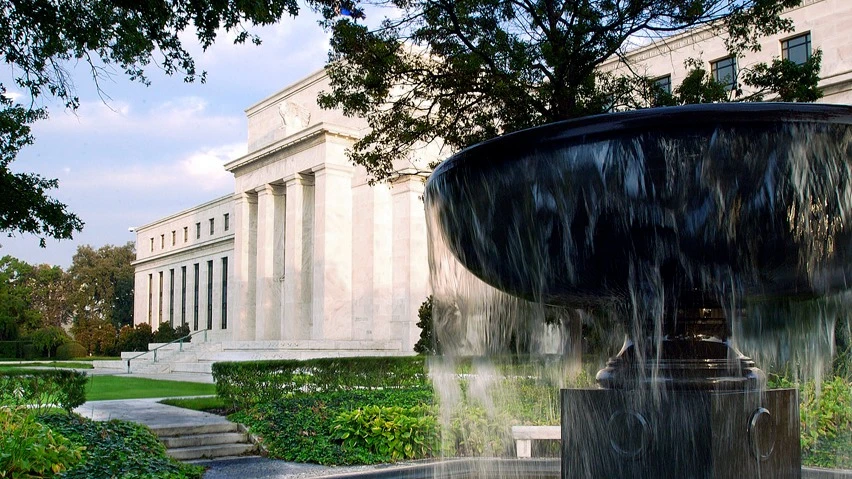
The market began to lay in the forecasts of the Fed rate increase. Before the war, it was expecting a decrease / Photo: federalreserve.gov
The war in the Middle East, which caused a sharp rise in oil prices, is forcing investors to radically revise their forecasts on the Federal Reserve's monetary policy. Traders now estimate almost 50% probability of a rate hike this year, writes the Financial Times.
Details
Whereas before the conflict in the Middle East, traders in the futures market expected two or three rate cuts by the end of the year, they now point to a nearly 50 percent chance of a 0.25 percentage point increase by October, the Financial Times notes.
This shift in sentiment has already been reflected in the debt market: the yield on two-year U.S. bonds, which is sensitive to Fed rate expectations, has risen about 0.5 percentage points since the start of the war to 3.94%, approaching a 12-month high.
"Investor sentiment towards the Fed is changing. The market assumes the conflict will be more protracted," the Financial Times quoted Subadra Rajappa, head of US research at Société Générale, as saying. "It's difficult for the market to make sense of this because the US is assumed to be energy independent and such shocks come off quickly. This assumption is now being questioned," she added.
Supply disruptions through the Strait of Hormuz have led to a sharp rise in oil prices: Brent has risen by about 50% since the war began. Against this background, inflation expectations in the United States for the coming year have risen by more than 1 percentage point since the beginning of the year, writes the Financial Times.
The reversal in traders' rate expectations may not mean the market really believes the Fed will move to tighten monetary policy. "Fed rate expectations have become a bit more hawkish, but that's not an accurate reflection of what the market really thinks about the regulator's actions. They have become detached from fundamentals," RBC Capital Markets strategist Blake Gwynne told the FT.
"Wait and see."
Against this backdrop, caution is growing within the Fed itself. Member of the Board of Governors Christopher Waller said in an interview with CNBC that the regulator should take a wait-and-see attitude amid the uncertainty associated with the war and its impact on inflation and the economy.
Waller has previously consistently advocated lower rates, pointing to a weakening labor market, but now allows for a more restrained approach. According to him, current conditions require "wait and see" how the situation will develop.
At the same time, he is not abandoning the scenario of policy easing. If the labor market continues to weaken - for example, a series of weak employment reports confirms a sustained slowdown - he is prepared to support another rate cut later this year.
The key factor for him remains the dynamics of employment. Waller notes that deterioration in the labor market will be a signal for the Fed's reaction. In particular, a recurrence of a marked drop in employment could signal a deeper cooling of the economy.
He assesses inflation relatively calmly, considering the current growth to be largely temporary and related to import duties, while in the baseline scenario he expects it to return to the Fed's 2% target. However, he recognizes that a prolonged war and rising energy prices could change this trajectory and complicate decision-making.
Context
The Fed, which kept rates unchanged for the second consecutive time on March 18, has not yet changed its official forecast. The median survey of FOMC members suggests one interest rate cut of a quarter percentage point in 2026 and another similar one in 2027. At the same time, Fed Chairman Jerome Powell confirmed that the conflict in the Middle East will increase inflationary pressures.
The situation also has political significance. A Fed rate hike would be a blow to President Donald Trump's campaign for lower borrowing costs, while a refusal to tighten policy amid rising prices could lock in inflation, the Financial Times notes.
This article was AI-translated and verified by a human editor