"Running on air": the market and consumers ignore the US-Iran war. What are the risks?
Analysts resort to comparisons to animals and cartoon characters to describe the situation


Consumers and stock markets are ignoring the long-term effects on the economy caused by the U.S.-Iran war, Wall Street analysts say / Photo: unsplash.com / David Vives
Consumers and the U.S. stock market have so far largely ignored the impact of rising oil prices due to the U.S. war with Iran, but the disconnect could end in a sharp deterioration, analysts at UBS and Piper Sandler have warned. Some say investors are trying to "outrun the bear," while others speak of a "cunning coyote effect" looming over developed economies, including the United States.
What's happening in the consumer market
"In the Road Runner cartoons, the wily coyote runs off the edge of a cliff, keeps running straight through the air and only then realizes there is no solid surface beneath his feet before plummeting into the abyss below. Developed economies, consumers are still happily running through the air," said Paul Donovan, a leading global economist at UBS(quoted by Business Insider).
The war with Iran is pushing oil prices up, gradually reducing household purchasing power, Donovan notes. But consumers aren't noticing it yet: according to Bank of America data cited by BI, household spending in April 2026 rose at the strongest pace since early 2023. Part of the increase is due to high gasoline prices, but spending excluding fuel has also risen, the publication notes.
The economy continues to follow a K-shaped trajectory: spending growth is primarily driven by wealthy Americans, while low-income groups are forced to allocate an increasing share of their budgets to fuel. To maintain their usual standard of living, consumers are tapping into their savings. "This can't go on forever, but economic gravity has yet to kick in," Donovan warns.
"Trying to run away from the bear" in the stock market
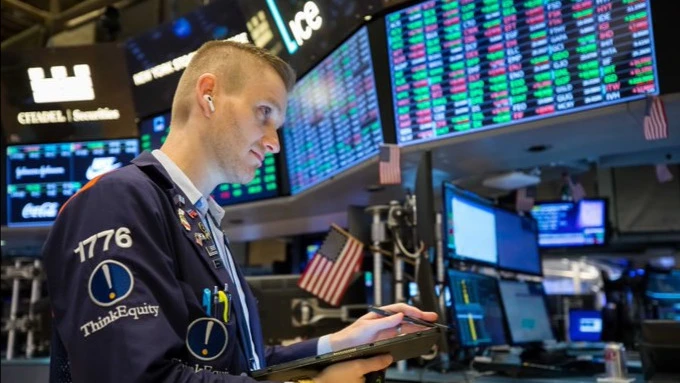
On the stock market, the picture is no less alarming. In the long term, there is still optimism about U.S. stocks, but in the short term, "what is happening looks like an attempt to run away from the bear," Business Insider quoted Craig Johnson, chief technical analyst at Piper Sandler, as saying.
This "bear" could be the economic consequences of the Middle East conflict, new turmoil in the Strait of Hormuz or escalation of the war between the US and Iran, the analyst believes. Nevertheless, markets are updating records, virtually ignoring the oil shock. According to Johnson, investors do not know how to trade in the conditions of geopolitical instability and how to assess the risks associated with it - so they prefer not to notice them at all
It is indicative that market sentiment has become noticeably more optimistic two months after the war began than it was at its outset. In mid-April, almost half of investors were bullish - compared to about a third in the period before the conflict began, data from the American Association of Individual Investors highlighted by BI showed.
This article was AI-translated and verified by a human editor