"All roads lead to higher prices and slower economy": IMF head on the consequences of war
US war with Iran thwarts IMF plans to raise global growth forecast

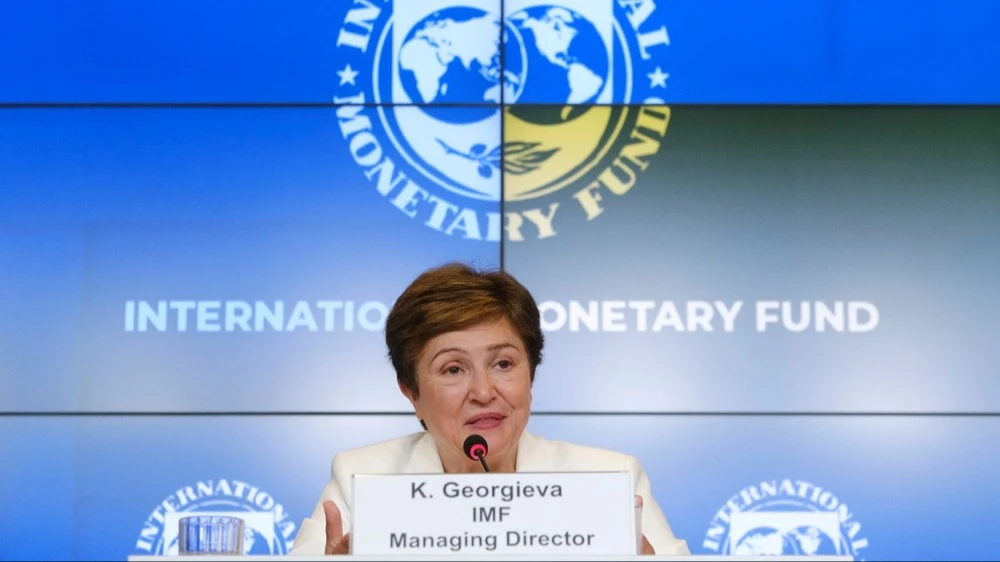
IMF to change forecast: war with Iran will accelerate inflation and slow growth / Photo: Alexandros Michailidis / Shutterstock
Higher inflation and slower global economic growth are inevitable amid a war with Iran, International Monetary Fund chief Kristalina Georgieva told Reuters on April 6.
Details
Before the war began, the IMF expected a modest improvement in its global growth forecast, to 3.3% in 2026 and 3.2% in 2027, Georgieva's words suggest. However, these expectations have been revised up: even with a rapid end to the fighting and a relatively swift recovery of markets, this would lead to a "relatively small" downgrade in the growth forecast and an upward revision in the inflation forecast. In the event of a protracted conflict, the impact on inflation and economic growth would be more significant, the Navy chief noted.
"Instead of that [improving the outlook], all roads now lead to higher prices and a slowing economy," Georgieva said.
Global oil supplies are down 13% because of the war, the IMF calculated, while other critical supply chains, including helium and fertilizer, are also severely damaged. The hardest hit will be the poorest countries without sufficient reserves, Georgieva warned. Many states have little or no fiscal space to cushion war-induced price increases, which also increases the risks of social instability, she said.
"We live in a world of heightened uncertainty," Georgieva added, pointing to geopolitical tensions, technological change, climate upheaval and demographic shifts. "All of this means that after emerging from the current shock, we need to be prepared for the next one," she said.
About 85% of IMF member countries are energy importers, Reuters explains. The impact of the war and the resulting energy shock is asymmetric: energy-importing countries are the hardest hit, but exporters, including Qatar, where Iranian strikes have affected production facilities, Georgieva said. She said the International Energy Agency reported damage to 72 energy facilities during the war, about a third of which sustained significant damage.
What the analysts are saying
The twin threats of accelerating inflation and slowing growth are heightening fears of a return of "stagflation" among consumers, businesses and regulators, CNBC notes.
"It's essentially stagflation. It's higher inflation and weaker economic growth resulting from policies - duty and migration policies," said Mark Zandi, chief economist at Moody's Analytics.
Context
After the February 28 attack by the U.S. and Israel, Iran effectively closed the Strait of Hormuz, through which energy resources from the Persian Gulf reach world markets, causing a sharp rise in oil and liquefied natural gas prices. International benchmark Brent held near $110 a barrel on April 7. May futures for U.S. WTI crude were at $116, although they jumped to $117 a barrel at the April 7 high. Since the start of the war in the Middle East, oil prices have added about 60%.
This article was AI-translated and verified by a human editor