Shares of Nvidia's competitor plummeted 17% following the earnings report. What spooked investors?

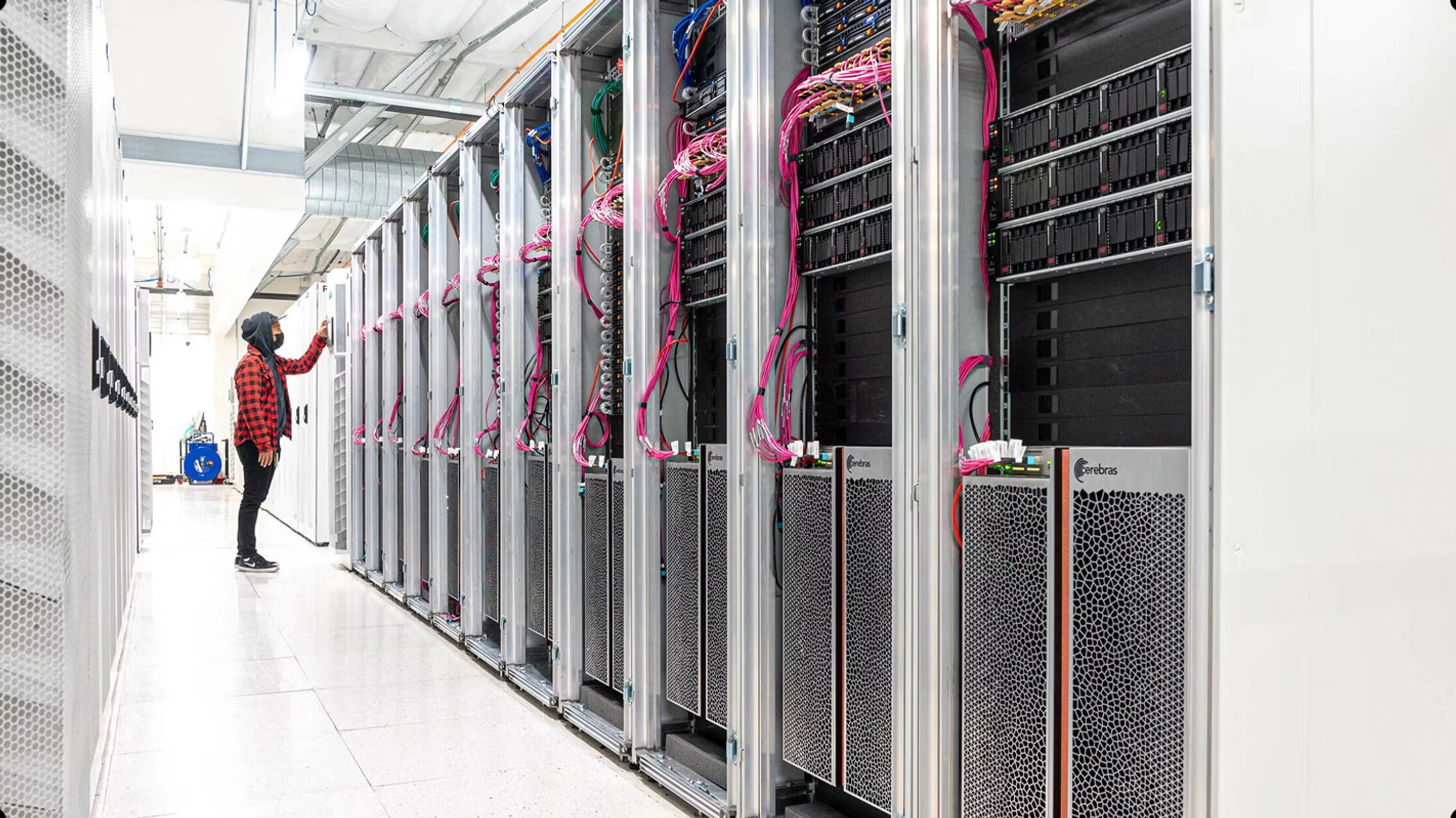
After Cerebras released its first financial report as a publicly traded company, its stock plummeted 16% / Photo: Cerebras
Shares of Nvidia’s competitor—AI chipmaker Cerebras—fell 17% during trading on June 24, even though its quarterly results exceeded analysts’ forecasts. This was Cerebras’ first earnings report as a public company. And although its revenue doubled and its loss was smaller than expected, investors were concerned about how the contract with OpenAI would affect its margins. The market is pricing in overly ambitious expectations for Cerebras over the next three years, Barron’s explains, calling the company’s valuation overvalued.
What Cerebras Announced
Cerebras' revenue rose 94% last quarter to $193 million—6.6% higher than analysts' forecasts, according to Barron's. The adjusted operating loss was smaller than expected, falling 82% year-over-year to $3.5 million.
The company’s revenue forecast for the current quarter also exceeded Wall Street estimates by 9%, according to Barron’s. The manufacturer expects sales to reach $194 million, representing an 88% increase.
At the same time, the forecast for the adjusted gross margin indicated that Cerebras expects profitability to decline—from 47% in the previous quarter to 38–41% for the full year. This is due to the scaling up of a $20 billion service contract with OpenAI, according to Barron’s. The developer of ChatGPT is to pay this amount over three years for the use of servers powered by Cerebras chips.
During a conference call following the earnings report, company executives stated that OpenAI’s demand for cloud computing capacity is growing faster than the company can bring new servers online. As a result, Cerebras decided to lease back some of the equipment it had previously sold to other customers and allocate that capacity to OpenAI. The manufacturer warned that this arrangement will put pressure on margins this year.
Cerebras CEO Andrew Feldman told CNBC after the stock’s plunge that investors had “misunderstood” the company’s outlook. According to him, the company presented its growth plan at the beginning of the year, disclosed it upon its IPO, and is now ahead of schedule.
Cerebras’ revenue figures are also impacted by warrants for 33.4 million shares that the company granted to OpenAI virtually for free, according to Barron’s. The value of these warrants is recorded in the financial statements as a sales discount—a non-cash expense classified as a deduction from revenue. At the end of the last quarter, the amount of this deduction was insignificant; however, according to Needham analyst Quinn Bolton, it will increase as the contract with OpenAI scales up.
What else do investors consider?
Cerebras shares are trading at a high valuation, as investors are pricing in very high expectations for the next three years. The stock is already experiencing heightened volatility, and the first-quarter earnings report has only amplified these fluctuations, according to Barron's.
The company specializes in developing unique semiconductor solutions for AI, and interest in this sector grew rapidly in the run-up to its IPO, which took place on May 14. On its very first day of trading, Cerebras’ stock soared by more than 200%, closing the session up 90%. At the same time, Barron’s calculated that in 19 of the 26 trading days since the listing, share price fluctuations exceeded 3%. At the close on June 23, the stock was trading 22.5% above its offering price. However, judging by current trends, the period of volatility is not yet over, the publication predicts.
Another factor contributing to high volatility is the low percentage of shares in free float: only about 15% of the total securities were offered during the IPO, while the remainder was subject to a moratorium. The next phase of the lock-up expiration will take place on Thursday, June 25. Insiders and early investors will be allowed to sell a block of shares equivalent to nearly 13% of the shares offered during the IPO. According to Barron’s, this could create an oversupply and put further pressure on the stock price.
Market participants expect that Cerebras will be able to capitalize in the future on the same market factors that drove the massive rally in Nvidia and Micron shares, the publication adds. The current boom in the AI data center segment is providing strong long-term support for the semiconductor sector, smoothing out its traditional cyclicality.
What They're Saying on Wall Street
According to FactSet, 11 analysts have already begun covering the company, and they have reacted quite optimistically to its earnings report: Mizuho and Wedbush raised their estimates following Cerebras’ conference call, CNBC reports. In particular, a Wedbush analyst noted that the stock’s decline does not change the overall picture.
The average target price for the chipmaker's stock is $294, which implies a 30% upside from the last closing price. The consensus rating for the stock is "buy."
This article was AI-translated and verified by a human editor