Short clips for stars began to bring in millions. Mr. Beast

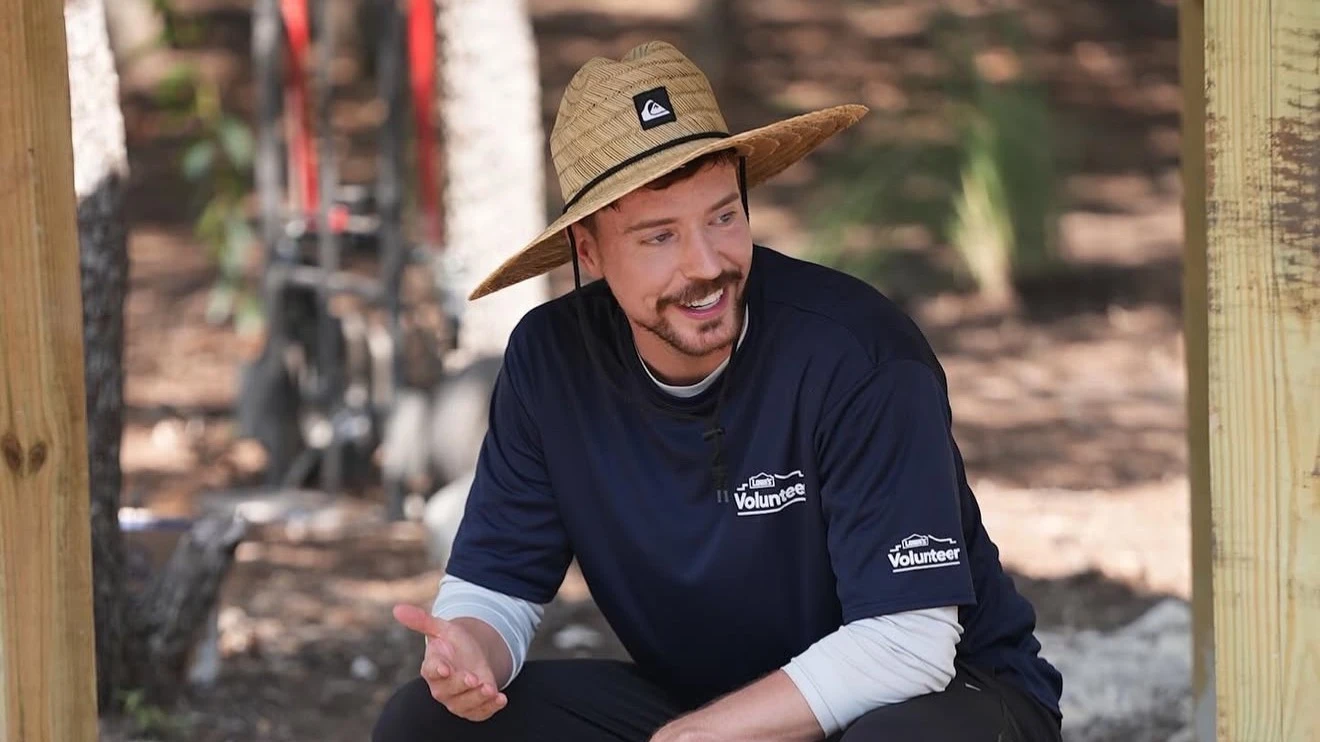
In October, Jimmy Donaldson, aka Mr. Beast, a global YouTube star with 450 million subscribers, launched Vyro, a new platform for clipping, i.e. producing short videos. The videos "masquerade" as user-generated fan content, but in reality they are elaborate advertising campaigns paid for by sponsors.
In August and September, Google Trends recorded the maximum peak of interest in the search query "clipping" over the past five years. And in late October , Bloomberg told the success story of 23-year-old Anthony Fujiwara, whose company Clipping, according to the publication's calculations, has earned $7.7 million on such viral videos since the beginning of this year, mostly in cryptocurrency. Its services for launching viral ad campaigns were also used by Mr. Beast. Behind the company is a team of 23,300 freelance editors who create short versions of long celebrity videos for YouTube, Instagram and Twitch.
Like memes and kitties: what clipping is and who needs it
Clipping is the creation of shorter clips from pre-made content and their viral distribution. Both Vyro and Clipping work as advertising campaign marketplaces, where brands or content creators place orders and specifications for editors (clippers) who create and distribute clips. Clippers upload them to their social networks and get paid for the number of views, while customers get advertising views of the clips that mimic regular user-generated content.
The Wall Street Journal writes that you can make clips out of anything: a podcast, a debate or even a movie. With their help, social media stars, most often bloggers, musicians, youtubers or ticktockers, want to attract a bigger audience and hire companies like Clipping. It could be, for example, announcing a musician's release, as in the case of hip-hop artist JT, or promoting a podcast from musician Elijah Blake.
Fujiwara himself says that creating such viral videos is "a way to buy space and time on people's screens while they flip through the feed."
Clipping's services, according to Bloomberg, are used by Los Angeles-based United Talent Agency, a major talent agency, and Universal Music Group's Capitol Music Group record label.
The administrator of the X Internet Hall of Fame viral account told Digiday that it is facing an influx of corporate clients in 2025: "We've worked with companies with market capitalization in the billions of dollars that are investing in clipping."
The essence of this business differs from traditional methods of monetizing social media authors, such as YouTube's affiliate program or the TikTok Creator Fund, which often require a blog to have a significant level of audience, CNBC writes.
YouTube's affiliate program pays from $0.5 to $2 per 1,000 views, depending on how actively users interact with the content (likes, reposts, etc.) and the time of viewing, CNBC points out. Having a promoted blog is important here. And the model of earning on clipping platforms is based primarily on the number of views. That is, you may have few subscribers, but you will still earn money if the video goes viral. For example, Mr. Beast for one of his campaigns paid clippers $50 for every 100 thousand views, writes Bloomberg. The creator of alternative sports leagues - the company Overtime - pays $150 for every 100 thousand views.
The difference with a regular ad campaign is that both the selebrities and the brands that shell out the money end up getting viral reach, the same kind of reach that memes and SEALs get.
"It's a modern marketing technique of the digital media age - advertising disguised as real fan activity," Bloomberg journalist Cecilia D'Anastasio tells NRP.
She says, for example, Anthony Fujiwara already has thousands of contractors working for him who are paid between $300 and $1,500 for every million views of their videos on Instagram Reels, TikTok, etc.
How to create viral content
Since the fight for the viewer's attention takes place in the first couple of seconds, the beginning of the clip is often manipulative. For example, a clip with a $200,000 supercar in the frame can be accompanied by the text: "Did this man really buy the most expensive car in the world?".
"Whether it's true or not, people are still going to watch," Kanoa Cunningham, the creator of such clips, tells the WSJ. He quit his job in the financial sector and now runs a team of eight editorial clippers. According to him, this work earns him between $20,000 and $30,000 a month.
The website of startup Whop, which launched its clipping marketplace in March, says: "Provocative or even controversial statements or questions will not only entice your viewers to continue watching, but will also encourage them to comment and share content, thus signaling to the algorithm to push your content even further. Quick zooms, a funny facial expression or outfit, and a trending filter are all examples of how to use visual techniques to amplify the effect."
However, it is possible to integrate such attention-grabbing hooks using only original content of the sponsor, otherwise the user will face a ban. Such a rule, for example, applies on the Clipping platform.
How platforms make money
Clipping earns money from subscription fees - customers pay on average from $2,500 to $10,000 per month, and sometimes more. The Clipping platform connects the sponsor with clippers in Discord. There, you can join the campaign yourself or create a group and manage it, receiving a percentage of revenue for the views of the "friend" you've brought in. By default, it's 5% of his payouts.
Most of the campaigns currently active on Clipping are only among the English-speaking audience, so it must include at least 30% of subscribers, plus at least half of the audience must be actively engaged, according to the company's Discord server. There are other requirements for participants, for example, the subject of the blog must be similar to the theme of the customer's advertising campaign. "Campaign sponsors don't want to pay for random accounts, they don't want the content to look like ads, their goal is organic reach," Clipping's Discord server said.
The minimum number of views for one post that Clipping pays for is 1 thousand. The same restriction applies on the Vyro platform. This condition protects platforms from spammers who could earn money by simply creating more and more accounts.
Mr. Beast's Vyro campaigns are also published on the Discord server, its own web application is still in test mode. Now four campaigns are published in Discord, two of them are related to Mr. Beast's own projects, one to a TV series from producer Dhar Mann, and the last one is an advertisement for the new movie "Predator: Planet of Death", which premiered in the cinema on November 6-7.
The Whop platform has its own web application that hosts customer campaigns, verifies views and pays out. Registration on Whop is free, users receive income directly from the customer, and Whop takes 10% of all commissions, Digiday points out.
What does this mean for social media and YouTube?
On the one hand, clipping platforms look like competitors for traditional YouTube payout and monetization programs: clipping services have higher payments and fewer account requirements.
Dmitry Kirsanov, director of Influencer Marketing at Rabbit & Carrot agency (part of Rabbit Group), agrees that clipping competes with social media payout programs, but with caveats.
If we are talking "about applications like Vyro, where the author (customer - editor's note) approves the use of his video, there is no competition - for him, short clips become an additional channel for promotion and monetization of the main content. So clipping is more of a pleasant bonus than an alternative"
However, customers have another problem - clippers can receive advertising income without the author's knowledge. And the latter will have no way of controlling this process. And given the rapid development of AI editors for cutting long videos into short fragments, such as Opus, the opportunities to quickly create and distribute such content are multiplied.
Platforms and social networks are trying to combat this. They are introducing tools that can help original content creators control such monetization.
For example, YouTube's Content ID program allows copyright holders to regulate how exactly the video platform should react to the appearance of duplicate content: block it, monetize it by showing ads, or simply collect statistics. Instagram's monetization rules directly state that "unoriginal content, as well as content that reproduces other materials without significant changes (e.g., commentary, parody, creative montage), cannot be monetized".
In the case of TikTok, there is an option to add a mark, indicating by whom or what your video was inspired by. This feature is voluntary and does not work for copyright protection, but it is a move toward control and attribution, Kirsanov says.
He also adds that social networks themselves indirectly profit from clipping, because one of the direct consequences of its introduction is an increase in the time of user presence in the application, and therefore an increase in the opportunities for displaying advertising.
Mounting in the gray zone and risks for brands
In the context of the broader marketing market, clipping is still a shadowy practice with little or no official regulation. At the moment, only a few major advertisers have publicly recognized its use, Digiday writes.
Jeremy Whitt, executive media director at agency Hanson Dodge, said some advertisers are using clipping to get around US Federal Trade Commission (FTC) rules requiring paid advertising on social networks to be labeled, which is what puts it in a legal gray area in the US. Some clipping companies openly disclose that they publish paid ads, but many do not, which carries legal liability for brands and advertisers working with them.
Jesse Saivar, a rights and intellectual property lawyer at Greenberg Glusker, said the top advertisers he works with are focused on complying with the FTC rules and are aware of the risks associated with violating them. However, he said smaller brands and content creators are unlikely to be penalized for violating the rules.
"Is the FTC going to penalize some microinfluencer who posted a 30-second video? Probably not, because they just don't have time for that."
On the other hand, instead of firing a cannon at sparrows, the FTC could end up penalizing the middleman, such as the marketplace where orders are placed, Saivar reasoned.
So far, there have been no comments or warnings from social networks or regulators about clipping, but the situation in this market will change significantly if social networks and video platforms (YouTube, Instagram, Twich, TikTok, X), where clipping videos are distributed, start to specifically fight against unmarked ads, says Patricia Meliana, Content Grip columnist.
This article was AI-translated and verified by a human editor