SpaceX has decided to discount, and investment funds are already saving money: the main thing about the IPO by May 31st

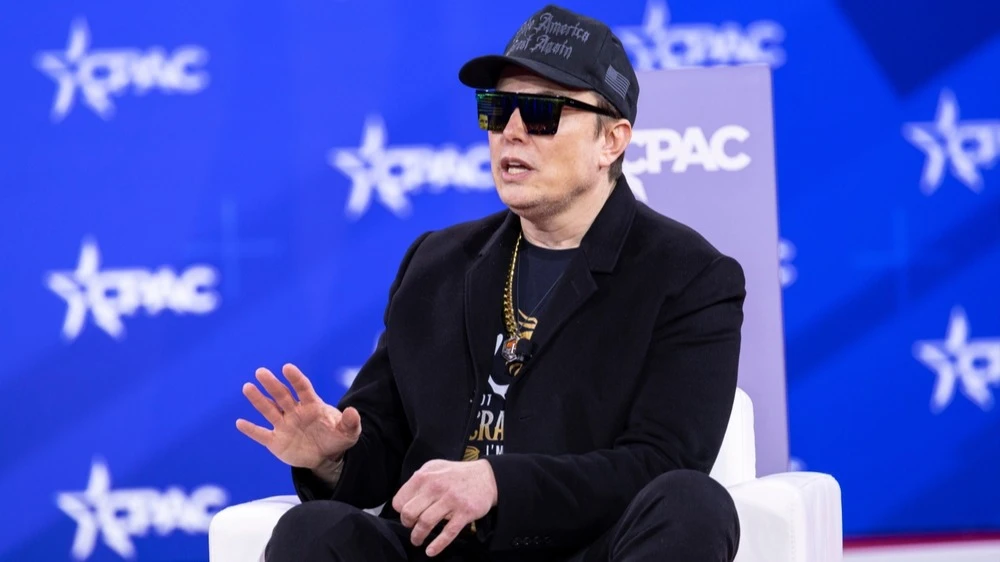
Elon Musk had to temper his ambitions in preparation for SpaceX's IPO / Photo: Joshua Sukoff/Shutterstock.com
Elon Musk's SpaceX has lowered its target capitalization target for going public to $1.8 trillion. Meanwhile, investment funds are already preparing liquidity for the expected listings of technology giants. China's leading memory chip maker is preparing the largest IPO in Shanghai in the last five years. The main IPO market events of the week are in our selection.
What has come to light about future placements
- SpaceX after consultations with investment banks reduced the target valuation of the business at IPO to "at least" $1.8 trillion, although recently hoped for a capitalization of more than $2 trillion, Bloomberg found out. That benchmark could still change before listing and the stock's debut could be delayed by a few days, its sources said. But even at a $2 trillion valuation, SpaceX's shares would look cheap compared to those of its competitors - satellite provider AST SpaceMobile and space launch operator Rocket Lab, the agency said this week. SpaceX is expected to set the offering price on June 11, and the next day its shares will begin trading on the Nasdaq exchange.
- ChangXin Memory Technologies (CXMT) has received approval from the Shanghai Stock Exchange for an IPO that could be the largest in mainland China since 2022. The memory chip maker plans to raise at least 29.5 billion yuan ($4.3 billion) by selling between 10% of its shares. Including an over-allotment option, the IPO could exceed $5 billion, Bloomberg estimated. CXMT is the world's fourth-largest maker of random access memory (DRAM) chips, demand for which has surged thanks to the AI boom. By early 2026, CXMT controlled nearly 8% of the global market, while the top three - Samsung, SK Hynix and Micron - controlled about 90%.
- Dutch cruise missile developer Destinus, founded by former owner of Russian retailer Tekhnosila Mikhail Kokorich, and German attack drone manufacturer Quantum Systems intend to launch an IPO in early 2027, sources told Bloomberg. They said Quantum, whose shareholder is PayPal and Palantir founder Peter Thiel, expects a valuation of at least €10 billion. Destinus is considering its native Amsterdam for the listing. Startups are catching demand for investments in the defense sector: artillery shell manufacturer CSG, submarine equipment supplier Gabler Group and Vincorion, a developer of power supply systems for military equipment, have already listed in Europe this year.
- Quantinuum, one of the leading creators of quantum computers, plans to raise up to $1.05 billion in a US IPO on a wave of investor interest in high-speed computing for AI. The company is looking to sell about 21 million shares at $45-50 apiece. At the top end of the range, the business will be valued at $12.7 billion. The offering price will be determined on June 3, then the securities will begin trading on Nasdaq under the ticker QNT. Quantinuum emerged in 2021 from the merger of Honeywell's quantum division with Cambridge Quantum. Its solutions are used by Airbus, BMW, HSBC and JPMorgan. The company is headed by Intel veteran Rajib Hazra. Quantum computers can outperform supercomputers many times over, but they only function at ultra-low temperatures and are buggy from the slightest disturbance.
- Innio, a German supplier of gas-fired power generation units under the Jenbacher and Waukesha brands, plans to raise up to $2.03 billion in a U.S. IPO and expects a business valuation in excess of $20 billion. Its majority shareholder AI Alpine, which is jointly owned by Advent International and Abu Dhabi Investment Authority funds, will list 75 million shares on the Nasdaq at $24 to $27 apiece. The securities will trade under the ticker INIO. Investors are increasingly looking not at AI developers but at businesses in the "picks and shovels" category - those building the infrastructure for the boom, Reuters notes. Innio has benefited from the demand for power for data centers, with orders for power equipment for them growing 16-fold between 2020 and 2025.
Results of recent IPOs
- Quotes of Danish BioMar, one of the leaders in the market of feed for commercial fish and shrimp, rose on the first day of trading after the largest IPO in Copenhagen since the placement of Netcompany in 2018. The shares rose to 113 kroner ($17.6) by the close of the session - up 5% on the offering price. The listing hit the upper end of the range and raised about 2.7 billion kroner ($420 million), mostly for BioMar's owner, Schouw & Co. It's a rare major debut for Copenhagen: the city has long been behind Stockholm as the top venue for Northern European IPOs. According to Bloomberg, BioMar may be followed by pharma company Leo Pharma and hearing aid manufacturer WS Audiology.
Other important news from the world of IPOs
- FTSE Russell, a subsidiary of the London Stock Exchange, has accelerated the inclusion of large companies in its US indices. The rule change will give passive index funds quick access to shares of SpaceX and other high-profile listings. The Wall Street Journal reports that now, large-cap issuers will be able to get into Russell's indexes in as little as five days of trading. Previously, companies had to wait until the day of the annual review. FTSE Russell is not the only index provider preparing for a wave of record IPOs: Nasdaq announced a similar mechanism in March, and S&P Dow Jones Indices began discussing such a move in April.
- Large investment funds have started to release funds in advance under the multi-billion dollar IPO SpaceX, OpenAI and Anthropic: some of them are preparing to sell stakes in other companies with high capitalization, writes Reuters. For passive funds, the inclusion of new stock giants in the indexes may mean a forced sale of existing securities, warned John Flood of Goldman Sachs. Retail investors, too, could fuel demand for offerings, with Deutsche Bank noting that their "ability and willingness to invest in equities remains high" thanks to the "gigantic amount of cachet accumulated during the pandemic."
This article was AI-translated and verified by a human editor