A bid for a monopoly in space and a premium for faith: what SpaceX's IPO means for investors
Elon Musk is trying to attract the market not only by visionary, but also by "down-to-earth" projects, among which is a semiconductor manufacturing plant

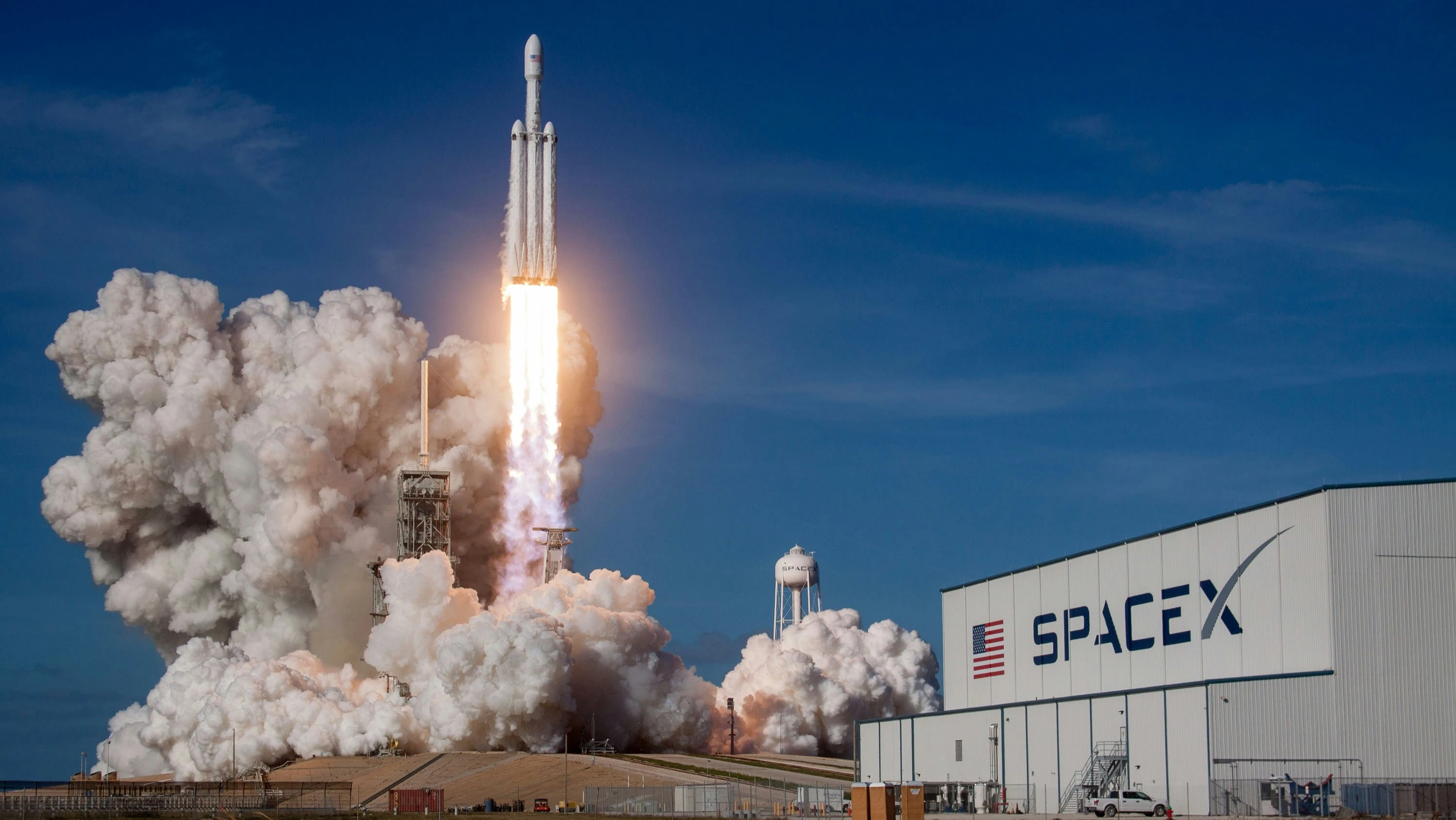
SpaceX's IPO may be the largest in history, but it's also a pretty controversial story for investors / Photo: SpaceX / Unsplash.com
SpaceX's potential IPO could be one of the highest-profile deals of the decade, but also one of the most controversial. At the current valuation, investors are actually paying a down payment for a future in which space transportation, satellite internet and interplanetary projects will generate a steady cash flow, says Evgeny Shatov, investment manager and partner at investment firm Capital Lab. The question is, will Elon Musk be able to do it?
Elon Musk's bet.
On Ma 20, as expected, SpaceX officially filed documents with the U.S. Securities and Exchange Commission (SEC) about its intention to hold an IPO. It is expected to go public on June 12. With a potential valuation of $1.75-2trillion, this IPO could be the largest in the history of the stock market.
But this is not the only thing that is interesting about the forthcoming placement of shares of Elon Musk's brainchild. The odious billionaire is betting on his popularity: the company can offer up to 30% of its shares to non-professional investors, i.e. ordinary people. Traditionally, this figure is much lower - 5-10%. In June the company will even organize a special event for such investors, where it will invite about 1500 people. The calculation here is that a large number of loyal private investors supports the valuation and reduces volatility after the IPO, as well as creates a long-term base of shareholders.
So where does SpaceX stand financially?
- In 2025, the company posted a $4.94 billion net loss and $2.6 billion operating loss on revenue of $18.67 billion.
- More than half of SpaceX's revenue is generated by its Starlink satellite internet project - $11.4 billion in 2025.
- In 2025, the company's space segment generated $4.1 billion in revenue but posted an operating loss of $657 million. The company spent $3 billion for the year and another $930 million for the first quarter of 2026 to develop new technologies within that segment.
- The company's AI business is also far from ideal. This segment earns money on advertising in X, as well as on services and infrastructure: subscriptions, data licensing and access to the API of Grok models. At the end of 2025, it had a $6.4 billion operating loss on revenue of $3.2 billion. At the same time, capital expenditures on AI in 2025 amounted to $12.7 billion (more than 60% of SpaceX's total capital expenditures). Over the year, they increased by 126%.
Proposals for investors: fantastic and down-to-earth
The successful launch of Starship with a Super Heavy V3 launch vehicle on Ma. 23 was a great advertising campaign for SpaceX IPO. This project is critical to its future space projects: building orbital data centers and colonizing Mars, which Musk dreams of, fulfilling its obligations to NASA to deliver astronauts to the Moon and launching the next generation of Starlink satellites into orbit.
SpaceX expects Starship to move from test launches to real launches and start delivering payloads into orbit, including the new Starlink satellites, as early as this year. The aerospace company believes that Starship will completely change the economics of cargo delivery to orbit: the cost of such operations should be reduced by 100 times, which will open up radically new prospects for space projects.
The signing of an agreement with Anthropic was also encouraging news ahead of the imminent IPO. The contract until 2029 could potentially bring SpaceX more than $40 billion in revenue. The deal implies that the AI startup will have access to SpaceX's AI infrastructure, in particular, to 220 thousand Nvidia gas pedals in the Colossus 1 data center.
But Musk is going to attract investors not only with space projects, many of which look like science fiction movie scripts, but also with more down-to-earth endeavors.
In March 2026, he announced the start of construction of a semiconductor plant TeraFab, which will produce chips for the needs of his companies, including Tesla and SpaceX. The seriousness of the project is evidenced by the participation of Intel, which has an almost central role in it - Terafab is going to use Intel 14A technology for the production of its chips, which, however, in fact, is not yet fully ready for implementation.
Terafab also remains in some sense a project of the future, although not so distant. The fact is that, judging by the information from the S1 form, it has not been finalized yet, and Tesla and Intel have the opportunity to withdraw from it. But the potential availability of its own semiconductor manufacturing plant in conditions of shortage and constant growth in the price of these components may become a competitive advantage for SpaceX and will allow it to build a vertically integrated AI-company.
As a result, so far the gap between the scale of ambition and actual financial results remains significant, meaning that the key investment thesis boils down to trust in Elon Musk's ability to turn technological visionaryism into a sustainable business model.
The only question is how much investors are willing to pay for this belief, and how long they will be willing to wait for its materialization. It is impossible to estimate the payback period: no one knows when Starship will really work as a regular solution and become profitable. Not to mention orbital data centers and missions to Mars.
SpaceX is now valued noticeably more aggressively than Tesla, another Musk project: with a potential IPO valuation of $1.5-2 trillion and revenues of about $18-20 billion, the company can be traded with a P/S multiple of about 75-100, while Tesla, with a capitalization of about $1.6 trillion and revenues of about $95 billion, has a P/S multiple of 15.37.
The difference is explained by the fact that the market perceives Tesla as a mature EV market leader and SpaceX as an infrastructure platform of the future built around Starlink, Starship, AI-compute and the space economy. That said, Tesla is already consistently profitable and scalable, while SpaceX remains a very high capex company with significant dependence on the success of Starship and AI-directions.
Ultimately, the SpaceX IPO is not so much about multiples, valuations and current financial performance. For market players, it is a story about investing in a potential monopoly on future space and AI infrastructure.
Does not constitute an investment recommendation.
This article was AI-translated and verified by a human editor