On the advice of Elon Musk: How a Russian native is changing the European defense industry
Mikhail Kokorich wanted to build a supersonic airplane, but switched to cruise missile development in 2022

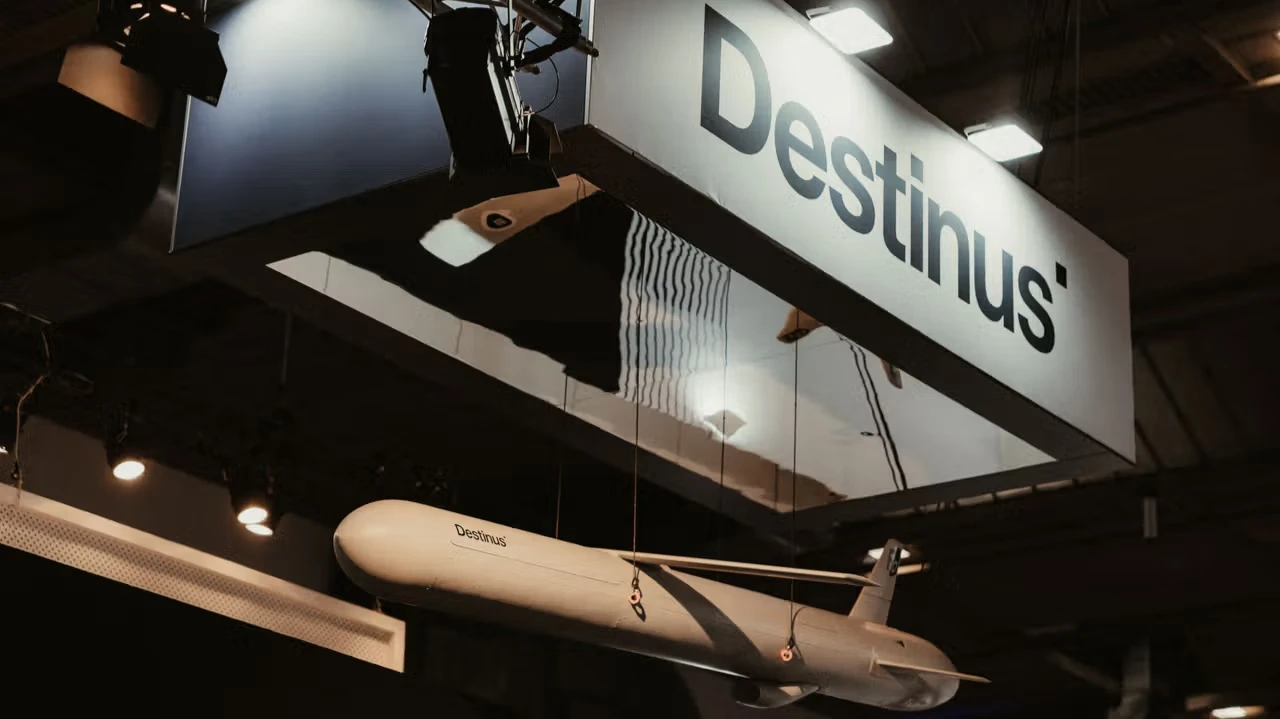
Destiny startup of ex-owner of Tekhnosila Mikhail Kokorich is developing cruise missiles for Europe / Photo: Destinus.com
Mikhail Kokorich, the former owner of Russian retailer Tekhnosila, has become a prominent figure in the European missile arms race. His startup Destinus, founded in 2021, has quickly gained a foothold in an industry long dominated by large defense concerns, the British Financial Times noted.
Destinus is now in talks with investors to raise around €200m ahead of a possible IPO, Bloomberg has learned. According to its sources, the company expects a valuation above €5 billion, based on annual revenue forecasts of around €500 million. The founder himself did not comment on the rumors of a listing, but told the FT: "We have raised money before and will raise more.
Who is Mr. Kokorich
Kokorich left Russia in 2012 and recently renounced his Russian citizenship, becoming a citizen of Grenada. The Novosibirsk State University graduate built his first notable business in 1997, and seven years later created the Chudodom chain of home improvement stores, which then merged with Uyuterra. His experience in retail came in handy in 2010-2012, when he took over the crisis management of the electronics supermarket chain Tekhnosila, bought it out, but soon decided to sell the asset.
In 2012, Kokorich founded Dauria Aerospace, which was awarded a contract by Roscosmos to supply two ultra-small satellites, but lost contact with them shortly after the first launch. In 2017, he and former Sberbank top executive Lev Khasis founded Momentus - a startup to develop a transportation system for satellites - which went public on Nasdaq in 2021.
Momentus' path to the stock exchange was accompanied by problems: security concerns of the US authorities due to the Russian origin of the co-founders led to Kokorich and Khasis having to sell their stakes. As a result, Momentus' valuation before listing was lowered from $1.1 billion to $567 million(now it is $58 million). The US regulator (SEC) later accused Momentus and Kokorich of misleading investors and falsifying the results of a prototype spacecraft test in 2019. In 2024, Kokorich agreed to pay a $2 million fine to the SEC and received a five-year ban from running public companies in the US. He told the FT he disagreed with the charges and that the case was "ultimately settled without admitting wrongdoing".
What Destinus does
At first Destinus planned to create a supersonic aircraft, but in 2022, after the conflict in Ukraine began, he switched to defense developments, writes FT. The businessman believes that Europe can no longer afford to rely on small batches of expensive high-end missiles: they take a long time to produce and it is difficult to replenish such arsenals. "Long-range strike capability is now one of the biggest gaps in Europe's defense capabilities," he told the British newspaper.
Kokorich attributes Destinus' rapid growth to its distributed manufacturing model and vertical integration: the company makes many key components, including turbojet engines and warheads, itself, rather than depending on a long chain of suppliers. Entrepreneur says the decision was partly influenced by a conversation he had with Elon Musk in 2012 during a trip to a SpaceX factory. "Elon made it clear: the only way to reduce the cost of rocket hardware by an order of magnitude is to produce critical subsystems in-house," the startup founder said.
Destinus wants to make systems that will be "10 times cheaper" than their older counterparts, although Kokoric admits this is "not always possible." Since moving into defense development, Destinus has produced thousands of long-range drones and Ruta Block 1 cruise mini-missiles for European governments and Ukraine. By the end of this year, the company, in conjunction with German defense giant Rheinmetall, plans to begin production of Ruta Block 2 with a range of more than 700 km. Industry experts told the FT that the Ruta Block 2 could be a logical choice for Europe following US President Donald Trump's decision to cancel deliveries of Tomahawk missiles. Destinus intends to start testing Ruta Block 3, a missile capable of flying 400km beyond the Tomahawk, in 2027.
Kokoric himself says that Destinus is no longer a startup: the company employs almost a thousand people in several countries, is profitable and generates revenue in the hundreds of millions of euros. The company has raised nearly €400 million, including shareholder loans and a €50 million credit line from Commerzbank. Destinus is also working with Rothschild on strategic options, including possible acquisitions. In 2025, it acquired Swiss startup Daedalean, founded by former Google and SpaceX engineers to develop drones, for $223 million.
This article was AI-translated and verified by a human editor