Strategy Breakdown: How the war in the Middle East has changed the flow of capital

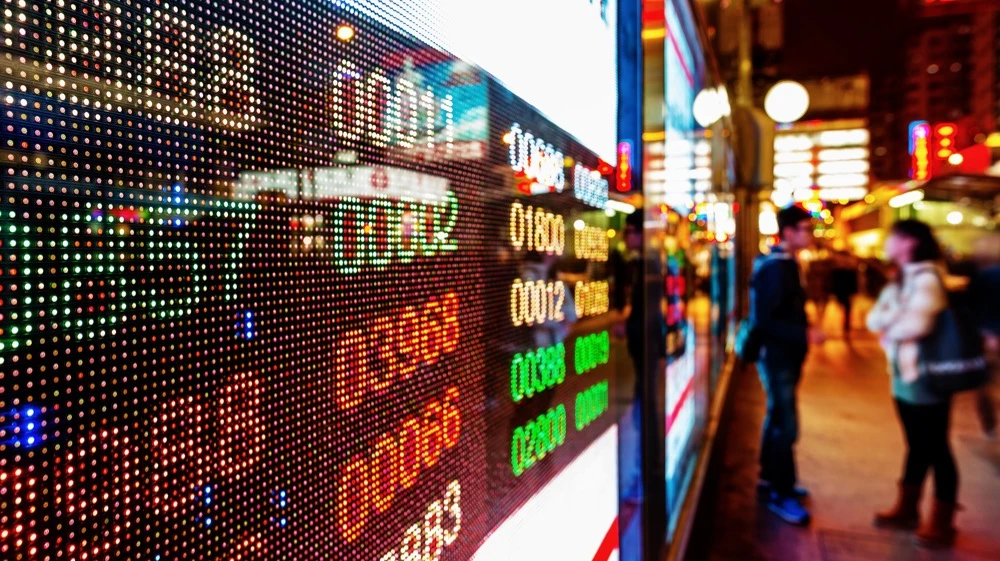
Asian markets experienced an outflow of investor funds after the war in the Middle East began. Photo: Daniel Fung / Shutterstock.com
The war in the Middle East triggered a reversal in several strategies that were particularly popular with international investors. After the war began, Asian equity funds experienced the largest outflow of funds in four years, while the stagnant U.S. stock market attracted increased interest. The game against the dollar also unfolded: the U.S. currency regained its safe haven status. How long will this reversal last?
Asian reversal
Prior to the U.S. and Israeli bombing of Iran, the MSCI Asia Pacific equity index had gained nearly 15% since the start of the year, but has fallen about 6.5% in the past week. The weekly drop for the MSCI Asia Pacific was the largest since the March 2020 coronavirus pandemic. Meanwhile, the S&P 500 lost about 2%.
It could be a reversal in the "Sell America, Buy Asia" strategy, which is facilitated by the strengthening of the dollar, Bloomberg writes.
Capital is not waiting for certainty on the Middle East situation to emerge, "the rotation is already underway and the dollar's strength this week is a clear indication of where the smart money is going," Hebe Chen, senior market analyst at Vantage Global Prime, told the agency:
China, Japan, Korea and Taiwan are totally dependent on imported [energy] resources...making the current oil shock far more devastating for that region than for the West.
Investors began to actively capture the profits they had earned earlier in Asian markets thanks to bets on technology, including the production of chips and artificial intelligence equipment, good economic performance, corporate reforms and rising profits. A weakening dollar made investing in local securities more profitable. But after the outbreak of war in the Middle East, the dollar strengthened, and this became an additional destabilizing factor for the region's markets.
The South Korean market, the most popular market in recent times, experienced a strong collapse. On enthusiasm around AI, the Kospi index almost doubled in January-February, but on Tuesday-Wednesday, March 3 and 4, it collapsed by 18.4%, the biggest correction in its history. On Wednesday, the stock exchange had to suspend trading for 20 minutes, and only 10 out of more than 800 stocks finished the trading day in the plus. On March 5 and 6, the index managed to recoup some of its losses.
Oil and LNG prices jumped due to military action and the de facto closure of the Strait of Hormuz, through which about 20% of the world's supplies of these types of energy resources pass. The shutdown of a number of production facilities, including the world's largest LNG facility in Qatar, also played a role. Middle Eastern countries are the main suppliers of energy resources for Asia. Korea and Japan appear particularly vulnerable, unlike China, which has its own large production capacity and oil reserves and imports large volumes of oil and gas from Russia and Central Asian countries.
More than 60% of Japan's and South Korea's oil imports go through the Strait of Hormuz, notes Alicia Garcia-Herrero, chief Asia-Pacific economist at Natixis Bank. India and Indonesia are also among the biggest oil importers. According to Garcia-Herrero, the negative consequences for these countries go beyond the oil industry and also affect the transport, construction, financial and defense sectors.
In addition, the Middle East produces almost 10% of the world's aluminum. And its producers in Bahrain and Qatar have started shutting down plants and declaring force majeure, the Financial Times reported.
A 10 percent rise in energy prices and keeping them at that level for a year would raise global inflation by 40 basis points and slow global economic growth by 0.1-0.2 percent, IMF Managing Director Kristalina Georgieva said Friday.
"For AI investment, stagflationary pressures are like an emergency circuit breaker: when the cost of capital rises and growth prospects disappear at the same time, it becomes extremely difficult for any company to defend the most ambitious infrastructure projects in the region to the board," says Chen.
Traders now forecast the Bank of Korea will raise interest rates by 50 basis points over the next 12 months, up from 25 basis points in late February, according to data compiled by Bloomberg.
The lack of monetary policy support is a negative for equities, says Rajiv de Mello, global portfolio manager at Gama Asset Management.
Sentiment in emerging markets has been very optimistic and those expectations may now be revised too, he adds.
The dollar yes, government bonds no.
Net outflows from emerging market funds in Asia (excluding China) amounted to $11 billion during the week - the maximum since March 2022, according to Bloomberg. Investments in the market of Taiwan decreased by a record $7.9 billion, South Korea - by $1.6 billion, India - by $1.3 billion.
Global funds have been buying Asian stocks "in anticipation of a weaker dollar and favorable inflation, but the escalating situation in Iran has called both of those assumptions into question," says Gary Tan, a fund manager at Allspring Global Investments. Investors are now reassessing, he says, trying to figure out whether the strong dollar will persist for longer and whether higher oil prices can again stimulate inflation.
According to a Bank of America survey in mid-February, fund managers held the largest bearish positions on the dollar since 2012, when the bank began collecting this data. By that point, the dollar index (the exchange rate against the currencies of major trading partners) had fallen 1.3 percent since the beginning of the year - in addition to a 9 percent drop in 2025.
But last week it grew and added almost 1.6% (however, on Friday the dollar index lost some of its growth due to unexpectedly weak US unemployment data).
Currencies of all developing countries fell against the dollar, Bloomberg notes.
But despite the sharply negative reaction "in the moment", some managers maintain an optimistic long-term view of emerging markets in general and Asian markets in particular.
"We have significantly reduced risk over the past few days but are looking to return to long emerging market positions at the first signs of stabilization," Citigroup analysts wrote.
UBS Global Wealth Management raised its recommendations on Korean shares after a large-scale correction, which managers considered technical rather than the result of a change in fundamentals, Bloomberg notes.
John Whitar, portfolio manager at Pictet Asset Management in Singapore, told the agency, "Unless there is a further escalation of the Middle East conflict, which is unlikely at this point given the weakening of Iran's military capabilities as a result of the joint US-Israeli strikes, we expect continued positive momentum in Asian markets."
However, not everyone on Wall Street agrees with the view that the conflict will end soon. "Wars always last longer than we expect," a senior trader at a major Wall Street bank told the FT, citing the dollar and gold as the main safe-haven assets.
What investors are not enthusiastic about in the current situation is the US Treasury bond market. Although they traditionally serve as a safe haven in times of crises and cataclysms, their prices have fallen this time. The yield of 10-year Treasury bonds rose during the week of the conflict from 3.95% to 4.13%.
There is no influx of funds into this market because "the fact remains that wars are expensive and usually stimulate inflation," noted Jon Treacy, publisher of Fuller Treacy Money, an investment newsletter. "This is not good news for a government that is teetering on the brink of fiscal sustainability."
This article was AI-translated and verified by a human editor