The "AI-Nostradamus" Fund reported a 65% loss for the quarter. What is it betting on?
Leopold Aschenbrenner, the foundation's founder, remains optimistic about the long-term potential of AI technologies
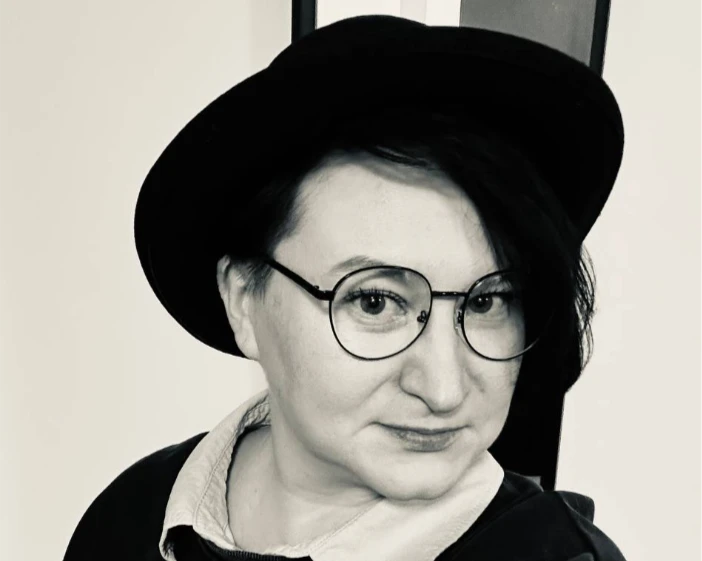

Leopold Aschenbrenner / Photo: Forourposterity.com
The hedge fund Situational Awareness informed investors that the value of its assets had fallen by 65% after fees in the third quarter, according to The Wall Street Journal, which cited a letter from the fund’s founder, 25-year-old Leopold Aschenbrenner. However, from the beginning of 2026 through the end of September, the fund’s return after fees remained positive at 88.5%, the WSJ noted. Aschenbrenner, who has been nicknamed the “AI Nostradamus,” also spoke about his investments during these challenging times in the market.
Details
In the letter, Aschenbrenner acknowledged the turbulence the fund experienced over the summer, when Situational Awareness nearly collapsed in July due to losses on leveraged trades, the WSJ reports. Since then, he has restructured the portfolio, and the fund is also hiring an experienced chief risk officer. “Many of our predictions, which seemed like science fiction two years ago, have come true. And yet we’ve also learned just how wrong we can be—and how ruthless the market is when we’re wrong,” he wrote.
He described the fund’s new investment principle as the following formula: “Volatility—yes; existential risk—even if we’re completely wrong—never.” Aschenbrenner expects to eventually resume short selling of stocks—which accounted for a significant portion of the losses this summer—and possibly return to leveraged trading, albeit on a smaller scale than before. According to him, the fund’s readiness to take on risk will be measured by its ability to withstand an event worse than the one in July: “Our risk scenarios and portfolio structure must account for singularity volatility.”
Aschenbrenner's Predictions
The investor described the decline in the AI stock market—which occurred after the letter was sent—as “drastic,” noting that current valuations of AI companies factor in only modest revenue growth for leading labs. He, on the other hand, forecasts that AI labs will end 2027 with an annual revenue of more than $1 trillion.
Aschenbrenner described the current investment opportunities as “the highest potential for returns in the fund’s entire history.” In his view, as AI advances and systems begin to create more advanced versions of themselves, most companies will lose “a large portion of their value” because assets such as employees and intellectual property will become obsolete.
Sectors such as IT outsourcing and software development will be at risk, and market leaders—including Nvidia, Advanced Micro Devices (AMD), Microsoft, and Apple —risk losing their competitive advantages. The same, he said, applies to “Musk’s universe”— SpaceX and Tesla. “Perhaps the best ‘buy-and-hold’ asset we can think of is the ‘Mona Lisa,’” he wrote.
In closing his letter, Aschenbrenner predicted the emergence of a “civilization of alien geniuses” by 2028, unless the development of AI is halted by regulation, and noted that the atmosphere in San Francisco “is starting to feel very strange.” “For most of the rest of the world, 2027 may turn out to be the last year that seems more or less normal,” he wrote.
Portfolio
Aschenbrenner reported that following the IPO of Anthropic—the fund’s largest private-equity holding—the composition of the Situational Awareness portfolio returned to its historical ratio: approximately 70% in publicly traded stocks and 30% in stakes in private companies. In August, the ratio was the opposite.
The fund may eventually reduce its stake in Anthropic, just as it would with any other security, depending on the attractiveness of other assets based on current valuations, the letter states. Nevertheless, Aschenbrenner described himself as “extremely positive” about Anthropic’s offering price and stated that even if he were starting from scratch, he would make this security the fund’s largest holding by a wide margin.
In recent months, Situational Awareness has been investing but has not accepted new funds from clients and has been “focused on internal work—learning lessons and building a more sustainable structure for future success,” the letter states.
Context
In July, Situational Awareness, whose assets totaled $45 billion, faced a capital shortfall due to the collapse of AI company stocks and was forced to urgently sell a significant portion of its leveraged portfolio to Ken Griffin’s investment firm Citadel at a discount to market value. The fund’s portfolio plummeted by 67% in July, and assets under management shrank to approximately $10 billion. Afterward, Aschenbrenner promised not to borrow money from banks anymore to increase the size of his bets.
In September, the fund became active again in the market, beginning to buy options on shares of AMD, Bloom Energy, CoreWeave, and several memory manufacturers, while reestablishing ties with Wall Street brokers using significantly less financial leverage than before.
The fund gained notoriety following the publication of Aschenbrenner’s essay on the imminent advent of general artificial intelligence, and prior to the summer sell-off, it had posted a return of 439% since the beginning of 2026, earning its founder the nickname “AI Nostradamus.”
This article was AI-translated and verified by a human editor