The Fragile Tower: Why 2026 could be a pivotal year for the K-shaped U.S. economy

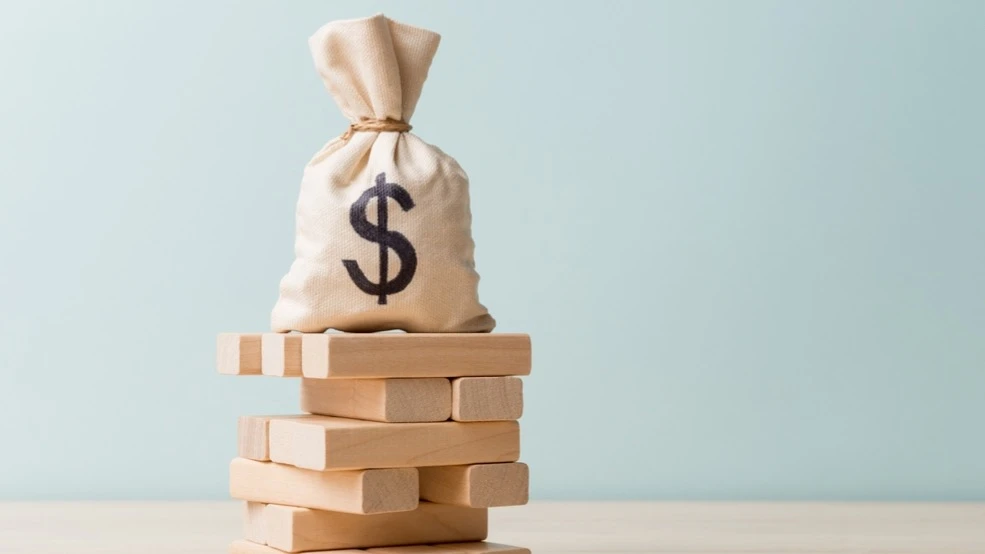
The U.S. economy is on a K-shaped trajectory. Growth is being fueled by the spending of affluent consumers, who are getting richer and richer thanks to a rebound in capital markets. And the poor are getting richer and having to cut back on their spending. It's like a tower of jenga blocks, where many of the blocks at the bottom have been removed, and the upper blocks - the last pillar of the economy - could be hit by a stock market downturn.
Diverging paths
"When people talk about a K-shaped economy, they mean an economy that is perceived differently by different segments of the population," says Joanne Su, director of consumer behavior research at the University of Michigan. Rich people are confident spenders; the growth in their spending in the letter K is the upward line. The poor are the line going down - struggling to make ends meet, switching to cheaper goods, buying on credit or installments.
The term "K-economy" was coined in 2020 by economist Peter Atwater of the College of William and Mary in Virginia to reflect the unevenness with which different segments of the population recovered from the crisis caused by the coronovirus pandemic. He believed that the situation would change with its end, but it did not.
Financial markets have reached record highs in the years since the pandemic, so the wealthiest Americans who own appreciating assets - stocks and real estate - have continued to climb up the "escalator," Atwater explained to The New York Times. But the lowest-paid workers have the lowest wage growth since 2024, data from the Federal Reserve Bank of Atlanta show.
For those at the bottom, the need to twist themselves so they don't run out of money becomes a monthly, if not weekly, task, Atwater notes.
According to Moody's Analytics, the richest 10% of Americans (with an annual income of $250 thousand) now account for 49.2% of consumer spending (10 years ago this share was 45.7%, and in the early 1990s - about 35%). Thanks to their spending, sellers of expensive goods and services are booming, notes The Wall Street Journal: luxury goods, luxury real estate, expensive clothes and shoes, seats in business class of airplanes and on international flights (while, for example, traffic on domestic flights and in economy class is stagnating).
"Fantastic", according to ING's chief international economist James Knightley, data on US GDP growth in Q3 - at 4.3% year-on-year - also reflects K-shaped dynamics. The main drivers of growth remain spending by affluent consumers and capital investment by technology companies, primarily in the artificial intelligence sector, he notes.
The wealthiest 20% of households continue to spend aggressively, fueled by their high incomes and rapid growth in wealth, while the lowest 60% of households are severely constrained by concerns about job security and possible price increases due to import duties.
This, according to Knightley, largely explains why consumer spending is flat while consumer sentiment is deteriorating. The Conference Board's consumer confidence index fell for the fifth straight month in December, marking the longest period of decline since the global financial crisis in 2008.
Poor small business
The economy is on different trajectories not only in the consumer sector but also in the corporate sector, Knightley notes. Technology giants and large companies are doing well, while small businesses are suffering: "For four consecutive quarters, capital investment by companies outside the technology sector has declined, a sign of recession. However, investment in computing and software is up 18% year-on-year. As a result, aggregate capital spending continues to grow," he writes.
High inflation, frugal consumers and import duties are eroding small businesses' profits, forcing them to cut costs and staff. According to ADP, which processes payrolls for businesses, firms with fewer than 50 employees have steadily cut jobs over the past six months, the WSJ writes. They shed nearly 180,000 workers over the year, while companies with 50 to 499 employees hired nearly 300,000 workers and those with 500 or more hired more than 430,000.
According to LSEG, net income for companies in the S&P 500 index rose 12.9% in the third quarter compared to the same period in 2024. Meanwhile, companies with fewer than 500 employees, which employ nearly half of Americans and produce more than 40% of GDP, saw their profits decline slightly over the year, according to Bank of America estimates.
Federal Reserve Chairman Jerome Powell recognized the problem. He said the central bank is watching for K-shaped dynamics in the economy. "If you listen to teleconferences about quarterly results or read consumer-facing reports from large publicly traded companies, many of them say that the economy is moving in two directions and that lower-income consumers are struggling, buying less and switching to cheaper products, but at the same time people with higher incomes and wealth are spending more," Powell said in late October.
10-fold income gap
Fairfield County in Connecticut is one of the regions where the diagonal lines of the letter "K" have diverged the most, says the Financial Times. In it, Greenwich, the unofficial capital of hedge funds, and Bridgeport are located at a distance of about 45 kilometers from each other. In the first, the average pre-tax income (per tax return) in 2023 amounted to $687 thousand, in the second - almost 10 times less, $ 70.5 thousand.
Since then, the gap may have widened even further, given the rise of the stock market and some commodity markets(precious metals, copper), the boom in M&A and AI-related areas - where managers could make even more money. Meanwhile, poor people do not have money to invest, and for them, incredible earnings on the growth of financial assets remain the limit of dreams.
This is reflected in consumer sentiment as studied by the University of Michigan. People with investments have a significantly better assessment of the economic situation than those who do not own stocks, with the latter's assessment dropping to its lowest level since 1998, when the university began collecting such data.
The situation has been exacerbated by the passage of the "big beautiful bill" on the budget, which was actively promoted by US President Donald Trump. It provides for tax cuts for the rich and cuts in funding for Medicaid, the federal health insurance program for low-income Americans, as well as the food stamp program for the poor.
According to the Congressional Budget Office, the law would result in the poorest 10 percent of households losing about $1,600 a year, while the richest 10 percent would gain $12,000.
The last pillar of the economy
Property stratification is nothing new. But now it's not just a story about inequality, it's become a macroeconomic story, says Lindsay Owens, executive director of the Groundwork Collaborative.
As long as the rich continue to consume, this masks more and more volatility and instability in the economy.
Different attitudes toward spending among income groups have always been observed, and the less affluent have traditionally been more sensitive to rising prices. But this time the situation is different in that the latter are cutting back on spending mainly because of worsening economic expectations, whereas in the past it happened only in the case of massive job losses, Michael Scordelez, director of U.S. economic analysis at Truist Advisory Services, explained to Bloomberg.
Even though the cost of living is not rising as fast now as in 2022, consumer prices have still risen 27% since the pandemic began, he noted: such inflation has affected psychology, leaving "scars" and leading to selective spending.
Diana Swank, chief economist at KPMG, sees another risk: what might be considered a "natural" level of inequality threatens to escalate to something "extreme," and that would make the economy as a whole more vulnerable to various risks. "This causes discontent, social unrest and undermines economic growth rather than promoting it," she says.
Speaking to Bloomberg, Atwater compared the situation to a Jenga tower where the blocks are now being removed from the very base, "Now we're seeing all this over-activity at the very top, while things are getting more and more fragile at the bottom."
The collapse of the "whole tower," according to Atwater and a number of analysts, could be triggered, for example, by a sharp drop in the stock market, where there has been talk of an inflated AI bubble for months.
Spending by wealthy Americans and investment by technology companies are likely to remain the main drivers of economic growth in 2026, says ING's Knightley: "What's likely to change that? Most likely is a stock market surge that will hit tech companies' share prices hard. This is likely to lead to tighter credit conditions, which will undermine capital investment and income for wealthy households."
Such hikes are quite possible, says Jon Treacy, publisher of investment newsletter Fuller Treacy Money. Next year there will be a change in the head of the Fed, he reminds.
Investors need to know if the new Fed chairman will support the market in times of stress. Usually, they will stage a mini-crisis to find out. This creates the possibility for sharp hikes in 2026.
A drop in the stock market "will knock the ground out from under the feet of high-income households, the last pillar of the economy, and raise the risk of a recession," Mark Zandi, chief economist at Moody's Analytics, told Bloomberg.
This article was AI-translated and verified by a human editor