The Hot Potato Game: Why Does Wall Street Prefer Chipmakers Over AI Developers?

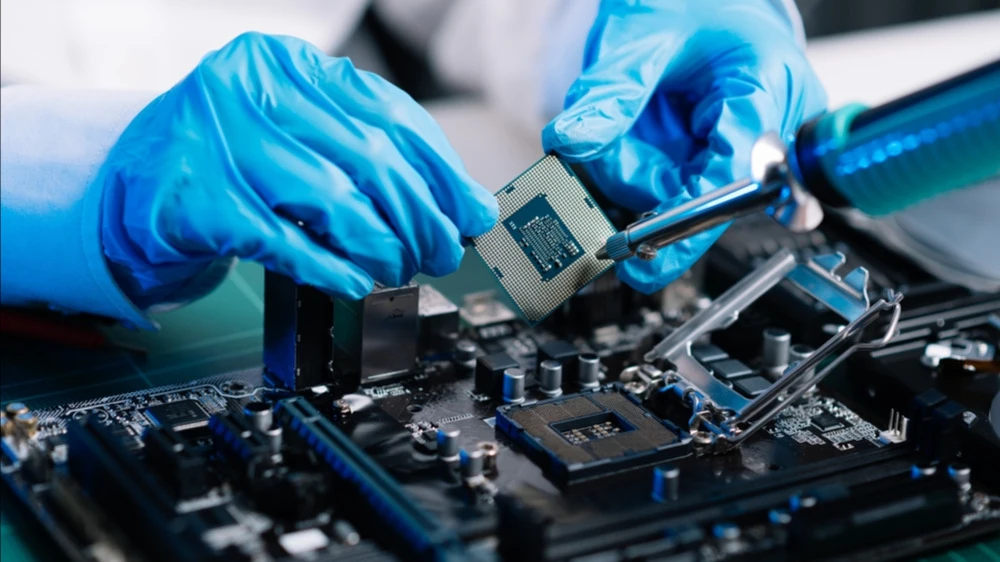
New AI agents require significantly more computing power than the previous generation of AI tools, which in turn is expected to drive demand for AI infrastructure, according to market analysts / Photo: Nuttapong Punna / Shutterstock.com
Although Meta Platforms’ Muse tool now appears to have taken the lead in the race for AI agents, Wall Street traders and fund managers believe that the best way for investors to bet on the race to create the most successful AI agent remains through shares of chipmakers, according to Bloomberg.
What Wall Street Is Betting On
— “Leadership here is almost like a hot potato: it’s constantly changing hands,” Paisley Nardini, head of investment strategy at Tema ETFs, told Bloomberg. “I’m already hearing jokes that in a couple of weeks we’ll forget about Muse because something else will come along.”
New agents require significantly more computing power than the previous generation of AI tools, which consisted mainly of chatbots. This means that steady demand should continue for the stocks of chip manufacturers and other companies in the AI infrastructure sector, Bloomberg notes.
“If you’re trying to guess who will emerge as the biggest winner in the AI agent market—Meta, Alphabet, Apple, or someone else—it’s almost like flipping a coin right now,” Nardini said. “Infrastructure offers a clearer path to capitalizing on this trend, because demand for agents will drive demand for related products in the long term.”
“Instead of trying to guess which company will ultimately create the best AI agent, we want to own the foundation on which all agents operate—the stocks of companies that will come out on top regardless of who ends up leading,” — said Rick Lear, chief investment officer at Lear Investment Management, in an interview with Bloomberg. Lear’s concentrated portfolio focuses on stocks that he believes will benefit from the proliferation of AI agents: chipmakers Nvidia and Micron Technology, and energy company Williams Cos.
“Leadership in the technology sector is constantly shifting from one company to another. But if agents do become widespread, we’ll need far more chips, memory, electricity, and infrastructure,” he said. “That will be true in any case, even if Meta goes from being today’s leader back to being a laggard.”
— An important aspect of investing in chipmakers is the ongoing development of AI agents. According to Citigroup analyst Atif Malik, the development of agent-based AI could drive demand for several types of semiconductors at once, including processors, memory, and networking chips. In an October 6 research note on AMD, he estimated that the total addressable market for central processing units will grow by an average of 60% per year through 2030.
Context
According to Bloomberg Intelligence, in 2027, net income for companies involved in AI infrastructure could grow by 63%, and revenue by 54%. As recently as late July, their net income was expected to increase by less than 48%, and revenue by 32%. Forecasts for 2028 are also being revised upward, the agency notes.
Nine out of the ten best-performing stocks in the S&P 500 this year are linked in one way or another to AI, notes Bloomberg. Chipmakers have seen particularly strong growth: despite July being the worst month for chipmakers since the dot-com era, the Philadelphia Stock Exchange Semiconductor Index has gained nearly 80% since the beginning of the year. The growth was driven by Micron, Marvell Technology, Intel, and Advanced Micro Devices.
Since the beginning of this year, chipmakers’ stocks have generally risen, regardless of who was considered the leader in the AI race, in which the frontrunners have changed several times. In the spring, the market was betting on Alphabet and Gemini, but after the September 8 launch of Muse, Meta attempted to break into the lead: the app quickly took the top spot in downloads on the U.S. App Store and Google Play, and the company’s stock rose by about 25% in September. Nevertheless, the performance of AI developers’ stocks lags significantly behind that of chipmakers. For example, Alphabet’s stock has risen 11% since the start of the year, while Meta’s has risen 9%. By comparison, AMD’s stock has gained 190% during this period, and Micron’s has risen 263%.
This article was AI-translated and verified by a human editor