Ekman Warned the Fed Against Making a Mistake: Raising Rates Could Trigger a Recession in the U.S. and Globally

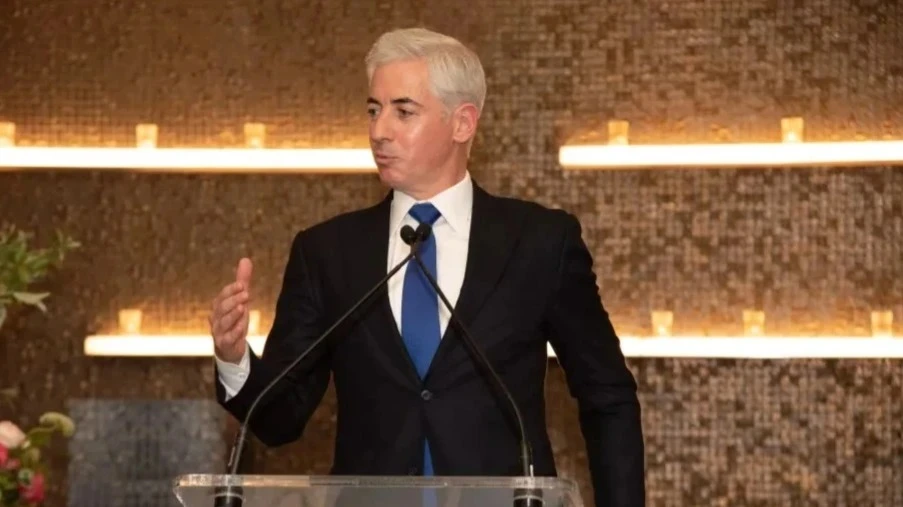
"A 2% inflation target is misguided": Bill Ackman called on the Fed to reconsider its policy / Photo: Pershingsquarephilanthropies.org
The Fed risks making yet another mistake if it raises rates again at its December 9 meeting, according to billionaire Bill Eckman, founder and CEO of the investment fund Pershing Square. According to him, financial conditions have already tightened significantly, and the 2% inflation target no longer reflects reality. Eckman believes that in a world of military spending, deglobalization, tariffs, and massive investments in AI, it is more realistic to aim for 3%, and attempts to bring inflation back to 2% at all costs could lead to a recession in the U.S. and around the world. He wrote about this on X.
Details
"I think the Fed is going to make another mistake on December 9. Financial conditions have tightened significantly. For example, SpaceX—a company with an investment-grade credit rating— has just raised funds through a secured loan at 8.259% per annum, whereas during its IPO it issued unsecured bonds at a rate below 6%,” Ekman pointed out.
He noted that following the recent sharp decline in the stock market, the cost of equity capital has risen significantly—it has become more expensive for companies to raise funds through the sale of shares. Furthermore, according to Ekman, the Fed’s goal of bringing inflation back to 2% is misguided: “Geopolitical risks, necessary investments in military spending worldwide, deglobalization and tariffs, as well as massive investments in AI infrastructure and related energy sectors—these are realities that did not exist when the 2% target was set.” According to the investor, a more realistic target in this new world is 3%, and “the Fed will plunge the U.S. and the entire world into a recession if it continues to raise rates in a futile attempt to bring inflation down to 2%.” Ekman concluded his post by saying, “Explain why I’m wrong.”
Ekman is protecting his own investments, Yahoo Finance explains: a rate cut would benefit the stock market and many of the stocks he owns, such as Microsoft and Netflix. Furthermore, it’s hard to argue that the inflation situation has worsened and that the Fed needs to act more aggressively to bring it under control, the website notes.
Who else is against raising the rates?
Ekman’s remarks echo the concerns of U.S. Treasury Secretary Scott Bessent. The day before, on November 22, he also cautioned the Fed against tightening policy too aggressively. “Many believe that they [at the Fed] could make a mistake if they go too far with tightening,” Bessent said. He had previously called it a mistake to raise rates too sharply in response to the energy shock, which, he said, is already subsiding.
What indicates a rate hike?
The Federal Reserve’s preferred measure of inflation—the Personal Consumption Expenditures (PCE) index— rose 3.6% year-over-year in September, while the core PCE (excluding food and energy prices) rose by 3.1%. Both figures are significantly above the Fed’s 2% target. Inflation does not appear to be falling fast enough, so interest rates may need to be kept high for longer or even raised again, notes Yahoo Finance.
In September, the Fed raised interest rates for the first time in more than three years: persistently high inflation—fueled in part by the AI boom and rising energy prices—forced the central bank to resume tightening its monetary policy. At its meeting in late October, the Fed left the rate unchanged, and many now consider this a mistake, the website notes. “If you break down inflation by category, it is concentrated—let’s put it this way—not where it should be, — in categories that are alarmingly persistent: services, healthcare, and a number of other areas where price increases cannot be explained by tariffs or oil prices,” said Ostin Goolsbee, president of the Federal Reserve Bank of Chicago, at the Yahoo Finance Invest conference in November. Goolsbee called for a sober assessment of the situation. According to him, the economy is gradually entering a territory where, historically, it has been difficult for any central bank to control inflation, and it is important to prevent the situation from worsening.
According to traders, there is a 96% probability that the Fed will raise interest rates in December to 4%–4.25%, according to data from the CME’s FedWatch tool.
This article was AI-translated and verified by a human editor