"The New Beast": how Wall Street is adapting to the booming prediction market
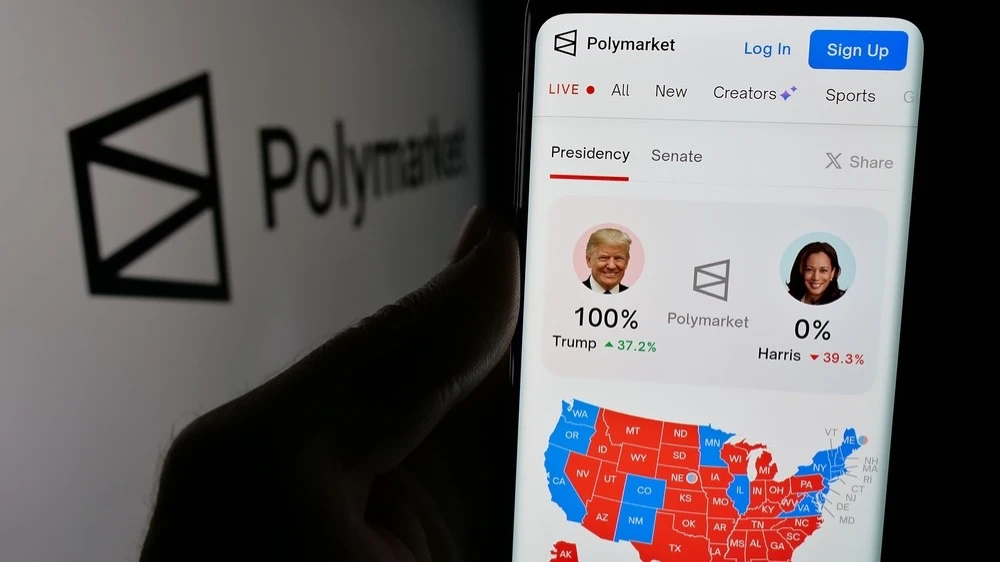
In 2024, you could bet on the outcome of the US presidential election on Polymarket. This platform, like its competitor Kalshi, predicted a victory for Donald Trump. Photo: T. Schneider / Shutterstock.com
Over the past two years, average monthly trading volumes on the prediction market, where Polymarket and Kalshi platforms are the leaders, have grown 80 times. Wall Street companies have begun hiring traders to work with prediction markets. Critics of the booming sector say it's an easy opportunity for holders of nonpublic information to make money from insider trading. Defenders insist that such platforms fulfill the main function of the market - to allow a fair assessment of a particular event.
Make money off of Maduro and Taylor Swift.
Hours before U.S. President Donald Trump announced on January 3 that U.S. special forces had captured Venezuelan President Nicolas Maduro, an anonymous trader bet $32,000 on the Polymarket platform that the Venezuelan dictator would lose power by the end of the month. As a result, he was able to earn more than $400 thousand on his bet.
The trader opened the account just days before he made a single bet - on the U.S. military operation in Venezuela, Politico writes. He made it on the night of the raid. "Given the new account, the perfectly timed trade and the huge winnings, the obvious question is: Did someone get rich off insider information about the raid?" the publication wondered.
Polymarket and the Kalshi platform are major players in the prediction market, where anyone can bet on various events. It could be the outcome of a sporting event, an election, whether Taylor Swift's new album will top Spotify (or whether she will mention her fiancé in it), whether a particular movie will win an Oscar, whether Chicago will get 30 cm of snow this month, who will be the next US president or mayor of New York. Betting on Polymarket clearly indicated that Zohran Mamdani will defeat Andrew Cuomo in the November 2025 New York City election, 94% vs. 6%. Polymarket and Kalshi also predicted a Donald Trump victory in 2024. Now, for example, on both platforms you can bet on whether Trump will manage to get Greenland.
The prediction market is expanding rapidly. In 2022, PredictIt, one of its pioneers and the then leader, had 80,000 users. Now Kalshi alone has millions of them, with weekly trading volume exceeding $1 billion, according to the company. Robinhood, a trading app popular among individual investors, first partnered with Kalshi, and now it has become involved in betting on events.
Critics point out that prediction markets gamify trading.
"It's hard to ignore the fact that casinos are out of the [S&P 500 index], but Robinhood is in," Tyler Gellash, CEO of the Healthy Markets Association, which is dedicated to protecting individual investors, told The Wall Street Journal.
Gellash's statement has a double meaning: Robinhood was included in the index in September instead of Caesars Entertainment, the largest casino operator in the United States.
The platforms themselves claim to be part of a long-term trend in the markets: trading is becoming less and less costly and more accessible to individual investors. And instruments that are now considered risky - from cryptocurrencies to options - may in the future become part of a typical retail investor's portfolio.
"We're serving the next generation of investors," Steve Quirk, Robinhood's director of brokerage services, told the WSJ. - We offer people more asset classes and opportunities."
New derivative instrument
Some state authorities, congressmen and regulators argue that predictive markets violate gambling laws, must follow them and pay the appropriate taxes.
However, the Kalshi platform has actually already been able to prove otherwise. The U.S. Futures Trading Commission (CFTC) tried to ban offering bets on the outcome of elections, says Bloomberg, but Kalshi through the court in 2024 has achieved a reversal of this decision. The court found the contract on the outcome of elections legal because they are not gambling or illegal activity.
This court victory created a real boom in the development of the predictive market. Thanks to the boom in 2025, the world's youngest self-made billionaires are the founders of Kalshi and Polymarket - Luana Lopez Lara, who studied computer science at MIT and interned at hedge funds Bridgewater Associates and Citadel Securities, and Shane Coplan, who wrote a letter to the Securities and Exchange Commission office at age 14 asking how to create a new market.
Average monthly trading volumes in the prediction market have risen from less than $100 million in early 2024 to more than $8 billion in December 2025, writes the Financial Times.
Traders bet on whether some event will happen in the real world or not. The work of platforms in this sense is similar to the betting business, but the difference is that, unlike it, it is not the company that takes bets. It is, as in a traditional financial market, made against another player or trader. If there is none, there is no transaction (an online casino or bookmaker can accept a bet "for itself").
A contract for an event costs from $0 to $1, and any number of them can be purchased. The platform, like a traditional exchange, holds the money of the transaction participants until the contract expires (when the event occurs or not) and then settles.
Price is determined by supply and demand: for example, strong demand for a "yes" bet pushes the price of that bet up, while the price of a "no" bet pushes the price of that bet down. The price reflects the probability of the event on which the bet is placed: if it is 40 cents, then the probability is estimated at 40%. This value is not chosen by anyone - as in a market, it is the result of the actions of buyers and sellers.
If the event occurs, the person who made the right bet gets $1 for each contract, the wrong one loses money. For example, if you bought a contract "yes" for 40 cents and the event occurs, you get $1, that is, your profit is 60 cents (minus commissions), explains Bloomberg. If it doesn't happen, you lose the 40 cents you paid.
Interest on Wall Street
Traditional market participants, and not only financial ones, since the second half of last year have been actively looking at the prediction business.
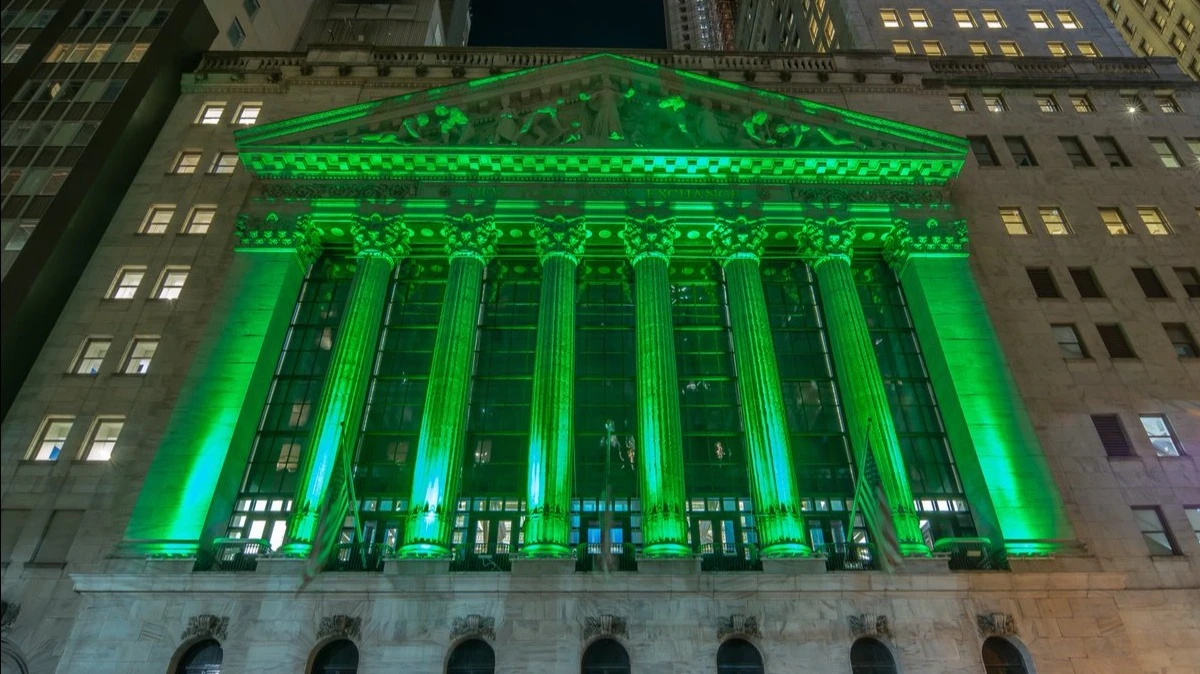
Last fall, Intercontinental Exchange (ICE), the operator of the New York Stock Exchange, decided to buy a 25% stake in Polymarket for $2 billion. ICE cited demand from customers who want to use predictive market data to inform trading strategies as one of the reasons.
Kalshi has agreements with media companies CNN and CNBC that will showcase its quotes for various events. Polymarket has a similar deal with Yahoo Finance.
Wall Street companies are also taking an active interest in prediction, the FT writes. Trading company DRW is setting up a "specialized predictive markets department" and is looking for a trader to "monitor and trade in real time" on Polymarket and Kalshi. Options trading specialist Susquehanna is looking for traders to identify "incorrect fair value", "unusual behavior" and "inefficiencies" in predictive markets.
Cryptocurrency hedge fund Tyr Capital wants to hire a trader "who already uses sophisticated strategies" on them.
In such new markets, there are many opportunities for arbitrage trades, i.e. playing the difference, Joseph Saluzzi, co-founder of Themis Trading, told the newspaper, "The big players won't be throwing darts wondering whether Trump will invade this or that country, they will be playing one market against another."
Risks and opportunities
Prediction market poses serious risks, experts warn.
The decision to allow it to operate without regulatory oversight is an invitation to insider trading and playing it safe, says Jon Treacy, publisher of investment newsletter Fuller Treacy Money: "You don't have to be a seven-footer to realize this is going to lead to serious problems."
An unknown trader's bet on Nicolás Maduro's loss of power emphasized the urgency of the insider trading issue. Following the event, US House of Representatives member Richie Torres introduced a bill to prohibit government employees with access to sensitive information from engaging in insider trading in the prediction market.
Kalshi said in a statement to CBS that its rules categorically prohibit insider trading, including by government employees.
Clyde Vanel, a member of the New York State Assembly, has introduced a bill to ban trading on many types of predictions, including sports and politics. "We're dealing with a new beast," he acknowledged.
Actions in predictive markets can be used for manipulation, including in politics and elections, warns political technologist Caitlin Legacki. She is now helping House member Haley Stevens get elected to the Senate. Stevens' chances of winning are estimated at 18%, but there are few traders with a contract for this event, Legacki explained to Politico: "By placing a $2,500 bet, I can actually single-handedly increase her chances from 18% to 55%."
Kalshi, commenting on the collaboration with news agencies, said its data will be a "powerful addition to CNN's reporting" that will help journalists cover American politics more accurately. But Legacki isn't convinced: "Corporations, AI, cryptocurrency companies, anyone can throw money at this market to inflate or distort the chances of candidates they want to either help or hurt."
Proponents of predictive trading insist that it helps fulfill the market's primary function of finding a fair price, just in a new way.
"The point of these markets is to get information, so the only reason for you to trade in them is if you think you have some information," Robert Hanson, an economics professor at George Mason University whose academic work inspired the founders of Polymarket and Kalshi, told Forbes. - People with more information should trade more and make more money, because that's how they get rewarded for it."
This article was AI-translated and verified by a human editor