The volume of short positions in Nike stock has increased 11 times. Why is Wall Street losing patience?

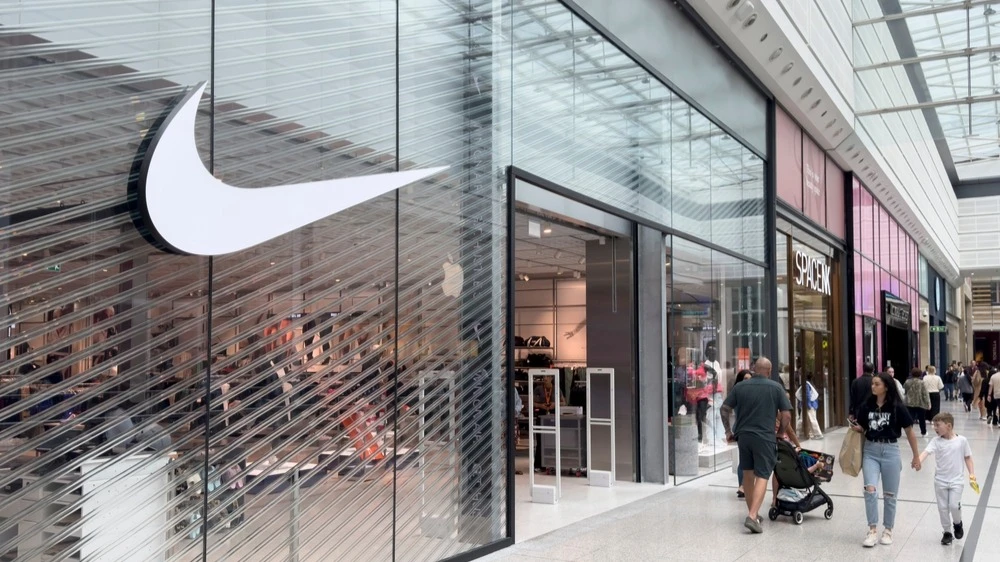
Investors are increasingly betting on a drop in Nike stock / Photo: raymond orton / Shutterstock.com
Investors are increasingly betting on the fall of Nike: the volume of short positions on shares of the sports giant has increased sharply according to the data for the beginning of Ma, writes Reuters. The retailer's share of the global market for athletic footwear has declined for the third year in a row - amid difficulties with the sale of stock and the release of new hits. The company is giving way to more aggressive competitors, and the promised reboot is still not coming - Wall Street is signaling growing impatience.
Details
By Ma 1, the volume of short positions in Nike shares had reached 4.67%, according to S&P Global Market Intelligence data cited by Reuters. That's more than 11 times the level in October 2024, when Elliott Hill took over the company amid inventory overstocking and falling demand for classic models. Nike's performance is also well above the level of bets against its key competitors, with On Running having a 1.68% short interest rate and Hoka owner Deckers at 0.52%, the agency notes.
Investor skepticism is caused by weak operating performance: Nike's share of the global market for athletic shoes in 2025 decreased by 3 percentage points, falling to 22.9%, according to data from Euromonitor International. Another blow to the giant's reputation was the achievement of Adidas: last week, an athlete wearing the German brand's new ultralight sneakers broke the two-hour barrier in a marathon. This record left Nike behind in the innovation race, explains Reuters. By comparison, Adidas' market share rose from 11.7% to 12.2% last year.
What's up with Nike stock
At the pre-market on May 6, Nike shares rose in price by 1.1%. During the session on Ma 5, their value remained virtually unchanged, and on Ma 4, quotations closed at $43.09 - the lowest level since 2014.
Wall Street's consensus forecast for the company's securities remains at Overweight, which is equivalent to an advice to buy them, but the recommendation structure has shifted to a wait-and-see stance. Over the past three months, the number of analysts suggesting a stake in Nike has fallen from 19 to 15. At the same time, the number of "hold" recommendations has increased from 14 to 18. Only two of them advise to sell Nike shares.
Why Nike is losing ground
After taking over as CEO, Hill announced the launch of a recovery program, but warned that Nike's recovery from the slump in demand would take time. He pledged to return the brand to its former dominance and influence on pricing to eliminate the need for constant sales, Reuters writes. In March 2026, amid the continuing decline in operating margins, Hill admitted the process was slower than he would have liked.
"We've been discussing the same issues since Hill's arrival. It seems like progress should have been more visible by now," Morningstar analyst David Schwartz lamented.
Nike has stockpiled surplus merchandise in recent years as demand for the retailer's classic lines, including the Dunk and Air Jordan, has cooled amid competition from newcomers such as On and Deckers. The company has been too slow to transition to new styles, Reuters explains.
A Nike spokesman said that Hill's first months at the helm of the company were spent "diagnosing problems" and that he only started implementing the new strategy late last year. "That is the proper point of reference for assessing progress, not just an 18-month window [since Hill took the position]," he emphasized in comments to the agency.
In 2025, Nike managed to introduce a successful running model Vomero 18, which brought in $100 million in the first three months. However, for the giant, whose business has historically been built on regular blockbuster sneaker launches, a single success was not enough to regain the trust of Wall Street.This year, the company is betting on technological leadership: updated versions of professional sneakers Alphafly with carbon fiber plates and the expansion of the Nike Mind line - an innovative model that, according to the brand, affects the sensory zones of the brain.
Despite staff reshuffles and a bloated marketing budget, the pace of profit recovery remains slow, Reuters notes. Business margins are under pressure due to aggressive pricing: according to M Science, while the total number of discounted items on Nike's website has decreased, the size of the discounts themselves has become significantly larger. At the end of February, about 37% of the total assortment was sold at promotions.
A space for optimism
Despite the growing market anxiety, key investors are still loyal to Hill, according to Reuters. Shareholder Simon Yeager from Flossbach von Storch notes that there is a positive trend in the areas of the CEO's direct responsibility. He attributes the current stagnation to external factors: trade restrictions and rising energy prices.
Among the positive signals, Yeager highlighted double-digit sales growth in the soccer and running categories in the North American market. However, the shareholder warned that if progress is not made in the remaining product categories during the year, management's credit will be exhausted.
This article was AI-translated and verified by a human editor