The war broke the main investment case in the luxury segment: what to buy

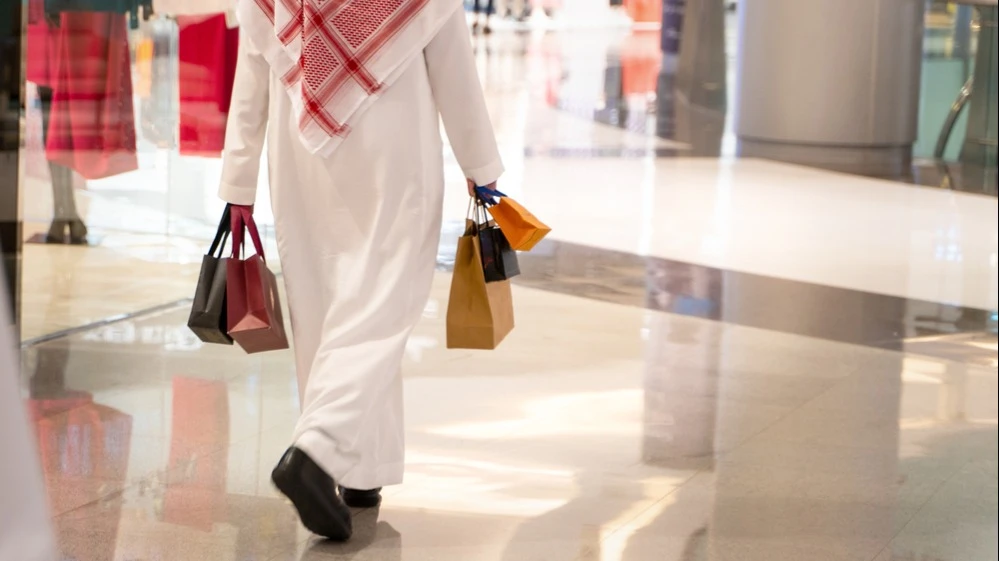
Before the war, annual sales in the luxury segment in the Middle East were growing at 8%. Photo: LiteHeavy/Shutterstock.com
Luxury can no longer be bought as a single investment basket - the war in the Middle East has returned it to the category of consumer discretionary, i.e. cyclical consumer sector. Dynamics are again determined not so much by the strength of brands as by tourist flows, currencies and consumer sentiment in the US and China. Alena Nikolaeva, an independent portfolio manager for global markets, wrote for Oninvest how to invest in luxury now that the sector is no longer unified and no longer gives a "quality premium" by default
Wartime suite
At the start of 2026, investors were betting on normalization: a partial recovery in demand in China, steady sales in the US, a major reshuffle of creative directors to bring novelty back to collections and, as a result, revitalize demand, traffic and sales - all of these were encouraging. Plus it seemed that the base would become more comfortable after the cooling of 2025, and even a moderate improvement in demand would look like an acceleration.
On February 28, the United States and Israel launched a military operation against Iran. We are not just talking about a local blow to the region, but a systemic effect. Formally, the share of the Middle East in global luxury sales is relatively small - about 5-10%. However, this region has been one of the key drivers of growth in recent years, especially against the backdrop of China's slowdown.
And as soon as it fell out, it was immediately reflected in the figures. In March, sales in Dubai's largest shopping centers dropped by 30-50% year-on-year, with traffic in some locations dropping by up to 50%. This already cost LVMH about 1 p.p. of revenue in the first quarter, and that's without taking into account secondary effects.
The key is different. Luxury is monetized not only where the client lives, but also where he spends. When a Middle Eastern customer stops flying to Paris or Milan, the slump occurs in two places at once - at home and in Europe. As a result, geopolitics hits the entire revenue chain at once: from local demand and travel retail to traffic in European flagships. This is why the effect has been so strong, and is likely to catch up in the next reports. The market is now punishing European luxury retail not for the weak first quarter results, but for the fact that the scenario that was too convenient for investors broke down. This was quickly reflected in the reports, which showed that the recovery of the sector turned out to be much more fragile than expected
Failure of the normalization scenario
The reports of LVMH, Kering and Hermes showed that there is a recovery, but it is extremely uneven and still sensitive to external shocks. Analysts at UBS had already warned before the reports that the market had already pushed the sector's valuations markedly downwards and it was trading around 15pc below its long-term premium to the market. Expected comparable sales growth for the first quarter of 2026 is around 4%, which already represents a slowdown relative to the end of 2025. At the same time, about 1pc of growth is offset by the impact of the Middle East conflict. The sector itself (ex-Hermes) was still priced at a premium of about 45% to MSCI Europe vs. 70% for the 5-year average and 60% for 15 years. That is, the market has already lowered valuations but has yet to gain clarity on a sustainable earnings trajectory.
Not everyone will win
Against this background, the most upside estimates look beautiful, but when read literally, they are more likely to be confusing. Yes, after the correction some securities became more interesting in terms of price/scenario ratio, but this is still not a story about a confirmed reversal. And there is an important caveat here: in the current regime, the market is looking primarily at the coming quarters - at the visibility of revenue, margins, and order flow, not at the abstract long-term strength of the brand.
In contrast, at the industry level, logic is becoming more selective. China is looking less and less like the old growth engine and more like a mature market, where the industry average is less and less informative and the outcome is driven by brand strength, product category and execution. Barclays, following a trip to China, notes that momentum in the mainland market in Q1 remains weak - in the low single digits - while aggregate demand from Chinese buyers is estimated to decline by around 2%. For 2026, growth is expected to be only about 1% after falling 7% in 2025 and 3% in 2024.
As a result, the market is beginning to move away from seeing the sector as a single growth story.
In other words, there is a disconnect: the market simplifies the picture to short-term signals in the moment, while within the sector the competition for share intensifies, where the few win. It is the quality of the brand, the product and the execution that is decisive: some companies, such as Moncler, Burberry or Brunello Cucinelli, are holding on while others continue to fall at double-digit rates. This is the new reality of the sector - not a recovery, but a redistribution of market shares.
Diamonds are an investor's best friend
It changes the approach to the choice of securities within the sector. That is why now it is more logical to look not at the most sagging players, but at those who still have the best profit visibility. In this sense, Richemont looks more balanced due to the high share of the jewelry segment. According to my estimates, it is here that the dynamics remains the most stable, which is also confirmed by market expectations: in the first quarter, about 9% organic growth is expected in the group and about 11% in Jewellery Maisons, while LVMH and Kering, on the contrary, are expected to decline in fashion and leather goods.
At the same time, it is important to note that the current correction was primarily caused by the heavyweights of the sector - LVMH, Kering and Hermès, while Moncler or Brunello Cucinelli confirmed the stability of the results. In the case of Richemont and Burberry, however, it is still a matter of expectations, which makes positioning more sensitive to any surprises.
But the key point is in the structure of demand. When the "soft luxury" segment faces weak volumes, disruptions in tourist flows and a clear consumer fatigue with the handbag category, jewelry becomes the most predictable growth area. And from this point of view Richemont looks interesting.
Burberry: catching an early stage reversal
The second best investment case is Burberry. The market, in my opinion, is still underestimating how much has changed. A year ago it was a reversal without confirmation, but now it is a story where internal changes are starting to convert into numbers. Current expectations are that the company is on track to recover comparable sales and improve momentum in Asia with revenues of around £2.4bn and margins of 6-7% in 2026. Importantly, the market is starting to lay the groundwork for a return to double-digit profitability through revenue growth and cost optimization. At the current YTD decline of around 10%, the paper looks closer to interesting levels, but a more compelling entry point, in my view, is forming lower around -15% YTD.
Moncler: growth against the season
The next logical bet is Moncler. The paper does look stronger than the sector, but it's important not to get confused here: it's not a proxy for a turnaround in all things luxury, but rather a very high-quality brand case in its own right. The company just reported better than expected revenue +6% YoY, or +12% in constant currency. Asia remains a key driver - around +14% with outperformance in China and Korea - direct-to-consumer brand sales are holding strong and the group's second brand Stone Island continues to grow double digits.
Given the current macro backdrop, the numbers look really strong. In essence, we see that with the right product and positioning, a brand is able to grow despite the environment. And this is another confirmation that the market has become much more selective.
LVMH: too big to grow
With LVMH, the situation is more complicated now. It is still the best bet for macro recovery of the sector, but definitely not an outright buy. Q1 organic growth was only around 1%, with the key Fashion & Leather Goods division down 2%. Pressures have been exacerbated by the war in the Middle East, with demand for some of the group's brands falling by 70% in March, while the business mix remains patchy, with individual segments growing but the scale of the company starting to play against it. Revenues are already substantially above pre-crisis levels and multiple of the nearest competitors, which makes it noticeably more difficult to maintain growth rates in the key segments. Therefore, we recommend gaining LVMH gradually, adding options if desired, if there is a bet on a recovery in the second half of the year. But it is not worth trying to guess the bottom.
Hermès: faith in old money
Hermès, focused on old-money clients whose fortunes are less vulnerable to external shocks, remains arguably the best business in the sector, but does not provide an obvious entry point. Here it is precisely important to separate company quality and timing. The first quarter was weaker than expected due to the Middle East, a strong euro and weaker tourist flows.
In Ma, we are seeing a decline in the number of tourists from the Middle East. We see this, for example, in Switzerland, in the UK, and also in Italy.
At the same time, the fundamentals remain almost flawless: a net cash position of around €12 billion, an operating margin above 40%, and sustainable growth expectations of around 10% per year over the horizon of the next few years. Because of this, the market has long perceived Hermès as a "near-perfect" asset, and even a moderate slowdown has been a reason to revise valuations. This is certainly not a short, but it is also not a case where one wants to actively buy while the premium multiple is shrinking.
Gucci: expectations instead of demand
Kering and its core brand Gucci is also a story about expectations. The problem is no longer so much the scale of the decline, but rather the fact that the brand is not seeing a turnaround. Demand for leather goods is weak, competition within the segment is only intensifying, and the new wave of collections, including the relaunch of Gucci under the leadership of Demna Gvasalia, does not seem to give a synchronized boost to all the houses, but rather intensifies the struggle for market share. And in this light, novelties work not as a general growth driver, but as a factor of demand redistribution. Already now Chanel is noticeably leading in terms of consumer interest, and this automatically complicates the recovery of other brands from Gucci to Dior. Therefore, Kering is more of an option story in case the company's new strategy starts to quickly convert into sales.
The Prada effect
The Devil Wears Prada 2 comes out on Ma. 1, and many are wondering if it could provide a new growth boost to luxury. But soberly, it's more of a cultural factor than an investment driver. The original movie coincided with a strong cycle in the industry, and it was almost impossible to separate its effect from the overall growth. So the logic is the same now: if the movie hits, it won't restart the sector, it will just reinforce existing trends. First of all, it may support categories with a strong visual and status component, and this is precisely jewelry at Richemont and individual houses within LVMH. If not, almost nothing will change for the market as a whole.
In fact, the market today is betting not on the "Prada effect" but on the normalization of the situation in the Middle East.
Before the war, Bernstein Research estimated that annual sales in the region were growing at 8%.
This article was AI-translated and verified by a human editor