"It could all come back in 24 hours": what does the luxury sector expect after the $176 billion collapse?
The big three luxury companies - LVMH, Hermès and Kering - released their first quarter reports this week, showing a decline in revenue due to the war in the Middle East

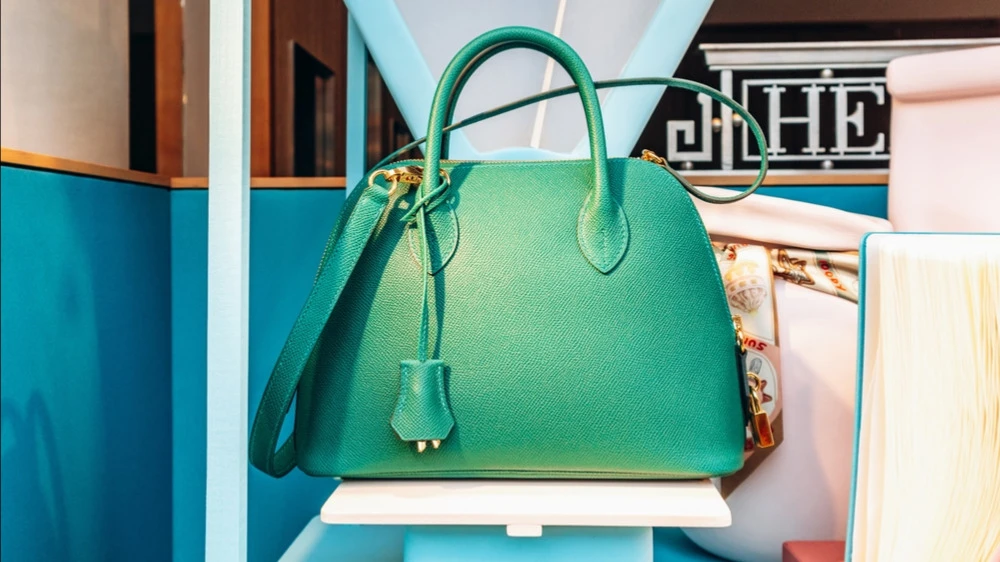
Hermès targets ultra-wealthy customers who are not concerned about rising fuel prices: WSJ sees no reason for the brand's shares to fall / Photo: Andrei Antipov / Shutterstock.com
The capitalization of ten European luxury companies in total has fallen by $176 billion since the end of last year amid the U.S. war with Iran, Bloomberg calculated. Three major luxury goods manufacturers reported a drop in revenue this week: sales were down not only in Dubai, but also in the regions where Middle Eastern shoppers flew to for shopping. Some stocks have sagged so badly that there is an emerging argument for buying on the downturn, notes The Wall Street Journal.
Details
Because of the war in the Persian Gulf, LVMH alone has lost almost $100 billion in capitalization, Bloomberg writes. Middle Eastern shoppers are among the most generous in the world: they actively spend money not only in shopping centers in Dubai, but also in Paris and Milan. Weak results from the three largest groups show how canceled flights and disrupted travel are starting to affect the entire industry, Bloomberg writes.
But the sell-off in luxury goods manufacturers' shares due to the war in Iran may have gone too far, especially in the case of the sector's strongest companies, The Wall Street Journal writes. For example, Prada shares are now trading at a P/E multiple, which shows the ratio of share price to expected annual earnings, of about 12 - the lowest level in the company's history. By comparison, since the brand's IPO in 2011, the average multiple has been around 28.
Brunello Cucinelli, a "quiet luxury" brand popular among tech billionaires, also suffered due to negative sentiment in the sector. Despite a rise in quotes in recent days after the release of strong results with a 14% increase in revenue in the first quarter, the stock is still trading at a discount relative to its historical levels, WSJ writes.
Hermès and LVMH shares are trading about 20% and 15% below their average multiples over the past ten years, respectively, the publication notes. Usually these securities are perceived as "defensive" during periods of weak markets, so the current discounts look atypical, WSJ writes. Hermès targets ultra-wealthy clients who care little about rising fuel prices, and their spending is usually cut only when the stock market falls. So far, that hasn't happened - the S&P 500 index is once again trading at an all-time high, WSJ emphasizes.
At the same time, the publication notes that investors have been actively buying shares of Kering (owner of Gucci) and Burberry in the past year in anticipation of a successful turnaround of the business. "Until there are clearer signs of progress, however, it may be wise to stay away from them," the WSJ warns.
What happened in the luxury sector
The "big three" luxury companies released their first quarter reports this week, showing a decline in revenue due to the war in the Middle East.
LVMH, which owns Louis Vuitton and Christian Dior brands, had the worst first quarter in the company's history, according to the report, Bloomberg writes. The war reduced the group's organic growth by about 1 p. p. Total sales fell by 6%. LVMH shares have lost 25% since the beginning of the year.
Hermès, usually considered the most resilient company in the sector, also disappointed investors, according to Bloomberg: sales in the Middle East region fell by 5.9%. In France - where more than half of Hermès' business is tourism-related - they were down 2.8%. Although the Middle East region itself provides about 4.4% of Hermès' total revenue, customers from it account for about 7% of sales as a whole Just on Wednesday, the market value of Hermès fell by almost $20 billion, with shares falling at a time up to 14%. The securities have lost 22% of their value since the beginning of the year.
Kering Group's retail revenue in the Middle East fell 11% in the first quarter. Gucci's comparable sales for the quarter fell 8%. The war in the Middle East had a negative impact of about 1 percentage point on Kering's total sales, the company said. The company's stock has lost more than 18% since the beginning of the year.
In addition to clothing and handbags, the luxury watch market is also feeling the cooling demand in the Middle East. Breitling CEO Georges Kern told Bloomberg that the company has temporarily adjusted shipments to the region due to a lack of tourists and a reduction in the number of flights. According to him, some price segments, such as the middle segment, are suffering more than others.
Can sales recover?
While the direct impact of the conflict may be temporary, its indirect effects are likely to be longer-lasting: rising food and energy prices are expected to reduce the purchasing power of consumers seeking luxury goods, wrote Berenberg analyst Nick Anderson. This will "intensify the spending pressures in the luxury segment that began after the Covid-19 pandemic," he argued.
Despite the negative backdrop, Hermès has signaled that the situation is beginning to improve: according to Eric du Algouet, vice president of finance at Hermès, sales in the Middle East are beginning to recover in the current quarter, Bloomberg writes.
Breitling's Kern also remains optimistic about the region's long-term prospects. "This is a region where tourism can recover literally overnight. It won't be a long process like in China, here everything can come back in 24 hours," he told Bloomberg on the sidelines of the Watches and Wonders trade show in Geneva. - Because there is a high level of security, the best infrastructure, service, tourism, hotels and airlines in the world.
This article was AI-translated and verified by a human editor