Trump threatened defense companies with a ban on dividends and buybacks. Stocks are down
Analysts don't yet understand exactly how the U.S. president can ban private companies from paying dividends

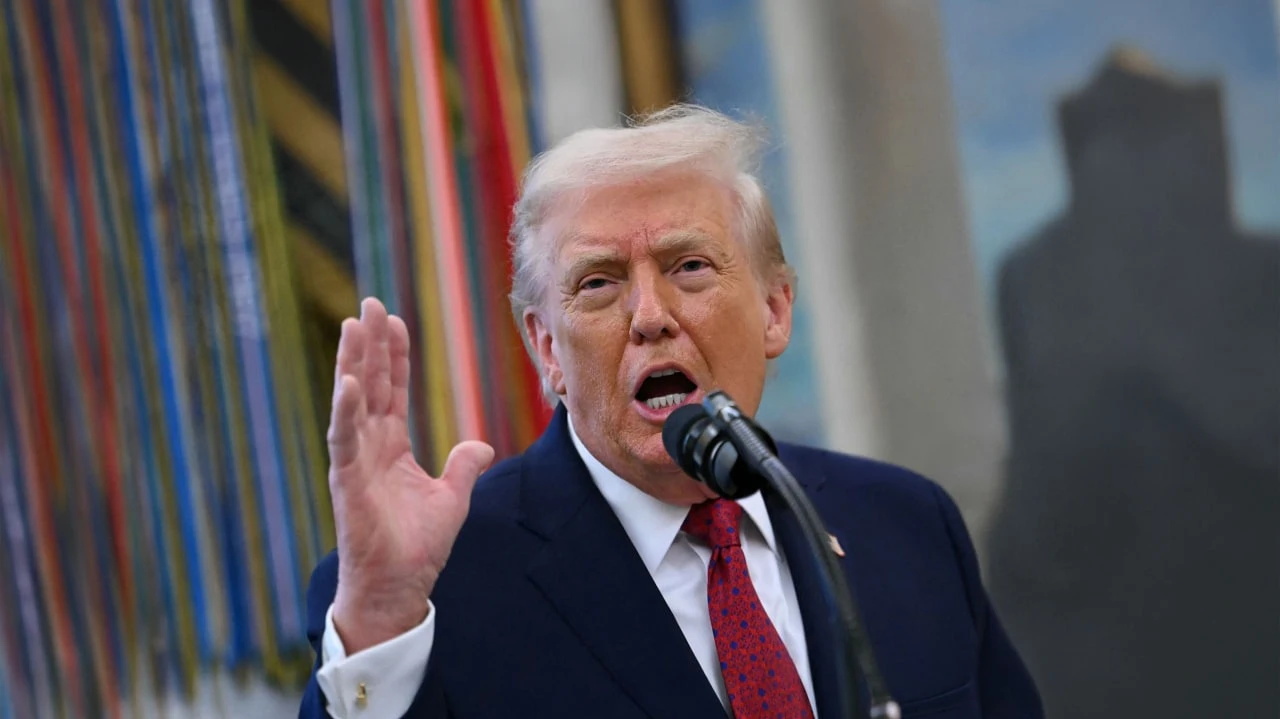
US President Donald Trump said he would not allow defense companies to pay dividends or buy back their own shares until they start investing more in factories and research. He also demanded that manufacturers deliver weapons to their main customer, the US government, faster and with higher quality. All of this triggered a sell-off in the sector. Shares of Northrop Grumman, which produces the B-2 Spirit bomber used in the strike on Iran last year, collapsed by 5.5%.
Details
The compensation of top defense company executives should be capped at $5 million until they build, "NEW AND MODERN plants," Trump wrote in a post on the Truth Social platform. He said businesses are too slow to produce military equipment and not doing a good enough job of maintaining it.
"Defense companies are paying huge dividends to their shareholders and conducting massive stock buybacks - to the detriment and detriment of investment in plants and equipment," the publication said. - [We] will no longer allow or tolerate this!"
The US President complained that military equipment is not being produced fast enough. According to him, it should be created "not with loans or government assistance" but with cash from the manufacturers themselves.
In addition, Trump threatened to cut ties with RTX, which makes Patriot missile systems, if it did not increase investment in its manufacturing facilities. The president wrote that RTX is "most aggressive in spending on its shareholders instead of the needs and requirements of the armed forces of the Xi."
That said, in a subsequent post, Trump said he has decided to increase the U.S. military budget for 2027 from $1 trillion to $1.5 trillion.
What about the stock
Shares of the largest U.S. defense contractors fell sharply after Trump's statement. Northrop Grumman securities collapsed at the end of trading by 5.5%, but jumped by more than 6.2% on the postmarket. Lockheed Martin, which makes F-35 fighter jets, plummeted 4.8% and soared 7.7% in extended trading. General Dynamics, which makes Virginia-class submarines and Abrams tanks, lost about 4.2% during the session before breaking out to plus 4.4%. RTX, mentioned separately by the president, fell nearly 2.5%, with its shares adding 3% in the postmarket.
The iShares U.S. Aerospace & Defense ETF was down 1.6% at the close and up 2.2% at the postmarket.
What it means for the investor
Jefferies analysts estimate that the largest U.S. defense contractors spent a total of nearly $50 billion on dividends and share buybacks in 2023 and 2024. By comparison, their spending on research, development and capital expenditures totaled about $39 billion over the same period, Bloomberg points out .
For the nine months ended Sept. 30, Northrop Grumman spent $1.17 billion on buybacks and paid $964 million in dividends to shareholders, CNBC calculated . Lockheed Martin's share buyback program reached $2.25 billion in the same period, and dividends reached $2.33 billion.
Northrop Grumman CEO Cathie Worden and Lockheed Martin CEO Jim Tykleit each received about $24 million in 2024, according to documents filed with the Securities and Exchange Commission. That's more than the median CEO compensation of all companies in the S&P 500 index - it was $17.5 million, Bloomberg notes.
How can a business be prohibited from paying dividends?
Trump did not specify how exactly he would enforce his demands. Earlier, Bloomberg sources reported that the president is considering issuing a decree to this effect.
Trump's announcement "raises a lot of questions," Capital Alpha Partners analyst Byron Callan said in an interview with Bloomberg. He said it remains unclear whether the restrictions will affect non-traditional defense contractors, such as software developers Anduril Industries and Palantir Technologies, and whether it will lead to an exodus of skilled managers and capital from major players in the sector.
This article was AI-translated and verified by a human editor