"Pathological optimism": three US stock market indexes hit records

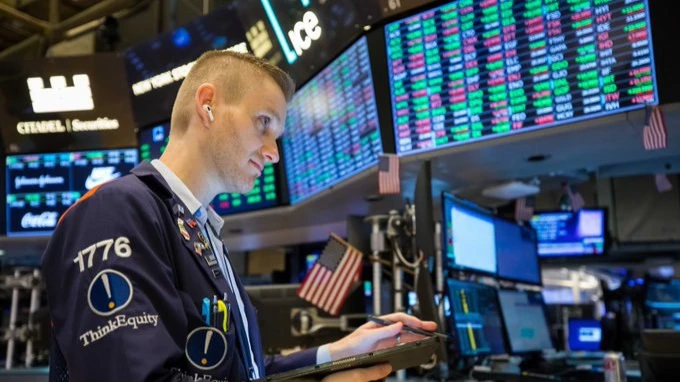
Photo: X / NYSE
Wall Street started the Memorial Day-shortened week with gains: the S&P 500, Nasdaq Composite and Russell 2000 indexes all hit all-time highs on Tuesday, Ma. 26. The market was supported by a jump in the quotations of memory chip maker Micron, whose capitalization exceeded $1 trillion for the first time, which affected the entire technology sector.
At the same time, stocks rose in price along with Brent oil and bonds. Traders' hopes for a peace agreement between the U.S. and Iran outweighed concerns over new strikes, Bloomberg writes. However, Piper Sandler expects the disruptions in shipping through the Strait of Hormuz to persist for several more months.
Details
- The broad market index S&P 500 at the end of trading on Ma. 26 rose 0.6% and reached a new record at 7,519 points.
- The Nasdaq Composite Technology Sector Index jumped 1.2 percent, also reaching a new high of 26,656.2 points.
- The Dow Jones Industrial Average was the only one of the three leading indices to go negative on Tuesday, losing 0.2%.
- The Russell 2000 index of small and mid-capitalization companies added 1.8% for the day and also hit a new record.
- Brent crude futures rose by 3.6% to $99.6 per barrel. At the same time, exchange contracts for North American WTI fell by 3% and traded at $93.7 per barrel.
What drove the market
The U.S. on Tuesday said it had struck southern Iran "in self-defense": among the targets were missile launchers and Iranian boats attempting to plant mines, CNBC reported. The price of Brent crude oil futures then pulled back from the lows reached on Monday, when President Donald Trump said negotiations to end the war were "progressing well."
U.S. Secretary of State Mark Rubio warned Tuesday that it will probably take several days to finalize the deal, Bloomberg writes. One of the contentious issues in the negotiations is Tehran's $24 billion in frozen assets: it wants half of that amount to be unblocked after the agreement is signed, the semi-official Iranian news agency Tasnim reported.
The increase of UBS target on Micron shares provoked their growth by 19%, as a result of which the market capitalization of the company for the first time exceeded $1 trillion. Analysts of the investment bank expect that the value of the chipmaker will soar by more than 100% due to probable fixed contracts with manufacturers of AI-processors, which need high-speed HBM memory. Securities of other memory chipmakers also rose in price following Micron: Seagate Technology added 4%, Western Digital - 8%. The Roundhill Memory ETF rose 14% to a record high.
The Dow Jones Industrial Average was also trading at record levels in early trading, but it was pulled down by UnitedHealth Group shares, MarketWatch writes. The health insurance giant is under pressure after Berkshire Hathaway sold all of its securities. The Dow Jones was also affected by falling quotes of Chevron and IBM and cheapening for the fourth day in a row Walmart securities, the publication notes.
What the analysts are saying
"Investors are showing an almost pathological optimism, expecting the war to end soon and things to return to the way they were before it," LNW Chief Investment Officer Ron Albahari told CNBC. He said there is a "tug-of-war" going on in the market. On one hand, traders believe in the "tsunami of capital spending that has been pushing markets up," while on the other hand, the foundation of the U.S. economy "is still relatively fragile" and inflation is "probably becoming systemic."
- "While we would like to share this optimism, there has already been enough disruption in the process of preparing an agreement between Washington and Tehran, so we will remain cautious until we see more tangible progress," Ian Lingen, head of U.S. rates strategy at BMO Capital Markets, warned Bloomberg.
- Traders shouldn't expect the U.S.-Iran deal to immediately send the S&P 500 to 8,000 points, but the reality is that eliminating distractions will allow investors to focus on earnings and growth, boosting market potential, according to Tom Essei, founder and president of Sevens Report Research. "The truce itself won't be an immediate catalyst, but it will still have a sustained positive impact on stocks and bonds as long as economic growth remains solid and inflation doesn't jump," he told Bloomberg.
This article was AI-translated and verified by a human editor