U.S. and Iran agree to open the Strait of Hormuz - NYT. Now what?

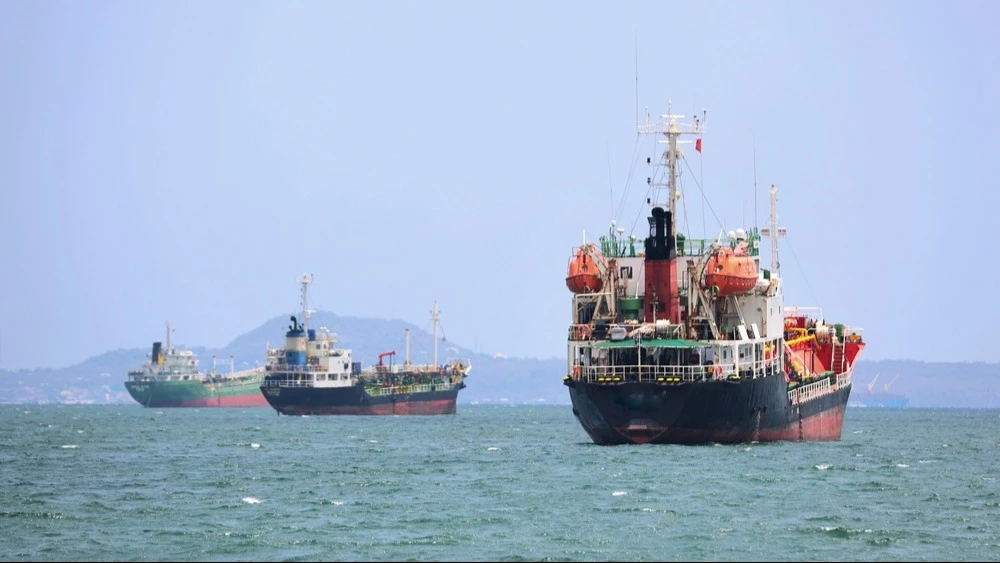
United States and Iran reach agreement in principle to resume shipping in the Strait of Hormuz - NYT / Photo: somkanae sawatdinak / Shutterstock
The United States and Iran have reached an "agreement in principle" to resume shipping in the Strait of Hormuz, The New York Times (NYT) reported, citing an unnamed U.S. official. He did not disclose details of the agreement. It is still unknown how soon shipping through this waterway will resume, the newspaper notes.
At the same time, the day before, the NYT recalls, Iranian news agencies reported that a military adviser to Iran's supreme leader had declared Tehran's "legitimate right" to "manage" and control the Strait of Hormuz - which contradicts the US position.
Nevertheless, Brent crude futures for July delivery fell just over 5% to $98 a barrel on May 25 (down to $97.1 at the session low), while U.S. West Texas Intermediate (WTI) crude for June delivery traded at $91.1 a barrel, losing 5.7%.
What now
Even if the Strait of Hormuz is officially opened soon, there are many variables that will need to be taken into account to restore shipping traffic, The New York Times points out. Among the questions to be answered are whether shipowners will believe in the strength of the U.S.-Iran peace agreement and how long it will take to clear the waters of the Strait of Hormuz and destroy the sea mines (believed to have been placed there by Iran).
Between 1,500 and 2,000 ships were blocked due to the conflict in the Middle East region.
The short answer is that "nobody knows" how soon normal tanker traffic will resume from the Persian Gulf and back and when oil prices will start to fall, Carl Weinberg, chief economist at High Frequency Economics, noted in a NYT commentary. One thing is for sure, he added: "Prices [for energy carriers] will not fall quickly".
Since the start of the war in the Middle East in late February, Brent crude prices have added more than 38%, while WTI crude has risen 40% over that period.
The U.S. and other maritime powers will need several weeks just to mobilize and deploy mine-clearing ships and equipment to the Middle East to clear the Strait of Hormuz, the International Energy Agency (IEA) reported earlier in May. Until the Strait is completely cleared of explosive devices, insurance companies are likely to require mandatory convoying of ships and additional security measures. This will inevitably lead to voyage delays and increased costs for shipping companies, the agency noted. "It will take at least two to three months to restore stable export operations," the IEA noted at the time.
The material is supplemented
This article was AI-translated and verified by a human editor