Reforms have made Nigeria the world's hottest market. What should investors keep an eye on?

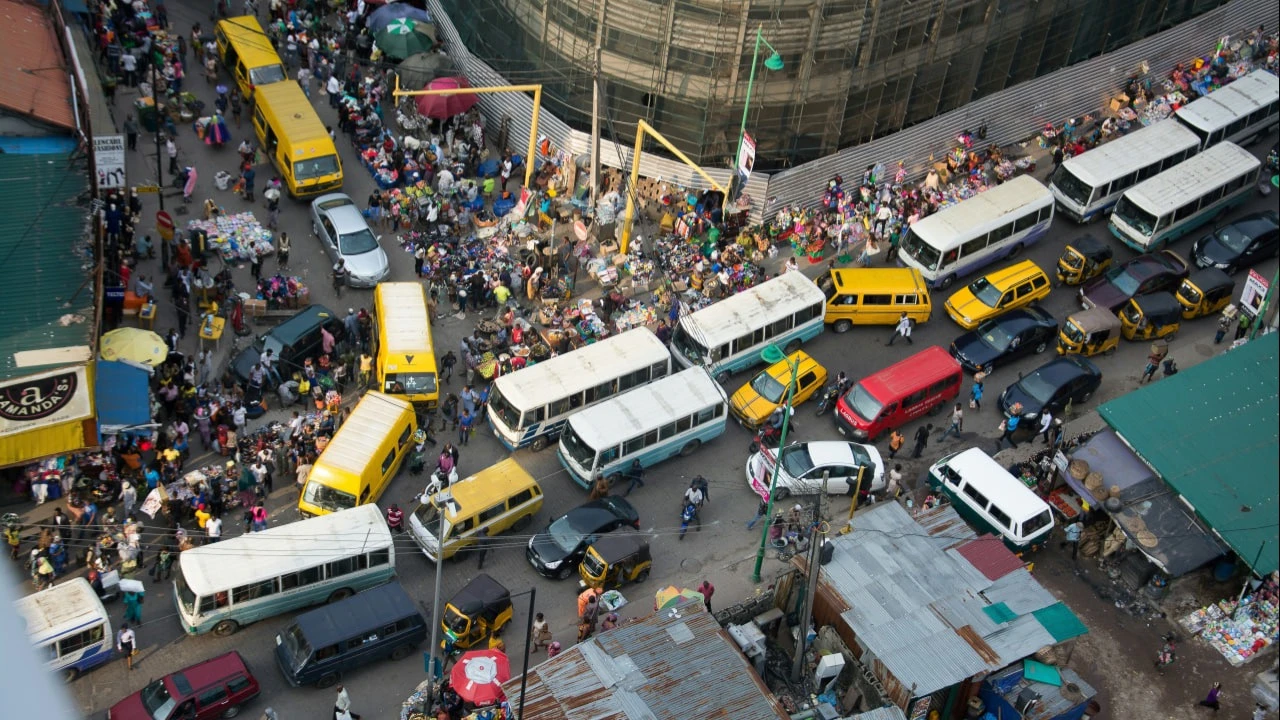
Nigeria's main stock market index has risen 68% in dollar terms this year. This is the best performance among the 92 markets tracked by Bloomberg. Photo: Opeyemi Adisa / Unsplash.com
This year, international investors have long been focused on artificial intelligence and the booming South Korean market, where chipmakers SK Hynix and Samsung Electronics have become trillion-dollar companies. But in the end, a completely different market posted the best results—Nigeria, an oil-producing country and one of Africa’s largest economies. Moreover, its success is linked not so much to oil as to reforms in the stock market and the financial sector.
Overtake the leader
From the start of the year through July 9, the NGX ASI—the index of all companies traded on the Nigerian Stock Exchange—rose 68% in U.S. dollar terms. This is the best performance among the 92 markets tracked by Bloomberg.
The rally, the agency notes, is attributable to economic reforms, rising oil prices due to the war in the Middle East, and improved access to foreign currency—a key factor for international investors when withdrawing funds from the country. Nigeria’s national currency, the naira, has strengthened by 4%.
As a result, Nigeria has surpassed South Korea—which had been the undisputed leader until now—in terms of market performance. From its peak on July 19, South Korea’s KOSPI index fell 22%, entering “bear” territory (a bear market is technically defined as a decline of more than 20%). Even Samsung’s 19-fold increase in quarterly profits failed to impress investors, as it was only 6% higher than forecasts. As a result, Samsung’s stock fell 7% on July 7, dragging down AI-related stocks not only in the domestic market but also in international markets.
"Extremely high expectations had already been priced in, so investors were 'selling on the news,'" explained Tim Waterer, chief market analyst at KCM Trade, at the time.
“Even strong results aren’t enough to satisfy the market when valuations are too high,” and the rotation out of overvalued AI stocks and into other sectors “is in full swing,” he added.
In addition, the South Korean won has fallen by nearly 5% since the beginning of the year. As a result, the KOSPI index has risen by only 66% in dollar terms.
Border Status
Just a few years ago, Nigeria was considered a pariah in the eyes of international investors. In 2023–2024, the major index providers—FTSE Russell, S&P Dow Jones, and MSCI—removed it from their frontier market indices.
This was due to the fact that the country had been experiencing a foreign currency shortage for a long time. Combined with delays in capital repatriation and foreign exchange controls, this made it difficult for international investors to bring funds in and out of the country, explains Business Insider Africa.
But President Bola Tinubu, who took office in 2023, launched radical financial reforms. The country moved toward currency liberalization, partially satisfying the pent-up unmet demand for foreign currency, while the government and the stock exchange carried out broader financial market reforms aimed at restoring investor confidence.
In March of this year, FTSE Russell placed Nigeria on review for possible reinstatement in the Frontier Markets Index. This supported stock prices, as did the rise in oil prices that began that same month, triggered by the Israeli and U.S. military operation against Iran and the blockade of the Strait of Hormuz. By Ma, according to the International Energy Agency, Nigeria had increased its oil production to 1.47 million barrels per day from 1.44 million in February.
But President Bola Tinubu, who took office in 2023, launched radical financial reforms. The country moved toward currency liberalization, partially satisfying the pent-up unmet demand for foreign currency, while the government and the stock exchange carried out broader financial market reforms aimed at restoring investor confidence.
Ironically, those same reforms delayed Nigeria’s inclusion in the FTSE Russell index, which had been expected in September. On June 1, the Nigerian Stock Exchange switched its settlement cycle from T+2 to T+1, meaning that the time required for the transfer of ownership and funds was reduced from two days to one after a trade is executed.
A shorter settlement period is traditionally considered a sign of a more developed market (the T+1 system is in effect in the United States as well), but in Nigeria’s case, it was precisely this reduction that raised concerns for FTSE Russell. This time lag gives market participants time to verify transactions, correct errors, and arrange payments, but at the same time ties up assets and capital for the period between the trade and final settlement. FTSE Russell determined that while shortening this period benefits domestic investors, it poses certain risks for foreign investors, given the need to exchange currency for naira in Nigeria’s still-inefficient market.
The provider suspended its plan to change the status of the Nigerian market in September, announcing in early July that it would conduct an additional review.
However, just one week after the report of a delay on the part of FTSE Russell, S&P Dow Jones announced that it had placed Nigeria on review for inclusion in its frontier markets index.
Unlike FTSE Russell, which focuses primarily on technical criteria, convenience, and protections for foreign investors, the U.S. provider noted general improvements in the regulatory environment. However, the consistent implementation of these measures remains the key criterion for a status review, and S&P Dow Jones will continue to monitor the progress of the reforms.
Nigeria's return to the index is likely to attract additional capital, at least from index funds, as well as from those active managers who use the index as a benchmark to compare their performance against it.
The Result of the Reforms
Participants in international capital markets are “reassessing” Nigeria, as reflected in its potential inclusion in indices and the fact that reform results are being factored into prices, Arnold Dublin-Green, managing director of RC Asset Management (a division of Renaissance Capital Africa). “We shouldn’t forget that the country is rebounding from a low base, which it reached as a result of the problems that led to its exclusion from the indices,” he noted.
But the rally in Asian markets is a completely different story, Dublin-Green points out: there, stock prices rose primarily due to the AI boom and the profits of companies tied to it —SK Hynix, Samsung, and Taiwan’s TSMC.
Unlike the Kospi, companies on the Nigerian Stock Exchange are not directly linked to AI, and investors are drawn by other factors, adds Damilola Okelaye, a trader at Stonex Nigeria Financial, based in Lagos, the capital of Nigeria. He notes that economic reforms and the expected initial public offering (IPO) of Dangote Petroleum Refinery and Petrochemicals, Africa’s largest oil refiner, have been “powerful drivers of growth” this year.
Although Africa has several major oil producers, the continent’s domestic refining capacity is underdeveloped. Nigeria, too, had been a net importer of petroleum products until now, but Dangote Petroleum, owned by Aliko Dangote, Africa’s richest businessman, has changed that.
In March, Dangote accounted for 72.3% of domestic consumption. And the increase in average daily gasoline exports to 44,000 barrels allowed Nigeria, according to Kpler, to become a net exporter of gasoline for the first time in many decades, albeit at a modest volume of 3,000 barrels for now, notes Business Insider Africa.
Dangote plans to take his company public later this year on several African stock exchanges, with the intention of offering about 10% of its shares. In April, he said that after the IPO, he plans to pay dividends to shareholders in U.S. dollars.
This article was AI-translated and verified by a human editor