Superstar forward Erling Haaland invested in assets in Norway. But he sold everything.

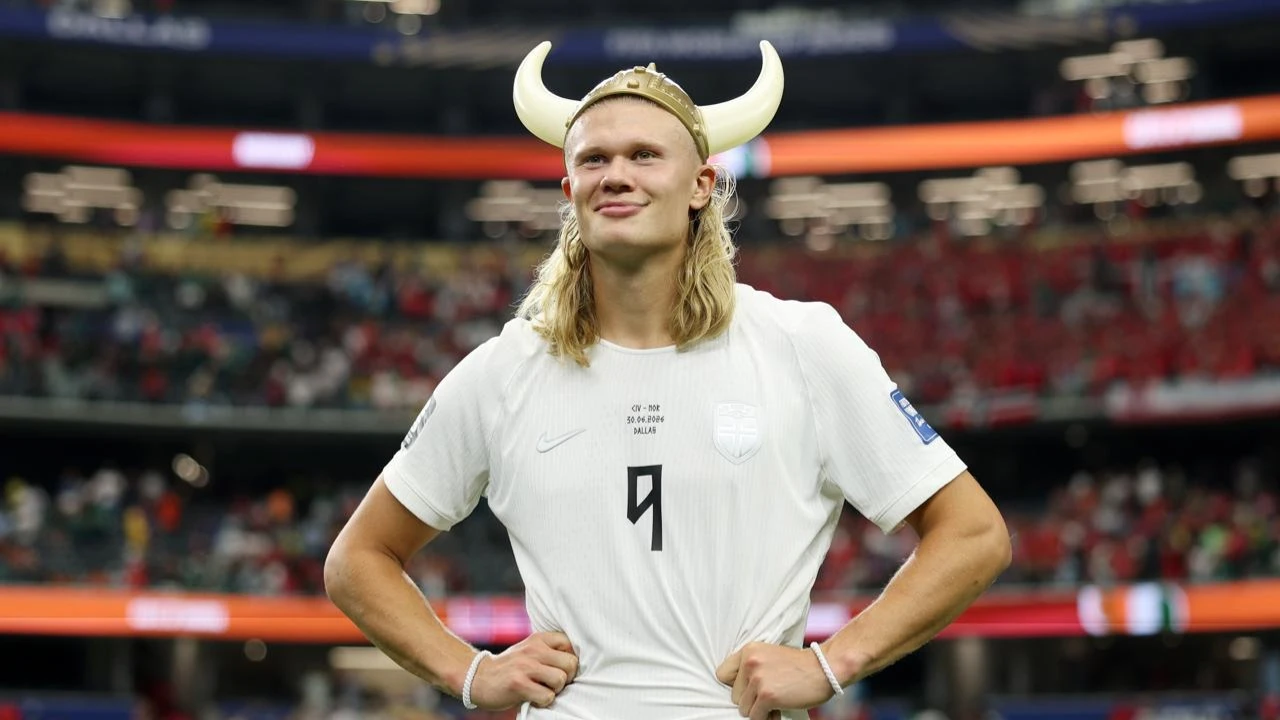
Celebrity Net Worth estimates Erling Holann's net worth at $100 million. Photo: Julian Finney - FIFA/FIFA via Getty Images
On July 11, one of the most anticipated matches of the World Cup will take place: England and Norway will face off in the quarterfinals. For Norway, this is a historic moment; the team has never reached this stage of the World Cup before. The season’s biggest star—Norway’s striker Erling Haaland, whom The New Yorker described as playing “like a Viking”—will take the field. Håland ranks fourth on Forbes’ list of the highest-paid soccer players at this tournament, trailing only Ronaldo, Messi, and Mbappé. Since 2023, he has also been an investor. What is his strategy?
A Tribute to the Motherland
Hollann never strays from the image of a simple, unassuming guy who spends his time in provincial Brune, even when he’s flying in a private jet and engaging in tax optimization, — that’s how Norwegian politician Mimir Kristjansson, who represents the district where the soccer player grew up in parliament, described his legendary fellow countryman in an interview with The New Yorker.
According to Kristiansson, it is precisely this ostentatious modesty that allows Håland to be a millionaire while still being seen by his compatriots as “folkelig”—that is, a down-to-earth guy, one of the guys.
Part of his investment strategy—also a kind of “folkelig”—involves investing in the local stock market. His first purchase was the shipping company Höegh Autoliners, whose shares are traded on the Oslo Stock Exchange. He then bought shares in Akastor, a Norwegian investment company that operates in the oilfield services sector and owns a portfolio of industrial and financial assets, as well as shares in the shipping bank Maritime & Merchant Bank. He sold nearly half of his position in Höegh just two months later, locking in a 22–30% return including dividends; the sale of the bank’s shares could have netted him about 2.4 million Norwegian kroner ($246,000 at the current exchange rate—here and below).
I got burned on the farm
One of Holann’s worst investment decisions was buying shares in the Norwegian biotech company Nykode Therapeutics. He invested in the company in February 2024, acquiring 700,000 shares. The entire purchase cost the forward approximately 12 million Norwegian kroner ($1.8 million), at 17.07 kroner per share. It was a significant investment—about 14% of his total investment portfolio, says Oninvest analyst Aldiyar Anuarbekov.
Five days after the purchase, Holann sold half of his stake; it appears that his father, Alfie Holann, became the owner.
And in November 2024, Nykode's stock price plummeted after the pharmaceutical company Genentech terminated its collaboration and licensing agreement with Nykode.

In addition to soccer, Erling Haaland earns money from endorsement deals with Nike, Breitling, Dolce & Gabbana, Visa, and others. Photo: James Gill - Danehouse/Getty Images
In April 2026, the Norwegian publication Nettavisen reported that Holann had sold his remaining shares in Nykode Therapeutics for three kroner per share—82% less than his purchase price. As a result, the sale of the remaining shares resulted in a loss of approximately 5 million Norwegian kroner for the Norwegian forward compared to the purchase price.
Norwegian-Style Plunder: An Anatomy of the Holann Family Office
Hollan makes his investments through Pillage 3, a company he registered in Norway in February 2023. It, in turn, is owned by the Luxembourg-based holding company Pillage 2, which has assets of approximately 347 million kroner ($34 million). The companies’ names translate to “plunder.” This may be a reference to the forward’s tactics on the field, where he “ravages” the opponent’s defense with his goals, or to the days when the Vikings raided England.
From a business perspective, there is also some irony in the name. Under the Norwegian Tax Code, dividends and capital gains received by an individual in Norway are taxed at a rate of up to 37.8%. If the same income is received by a Norwegian company, it falls under the equity exemption rule: 97% is exempt from income tax. Capital gains from the sale of shares within the company are no longer subject to personal income tax but rather to corporate income tax at a rate of 22%, and the proceeds can be reinvested without paying tax immediately.
Forbes estimates Erling Haaland’s net worth at $80 million, of which $60 million comes from his on-field earnings. In 2025, Kapital magazine estimated his net worth at 4.1 billion Norwegian kroner, or $418 million. According to Capology data cited by Yahoo Sports, Haaland’s base salary at Manchester City is about $645,000 per week, and with bonuses and licensing fees, it can reach $1.1 million. The soccer player is also a co-owner of Bon Dep, a manufacturer of hair accessories; in 2025, he earned 70 million kroner ($6.9 million) from hair ties and the Kknekki brand. He also has real estate holdings.
According to Pillage 3’s financial statements, which Aldiyar Anuarbekov reviewed, the company has investments in securities totaling 223 million kronor. The value of Pillage 3’s securities portfolio has nearly tripled since its founding through the end of 2024—from 85.5 million kronor.
Norwegian registries publicly list Pillage 3’s holdings in local companies valued at approximately 17 million kroner. This suggests that roughly 8% of the securities portfolio held by Holann is invested in the local market. “But it’s important to understand that the disclosure threshold in Norwegian shareholder registries applies only to large stakes. So the undisclosed portion could include both foreign securities and small stakes in local companies,” the analyst said.
According to Anuarbekov, over the same period, Pillage 3 increased its equity 9.5-fold—from 13.4 million kronor ($1.31 million) to 127.9 million kronor ($12.5 million). However, not all of this growth can be attributed to the business’s high return on investment.
The bulk of this increase was due to a capital injection. According to reports from the Brønnøysundregistrene registry, the company received an additional 90 million kroner in 2024, bringing its paid-in capital to 100 million kroner. Profit before taxes amounted to 24.5 million kroner.

A Briefcase That's No Longer Here
In April 2026, Nettavisen reported the complete sale of the Norwegian assets from Holann's portfolio.
According to *Finansavisen*, over the past 12 months, Pillage 3 sold securities worth 13.3 million kroner while purchasing only 1 million. In addition to Nykode, the company sold its stake in Akastor: 200,000 shares were purchased at 10.3 kroner each and sold for approximately 15 kroner each, generating approximately 900,000 (92,300) kroner in revenue.
The company also exited its stake in Maritime & Merchant Bank (traded on the Euronext NOTC over-the-counter market); this had been the largest position in the Norwegian portfolio: The shares were purchased at approximately 13.5 kroner each, and the company sold them for 17.5, which could have yielded up to 2.4 million kroner ($235,000).
The Oslo Børs Benchmark Index has gained about 14% since the start of the year. This year, the country’s stock market has been one of the beneficiaries of the war in Iran, according to the Wall Street Journal. By comparison, the STOXX Europe 600 has seen more modest gains—just over 8% since the start of the year. However, the Norwegian market is a relatively small market with limited liquidity compared to its American and European counterparts.
In other words, if we look at the individual trades rather than just the bottom line of the annual report, the picture is mixed: significant gains on Akastor and the bank offset the painful loss on Nykode. And the Norwegian national team’s forward also ended up in the black. Aldiyar Anuarbekov adds that the diversification of the disclosed Norwegian portion of Holan’s portfolio “appeared weak”: more than half was in the illiquid Maritime & Merchant stock, and nearly all positions were tied to the Norwegian shipping and oilfield services sectors.
Who is behind Holann's investments?
Hollan’s capital is managed directly by a group of well-known figures in the Norwegian financial market: Ole Ertvog, Harald Espedal, Odd Torlan, Dag Sigvart Koda, and Arne Fredly. The board of directors of his investment company includes his father, Alfi, and his father’s friend, former professional soccer player Egil Estestad.
It turns out that we are not dealing with a private investor with a stock portfolio, but with the owner of professionally managed capital.
The divestment from Norwegian stocks in the spring of 2026 is most likely a change in investment strategy rather than an exit from the market as such. Pillage 3’s 2025 financial statements, expected by the end of July, will reveal exactly where this portion of Holann’s investments has been redirected.
This article was AI-translated and verified by a human editor