U.S. stocks fell: the market is under pressure from fears of new tariffs and rising inflation


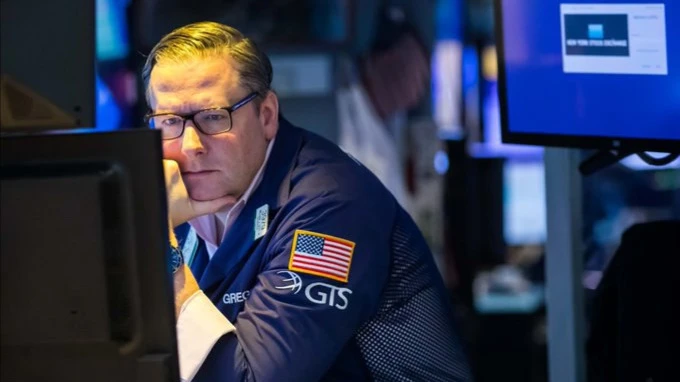
Photo: X / NYSE
There was no turnaround in the U.S. stock market. On Tuesday, November 24, the euphoria surrounding Jensen Huang’s return as CEO of Nvidia faded, and investors’ concerns about artificial intelligence came to the fore once again, triggering a new wave of sell-offs, according to Bloomberg.
Investors are concerned about the cost of AI development, the sustainability of investments in this sector, high company valuations, and the possibility of tighter regulation, the agency explains. Reports of Washington’s plans to impose higher tariffs on goods from China, the European Union, and more than a dozen other countries—as reported by the agency’s sources —have added to the pressure. The new measures could be announced as early as Tuesday.
Details
On Tuesday, the broad-market S&P 500 index fell 0.5% and has lost nearly 5% since the beginning of the month. It is on track for its worst November since the height of the 2008 global financial crisis, Bloomberg noted.
The Nasdaq Composite technology sector index fell 1.5%; for November, it is down 6.7%. Shares of chipmakers fell particularly sharply on Tuesday: the Philadelphia Semiconductor Index, which tracks semiconductor companies, plummeted 7.6%. It is now 40% below its June high.
Nvidia’s stock price plummeted 5.9% following Monday’s historic rally. The agency explains that investors’ initial enthusiasm over Jensen Huang’s return as CEO has faded. Market participants must take into account that the company’s board of directors and U.S. authorities are still investigating whether the head of the leading chipmaker has been the target of a foreign spy, Bloomberg explains.
Anthropic's stock fell 6.5% and traded below its IPO price for the first time since going public.

Investors are seeking protection
Blue-chip index The Dow Jones Industrial Average was the only one of the three key benchmarks of the U.S. stock market to close higher on Tuesday—up 0.8%—and even surpassed the psychologically important 50,000-point mark. It was buoyed by gains in the shares of Nike, Amgen, Johnson & Johnson, and Salesforce.
Defensive stocks, particularly those in the healthcare sector, led the market, MarketWatch noted. This sector, as part of the S&P 500, rose 2.9%. Companies in the healthcare sector or those that sell essential goods tend to have relatively low market valuations and generous dividends, according to Bloomberg.
What should we prepare for next?
"The chances that Friday marked a turning point aren't particularly high. “We doubt the S&P 500 will return to its early-October peak anytime soon,” Jonas Goltermann, chief financial markets economist at Capital Economics, told Barron’s. In five out of 11 cases where the index fell at a comparable rate, the decline subsequently turned into a bear market. In four other cases, it came very close to one.
“It’s enough to make your head spin, the way everything is changing from one day to the next,” admitted Adam Phillips, managing director of portfolio strategy at EP Wealth Advisors. He’s in no hurry to buy stocks on the dip just yet. “Nothing has changed significantly since Monday, but the danger hasn’t passed yet. Investments in AI continue to raise a lot of concerns, and the market still has to come to terms with all this uncertainty.”
Matthew Tuttle, CEO of Tuttle Capital Management, noted that he uses any pullback as an opportunity to sell shares. “Traders are beginning to realize that Jensen Huang’s return won’t save AI,” Tuttle said. He pointed out that Nvidia’s CEO and the entire company remain under close scrutiny: “The investigation is ongoing. There are still many questions regarding Huang himself and how the chipmaker handles its accounting.” To protect his portfolios from further declines, Tuttle is buying put options on the VanEck Semiconductor ETF, which includes shares of leading chipmakers, including Nvidia, AMD, and Intel.
The return of tariffs to the agenda has once again sparked concern among market participants about their impact on economic growth and inflation. “With so much uncertainty surrounding AI right now, the last thing Wall Street wants to hear about is a trade war,” said Charles Lemonides, CEO and portfolio manager at ValueWorks. “Investors will be spooked by any news they perceive as a threat to the economy or corporate profits.”
Traders shifted their focus to defensive-sector stocks ahead of a key U.S. inflation report, MarketWatch notes. On Wednesday, October data on the Personal Consumption Expenditures (PCE) price index—a key indicator tracked by the Fed—will be released. Kevin Gordon, head of macroeconomic research and strategy at Charles Schwab, believes these figures will be crucial. This is the final PCE release before the Fed’s December rate decision.
According to the Cleveland Fed’s estimate, the index may have accelerated from 3.6% in September to 3.8%. Core inflation is projected to have risen from 3.1% to 3.2%, Barron’s reports.
This article was AI-translated and verified by a human editor