Volkswagen plans to cut 50,000 jobs. What does this mean for investors?
The company's stock in the U.S. posted its best performance in 3.5 years

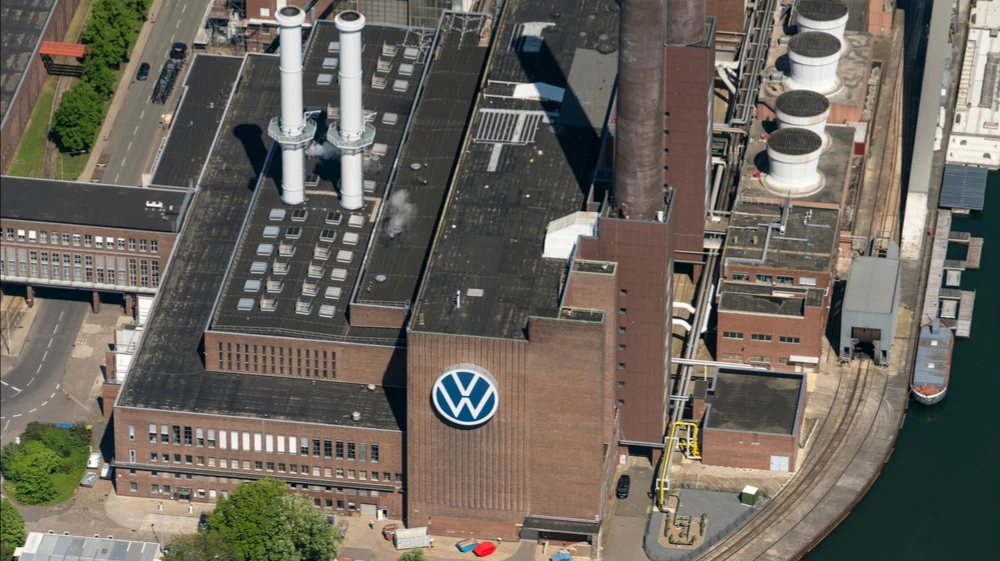
Volkswagen has acknowledged that its excess production capacity in Europe currently stands at about 500,000 cars per year / Photo: Aerovista Luchtfotografie / Shutterstock.com
The supervisory board of European automotive giant Volkswagen—which also owns the Porsche and Audi brands—has approved a large-scale reorganization that calls for the elimination of an additional 50,000 jobs, as well as a significant reduction in the number of vehicle models and production capacity. The company has dubbed this the “Future Plan,” and its announcement led to an 8.7% rise in Volkswagen shares on the U.S. over-the-counter market—the strongest performance since March 2023, according to Bloomberg.
Details
The plan unveiled on Thursday doubles the workforce reductions agreed upon within the Volkswagen Group starting in late 2024. It also calls for the possibility of cutting the company’s model lineup by nearly half by 2035. The elimination of an additional 50,000 jobs represents about 8% of VW’s global workforce as of the end of last year, Bloomberg notes.
In 2024, the Volkswagen Group had already agreed to cut approximately 50,000 jobs in Germany by 2030, including 35,000 at Volkswagen AG itself.
"Against the backdrop of intensifying global competition, shifting demand, and technological changes in the automotive industry, consistently aligning headcount with economic realities is of fundamental importance," the company said in a statement.
The VW Works Council, which represents the interests of employees, attempted to soften the perception of potential layoffs. It stated that the figure of 50,000 is an estimated benchmark derived from Volkswagen’s goal of achieving 9% operating profitability by 2030, rather than a fixed target for headcount, according to Bloomberg.
A council representative also stated that the current agreements continue to rule out forced layoffs at Volkswagen through the end of 2030. The unions acknowledged that Volkswagen needs to cut costs further, but opposed plant closures and plans to spin off parts of VW’s core business, Bloomberg noted.
What does this mean for an investor?
Failure to adopt the cost-cutting plan could spell big trouble for the auto giant. In a letter to Volkswagen’s chairman, seen by the Financial Times, Union Investment—one of Germany’s largest asset managers—warned that the automaker’s failure to improve profitability could jeopardize its investment-grade credit rating.
“Unless the financial situation improves dramatically, Volkswagen’s bonds will be reclassified as high-yield bonds,” Moritz Kronenberger, a portfolio manager at Union Investment who signed the letter, told the FT. High yields indicate that the bonds are trading at a low price.
The approved cost-cutting plan strengthens the position of VW CEO Oliver Blume in pushing through reforms at a time when Volkswagen is facing high costs, weak demand, and intensifying competition—primarily from Chinese automakers—Bloomberg explains. However, the plan does not call for the immediate closure of any plants. Volkswagen acknowledged that its excess production capacity in Europe currently stands at about 500,000 vehicles per year. The company stated that the plants in Emden, Hanover, Neckarsulm, and Zwickau do not yet have competitive production plans for the future after the current models are phased out between 2031 and 2034. Volkswagen intends to explore alternative uses for these facilities.
Blume previously stated that Volkswagen can no longer afford to maintain its current scale of spending while simultaneously financing investments in electric vehicles, batteries, and software, according to Bloomberg. As part of the reform, Volkswagen aims to bring its operating margin to 9% by 2030, with annual sales of about 9 million vehicles. In addition, the company plans to allocate €135 billion to capital expenditures, research, and development between 2027 and 2031.
This article was AI-translated and verified by a human editor