"Volumes Without Prices": Why Analysts Expect the End of Superprofits for "KazMunayGas"


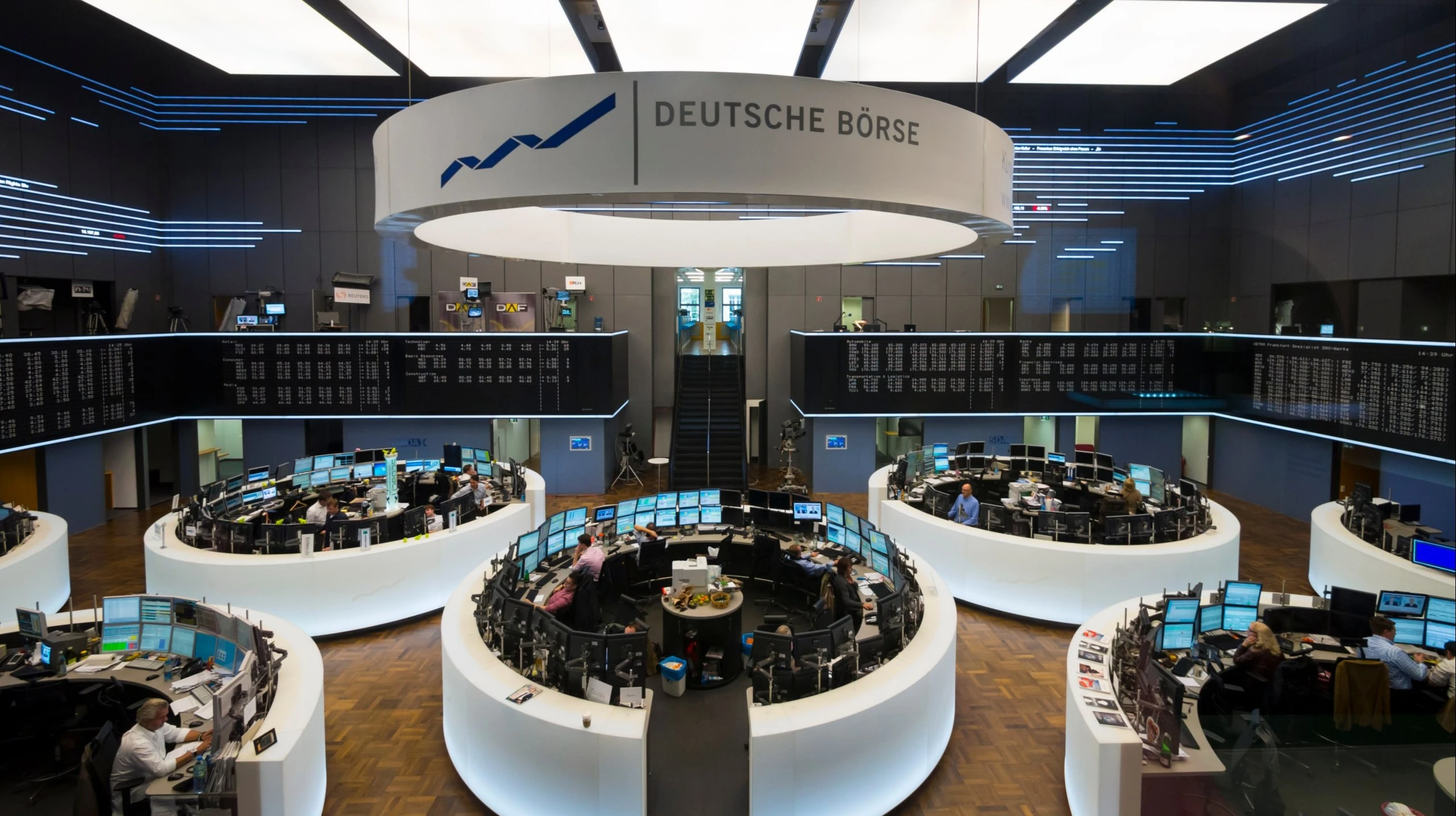
Analysts believe that KazMunayGas shares have run out of room to grow / Photo: Shutterstock.com
Investment bank WOOD & Company has revised its forecast for KazMunayGas securities, raising the target price to 34,900 tenge per share ($77.06 at the National Bank of Kazakhstan’s exchange rate as of November 5, 2026), which implies a decline of more than 2% from current levels. The bank maintained its “hold” recommendation.
“KazMunayGas is reaping the benefits of windfall profits in 2026, as its profits are highly sensitive to crude oil prices,” analysts write in a report titled “Return to Normal.” Brent crude prices have averaged around $90 per barrel since the start of the year—$20 higher than in 2025—which is entirely due to the conflict in the Persian Gulf. If oil from that region had not been blocked, prices would have remained low in 2026, they believe.
As a result, over the past 12 months, the price of KazMunayGas shares has risen, contrary to the investment bank’s expectations, by more than 60% as of the review date, from 22,118 to 35,700 tenge (from $48.83 to $78.82) per share. The company’s EBITDA in 2026 will be 88% higher than last year, analysts write, primarily due to oil prices and, in part, thanks to high production volumes.
Wood&Company is an investment bank focused on the markets of Central and Eastern Europe, as well as emerging markets. Its headquarters are located in the Czech Republic. The company served as a joint bookrunner for the initial public offerings of Air Astana, Kaspi.kz, and NAC “Kazatomprom.”
Drivers of Production
According to experts, oil prices will fall in 2027: the average annual forecast for Brent prices in 2026 is $89.1 per barrel, $75 in 2027, and $80 in 2028. “We expect oil prices to decline, based on the assumption that crude oil flows from the Persian Gulf will normalize. The reason for the bearish forecast is rising production outside OPEC: after leaving the cartel, the UAE is working to increase its production capacity.”
Analysts predict that the coming year will bring “volumes without prices” to KazMunayGas, leading to a 29% decline in production EBITDA compared to 2026. In 2027, production will grow by 9%, and in 2028, by 1%.
In 2027, production will grow by 9 percent, and in 2028, by 1 percent. Analysts attribute this growth primarily to the resumption of operations at Tengiz following technical issues and the expansion of other projects. At Kashagan, additional gas processing capacity should allow for an increase in oil production of 20,000–25,000 barrels per day; an increase in gas supplies from other fields is also expected.
Kazakhstan’s commitments to OPEC+ could hinder further growth in production: its quota is about 1.5 million barrels per day, while actual production stands at around 1.8 million. However, analysts note that the largest fields are being developed in partnership with foreign companies, and the contracts do not provide for government-imposed production limits.
Market Status
WOOD & Company significantly raised its EBITDA forecast for KazMunayGas for 2026 from 2.82 trillion to 3.43 trillion tenge, but lowered its forecasts for 2027 from 3.45 trillion to 3.16 trillion tenge, and for 2028 from 4.07 trillion to 3.7 trillion tenge.
Since the net debt-to-EBITDA ratio is currently less than one, KMG will be able to allocate at least half of its free cash flow to dividends in accordance with its dividend policy—which suggests a yield of 6.7% for 2026–2028. The projected net debt-to-EBITDA ratio is -0.39 in 2026, -0.77 in 2027, and -1.06 in 2028.
KazMunayGas’s price-to-earnings (P/E) ratio will decline from 9.1 at the end of 2026 to 6.8 by the end of 2028, and the enterprise value (EV) to EBITDA ratio will fall from 6 to 4.8. This decline is primarily due to expected profit growth while the stock price remains unchanged: analysts forecast KMG’s net income at 2.39 trillion tenge ($5.28 billion) in 2026, 2.42 trillion ($5.34 billion) in 2027, and 3.23 trillion ($7.13 billion) in 2028.
Compared to international oil and gas companies, KazMunayGas is valued at roughly the same level based on its 2026 P/E ratio, and significantly lower based on its 2028 P/E ratio. Based on EV/EBITDA in 2026, KazMunayGas is trading at a premium to the median of comparable companies, and only by 2028 is this metric expected to decline to the median level.
Analysts attribute this discrepancy to the stock’s “frontier market” status and low liquidity. Only 3% of the 610 million shares are in free float, although, as WOOD & Company notes, the free float limit for strategic companies in Kazakhstan is set at 25%, so opportunities for additional offerings remain. According to the authors, combining the sale of an additional stake with a listing on an international exchange would be particularly attractive to foreign investors.
Business Threats
Among external risks, WOOD & Company notes the legal proceedings involving the Kashagan and Karachaganak fields, whose shareholders include “KazMunayGas.” “The company holds a 20% stake in Kashagan and a 10% stake in Karachaganak. A major arbitration award against these projects would have a significant impact on its balance sheet,” analysts note. In addition, Russia’s Lukoil is among the shareholders of several fields. And although the fields themselves are not subject to sanctions, projects to develop them could be delayed. For example, “Kalamkas-More – Khazar” and the “Al-Farabi” exploration project. WOOD & Company suggests that “KazMunayGas” may independently acquire the Russian company’s Kazakhstani assets, thereby increasing its stake in local projects.
Finally, analysts point out that Kazakhstan exports most of its crude oil via the CPC pipeline, which runs through Russian territory. The volume of oil transported via the alternative Baku-Tbilisi-Ceyhan (BTC) route is planned to increase to 2.5 million metric tons per year. However, this is incomparable to the more than 60 million metric tons currently transported annually via the CPC.
At the close of trading on November 5, 2026, on the KASE, KazMunayGas shares closed at 35,879.87 tenge ($79.22), down 0.26% from the previous session.
This article was AI-translated and verified by a human editor