"A Chance to Break Out of Positions": The Rally in Asia on Huang's Return Lasted a Day
Taiwan's main index fell nearly 9% during trading after rising by the same amount the previous day

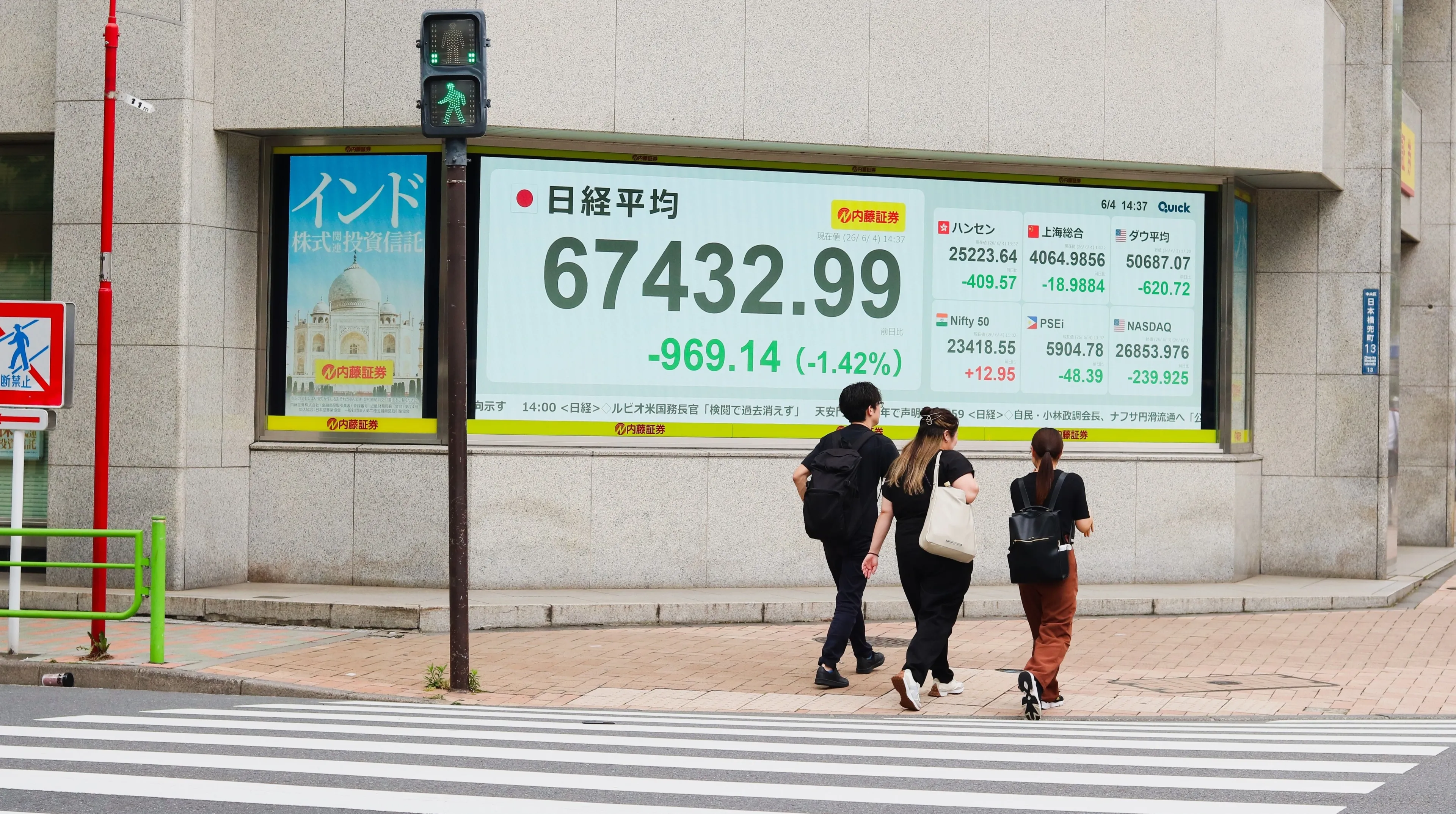
Tech stocks in Asia plummeted on November 25 as the rally on Wall Street, fueled by Jensen Huang's return to Nvidia, ran out of steam / Photo: Ned Snowman/Shutterstock.com
Technology stocks in Asia fell sharply on November 25 after the rally on Wall Street—triggered by Nvidia co-founder Jensen Huang’s return as CEO— ran out of steam. The rally with which Asian markets had greeted the news the previous day lasted only one trading session. Investor interest in AI stocks remains fragile: they are concerned about whether there will be enough money to build AI infrastructure and how high capital expenditures will affect issuers’ profits, Bloomberg reports.

Chipmakers sent the indices plummeting
The Taiex, Taiwan’s main stock index, which rose 9% on November 24, fell 8.6% during trading on November 25 but then pared its losses. Shares of TSMC— a key contract chip manufacturer for Nvidia—briefly fell 9.4% but ended the day down 3.6%. In South Korea, the Kospi index fell 6.4% during the day, while shares of memory manufacturers Samsung Electronics and SK Hynix dropped 9.9% and 10.1%, respectively. These two companies account for about half of the South Korean market’s market capitalization, and both were among the main beneficiaries of the sharp rise in demand for data center equipment, notes the Financial Times.
The stock markets in Taiwan and South Korea, which soared on the AI boom, are now deep in bear market territory (down 20% or more from their peaks), according to Bloomberg. Volatility is also on the rise: the volatility index for Taiwanese stocks over the past month has approached its highest level since 1991. In Japan, the Nikkei 225 index fell 3.7% during trading, while shares of chip equipment maker Tokyo Electron and flash memory manufacturer Kioxia dropped 13.7% and 15.9%, respectively.
A bounce for a sell
The sell-off on November 25 was “a simultaneous reassessment of valuations and liquidation of positions,” according to Charu Chanana, chief investment strategist at Saxo Markets. “Yesterday’s rally may have been an opportunity to exit positions, rather than a signal for investors to increase their holdings again,” Bloomberg quotes her as saying. On November 24, Chanana warned that turning even a strong rebound into a sustained recovery would not be easy.
AI stocks had already begun to fall in price even before the story about Huang’s resignation, noted Liz Ann Saunders, an investment strategist at Charles Schwab, during a CNBC broadcast. According to her, the sell-off is driven by “a broader, more general trend”: Investors are concerned about capital expenditures and data center construction, the gap between how much capital costs companies and how much it generates, as well as the market’s division into profitable and unprofitable segments.
In a volatile market, Goldman Sachs traders advised clients to engage in “opportunistic trading”—trading based on the situation and adapting to current market catalysts, according to Bloomberg. This approach can help balance FOMO (fear of missing out) while maintaining good control over the risk of a decline, according to the Wall Street investment giant.

This article was AI-translated and verified by a human editor