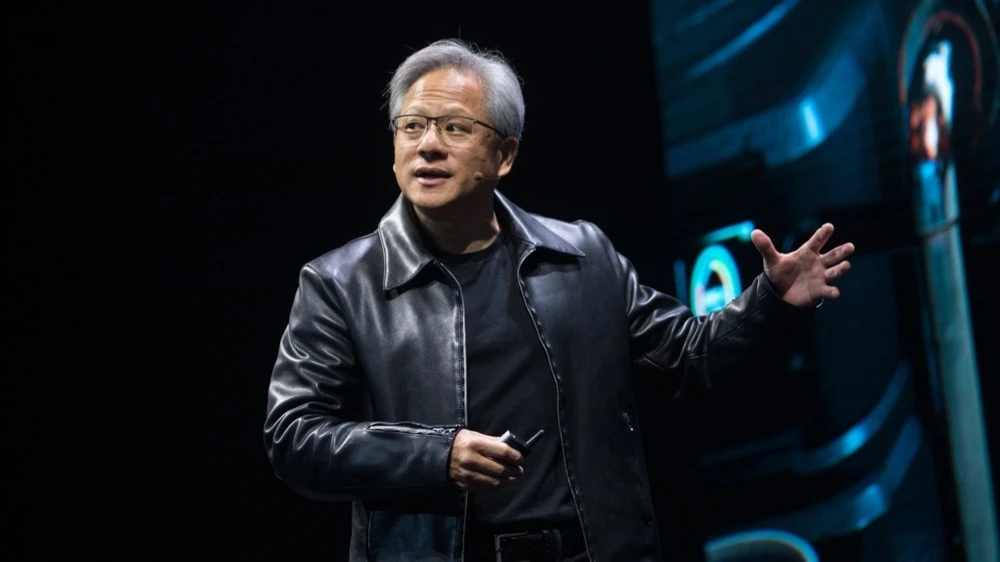
Huang's return gave Asian stocks their best day since July. Will the rally last?
The MSCI Asia Pacific Regional Index snapped its eight-session losing streak just shy of bear market territory

Shares of TSMC, the world's largest custom chip manufacturer, jumped 10% on news of Jensen Huang's return to Nvidia / Photo: Jack Hong/Shutterstock.com
Asian stocks rose on November 24 at their fastest one-day pace since July 31 after Jensen Huang returned as CEO of Nvidia, according to Bloomberg. According to the agency, shares of chipmakers—which the market views as suppliers of the “picks and shovels” for building AI infrastructure—rose more sharply than others. However, strategists at Saxo and Asymmetric Advisors doubt the sustainability of this rally.
Rise to the exchange limit
In Taiwan, many stocks rose nearly to their daily limit: the daily price fluctuation for most stocks there is capped at 10%, and nearly a third of the companies in the main Taiex index gained more than 9%, according to Bloomberg. The index itself rose 9.2% during the trading session, with more than 1,050 stocks gaining ground compared to just 10 that fell. Shares of TSMC, the world’s largest custom chip manufacturer, soared to the daily price limit.
South Korea's main stock index, the KOSPI, rose 7.6% during trading, while shares of memory manufacturers Samsung Electronics and SK Hynix rose 9.1% and 11.7%, respectively. The Japanese Nikkei 225 index rose as much as 5%, while shares of Nvidia supplier Advantest rose 16.1%.
Chinese tech companies also saw their stock prices rise, even though their shares had been falling previously: investors feared that, following the scandal involving Huang, the U.S. would tighten controls on chip exports. Shares of Nvidia supplier Foxconn Industrial Internet in Shanghai rose by the daily limit of 10%. The MSCI Asia Pacific regional index gained 3.7% during the trading session, halting an eight-day decline that had nearly pushed it into bear market territory (a 20% drop from its high), Bloomberg notes.
Fragile Trust
The return of Nvidia’s CEO “removes a major source of uncertainty” and reduces the immediate risk of disruptions to the company’s supply chain and its technology development plans, Reuters quotes Saxo Bank strategist Charu Chanana as saying. But turning a strong rebound into a sustained recovery may prove difficult, Chanana warns. According to her, “more serious questions” remain unanswered: Will investments in AI pay off? Will the largest cloud companies be able to continue spending as much on it as they do now? And are AI-related stocks too expensive?
Short sellers suffered heavy losses on November 23: the GraniteShares 2x Short NVDA Daily ETF, designed to generate twice the return from a decline in Nvidia’s stock price, fell 63%, according to Bloomberg. Once the short squeeze—a price surge caused by the closing of short positions—ends, selling pressure on chipmakers’ stocks, especially Nvidia, could easily return in the coming days, the agency quotes Asymmetric Advisors strategist Amir Anvarzadeh as saying. He attributes this risk to the “political circus in Washington,” “ongoing questions about financial reporting,” and “circular financing.”
This article was AI-translated and verified by a human editor