"A Crack Has Appeared in Amazon's Armor": E-commerce Has Let the Retailer Down
The company plans to spend about $220 billion on capital expenditures this year, while revenue from its core business is growing at a slower pace

/ Photo: B2GDrone / Shutterstock.com
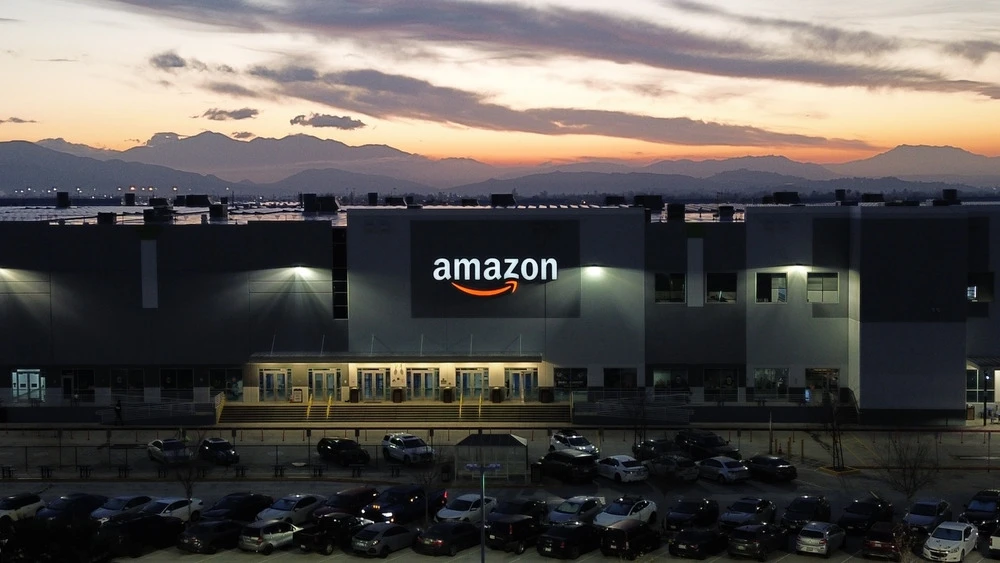
Amazon, a retailer and owner of cloud infrastructure for AI, reported higher-than-expected capital expenditures and, at the same time, a slowdown in e-commerce revenue growth. The company’s forecast for the holiday shopping season also suggests that a rapid recovery in its online business is not yet expected, Bloomberg notes. And despite record growth in its cloud business, Amazon’s revenue and profits fell short of Wall Street’s expectations. The company’s stock plummeted more than 7% in after-hours trading on October 29.
Details
In the third quarter, Amazon spent more than $77 billion on equipment and real estate, significantly exceeding analysts’ forecasts, according to Bloomberg. The company continues to build data centers and expand its infrastructure. As a result of these massive expenditures, Amazon’s free cash flow over the past 12 months was negative, totaling minus $42.4 billion. By comparison, it was positive a year earlier—$14.8 billion. The company confirmed that capital expenditures in 2026 will total approximately $220 billion.
Revenue from Amazon Web Services (AWS), the cloud division closely watched by investors, rose 39.3% in the third quarter to $46 billion. This marks the highest growth rate in nearly five years, the company notes. By comparison, AWS revenue grew by 37% in the second quarter and by 28% in the first. However, signs of a slowdown have emerged in the company’s core business segments: revenue from online sales rose by just 2%, to $68.5 billion. This is the slowest growth rate since early 2023, when Amazon was still recovering from a downturn in e-commerce following the end of the pandemic, Bloomberg points out. Revenue from Amazon’s advertising business, which is closely tied to e-commerce, rose by 11%. This is the slowest growth rate since 2020, when the company began reporting results for this segment separately, the agency notes.
Overall, the company's revenue in the third quarter rose 12% year-over-year to $201.9 billion. Analysts surveyed by LSEG had expected $202.31 billion, according to CNBC. Earnings per share fell 3% to $1.89, compared with the expected $1.96. Amazon attributed this primarily to a high basis of comparison: in the third quarter of last year, the company recorded pre-tax income of $9.5 billion from its investment in the artificial intelligence developer Anthropic.
The forecast for the current quarter, which includes the holiday sales season, also disappointed investors: Amazon expects revenue to range from $240 billion to $247 billion. The midpoint of the range—$243.5 billion—was below analysts’ consensus forecast of $244.51 billion, according to Reuters.
Amazon shares plummeted 7% in after-hours trading following the release of its earnings report on October 29, falling to $227. They closed Thursday’s regular trading session down 4.3%, at $243.8. From the start of the year through Thursday’s close, the company’s stock had risen 5.6%, while the broad-market S&P 500 index had gained more than 12%.
What Analysts Are Saying
The relative weakness of Amazon’s retail business is likely due in part to the decision to move Prime Day from July to June this year, according to John Tomlinson, an analyst at research firm M Science, whose comments were cited by Bloomberg. Nevertheless, “a small crack has appeared in the company’s armor,” the analyst noted. “A lot of attention is currently being paid to how much companies are spending on artificial intelligence,” he added.
“AWS’s accelerated growth failed to meet investors’ inflated expectations and did not allow the company to measure up to the higher bar set by its competitors—Microsoft and Google,” Sky Canaves, an analyst at eMarketer, told Bloomberg. “The improvement in the cloud division’s operating profitability was one of the positive signs, but it may not be enough to allay concerns about a sharp spike in capital expenditures and the resulting collapse in free cash flow.”
According to Canaves, the postponement of Prime Day “cannot fully explain the weak revenue growth of online retailers and the advertising business.” “This suggests that pressure on consumers may be becoming increasingly noticeable: shoppers are cutting back on spending wherever they can, and this, in turn, affects advertisers’ willingness to spend money,” the analyst added.
Context
This year, AWS’s business growth has accelerated thanks to sales of services to companies in the artificial intelligence sector, including OpenAI and Anthropic, according to Bloomberg. Both companies rely in part on Amazon servers to run their models. Amazon has also expanded its network of data centers, increasing its capacity to provide computing power to enterprise customers.
Investors’ disappointment with Amazon’s results mirrors the market’s reaction to the earnings report from its competitor, Alphabet, released on Wednesday, according to Bloomberg. Despite strong growth in its cloud business, Alphabet’s revenue figures for its search and advertising businesses heightened investors’ concerns about the threat that artificial intelligence poses to its main source of revenue. As a result, Alphabet’s stock plummeted 13% on Thursday, marking its worst trading day in history.
Microsoft, a software developer and cloud service provider that also released its earnings report on Wednesday, reported a 48% increase in cloud revenue while keeping capital expenditures under control. This helped reassure investors concerned about tech companies’ massive spending on AI. On Thursday, Microsoft’s stock fell by less than 1%.
This article was AI-translated and verified by a human editor