Microsoft beats cloud revenue expectations for last quarter
Microsoft’s cloud revenue beat expectations as spending on AI continued to rise

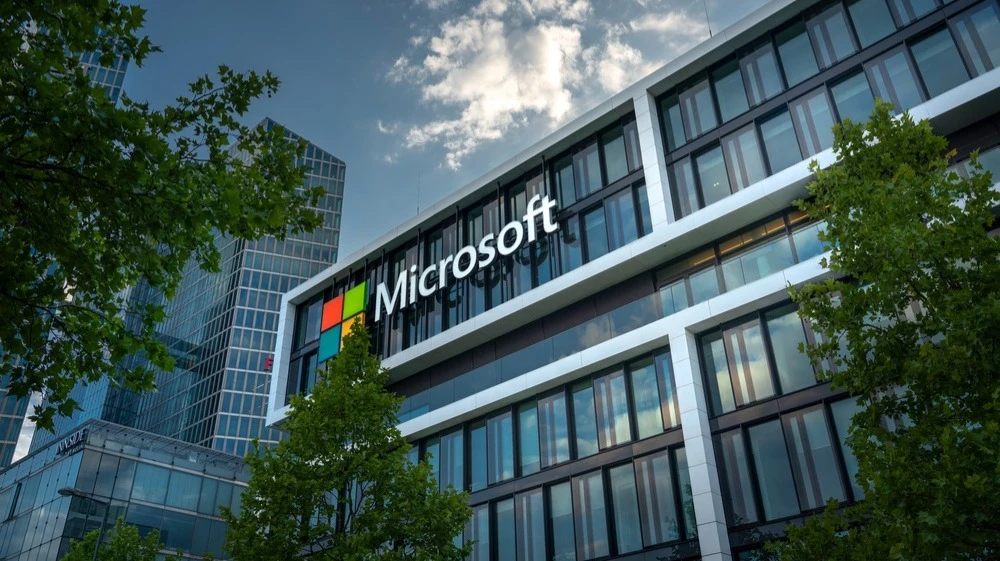
Microsoft, like its rivals, is investing billions of dollars in AI infrastructure to meet demand for computing power / Photo: PJ McDonnell / Shutterstock.com
Microsoft beat analysts’ expectations for cloud revenue in its latest quarter, offering evidence that its massive AI investments are starting to pay off as Wall Street grows increasingly wary of tech giants’ debt-funded spending, Reuters reports. The stock rose following the earnings.
Details
Revenue at Azure, Microsoft’s cloud business, grew 48% year over year to $33.17 billion in the fiscal first quarter, ended September 30. That topped the consensus estimate of $32.84 billion, according to Visible Alpha data. Azure revenue totaled $29.4 billion in the previous quarter.
Microsoft previously disclosed only Azure’s growth rates, but in September decided to report revenue in dollars to make it easier to compare the business with rival cloud providers Amazon Web Services and Google Cloud.
Microsoft’s headline revenue rose 19% to $92.3 billion versus the $90.6 billion forecast. Net income increased 32% year over year to $36.6 billion.
Quarterly capex totaled $45.2 billion, up 30% from a year earlier, though the management had forecast spending of $50 billion. Free cash flow reached $18.6 billion, well above analysts’ expectations of $8.54 billion, according to Visible Alpha data.
Stock performance
Microsoft shares rose around 4% in after-hours trading on Wednesday. The stock is up almost 9% year to date.
Context
Microsoft’s results came amid growing concern on Wall Street about the debt major tech companies are taking on to finance their AI investments. Their spending on data-center construction, equipment, and power is expected to exceed $700 billion this year.
Concerns about the cost of financing these investments have intensified in recent weeks as cash flows shrink and debt loads rise across U.S. tech companies. Troubles at neocloud provider CoreWeave and record costs to insure Meta’s debt against default have added to those concerns. Last week, investors sold shares of Meta and other AI-related companies after the Facebook parent’s management raised its full-year capex guidance and announced plans to issue new shares to finance that spending.
Earlier on Wednesday, cloud giant Oracle's management stated its expectation for capex to peak in the current and next fiscal years, while pledging to raise no more than $20 billion in additional financing for AI projects through fiscal 2030. Microsoft’s management had initially guided for capex of $190 billion for 2026. The tech giant also faces the risk that autonomous AI tools could encroach on its productivity software business.
Some analysts believe Microsoft’s strong financial position gives it an advantage over rivals as AI spending rises, Reuters writes. Truist analysts point out that spreads on the company’s five-year credit default swaps, an indicator of perceived default risk, remain the lowest among the largest tech companies.
Microsoft also remains the only hyperscaler expected to generate positive free cash flow next year, while Alphabet, Amazon, and Oracle are expected to burn cash.