A Record Year and a Strong Outlook: Did Micron's Report Confirm the Sustainability of the AI Boom?

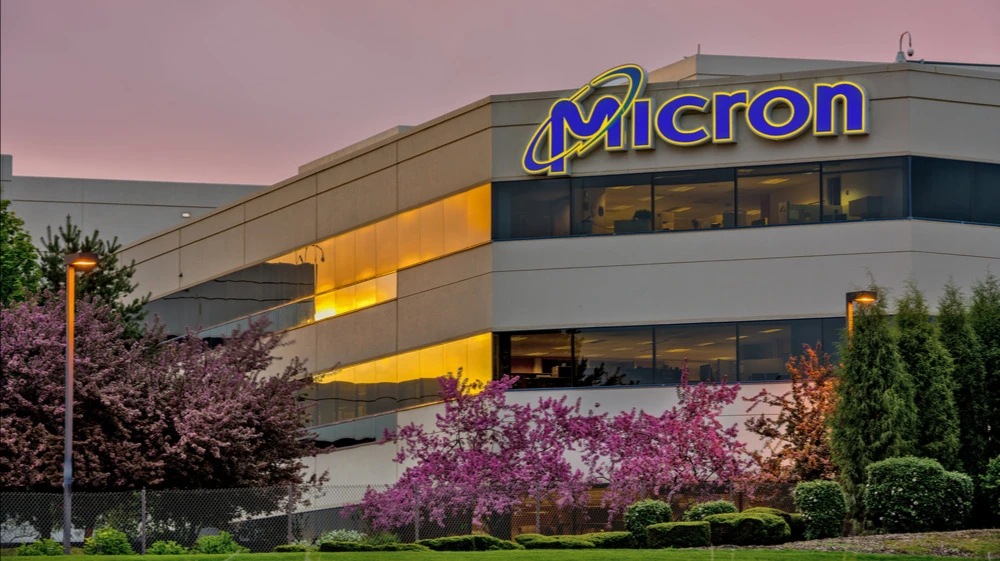
Micron's adjusted profit rose by more than 1,000% in the quarter / Photo: Charles Knowles / Shutterstock.com
Micron, the largest U.S. manufacturer of memory chips for AI, reported record results for fiscal year 2026 and issued a forecast that exceeded analysts' expectations. Its performance is seen on Wall Street as an indicator of demand for AI.
Details
In the fourth fiscal quarter, which ended on August 27, Micron's revenue increased nearly fivefold compared with the same period last year. It reached $54.2 billion, while analysts surveyed by LSEG had expected only $51.1 billion, according to CNBC. Adjusted earnings per share rose by more than 1,000% to $33.42—versus a consensus estimate of $31.61.
For the entire 2026 fiscal year, the chipmaker’s revenue totaled $133.19 billion, a 3.6-fold increase. Adjusted earnings rose more than 9-fold.
The chipmaker expects revenue of about $61.5 billion in the current quarter, which marks the start of the new fiscal year. Wall Street had forecast an average of $56.8 billion, according to CNBC. The earnings forecast also significantly exceeded market estimates.
“Micron posted record results in fiscal year 2026, and we expect fiscal year 2027 to be even stronger,” said Micron CEO Sanjay Mehrotra in a press release. “Memory expands the capabilities of artificial intelligence and enhances the competitiveness of our customers’ platforms.”
He expects the balance between supply and demand in the memory market to become “significantly tighter” in 2027 and 2028.
At the same time, the manufacturer warned that it had decided to increase pay for all employees, which would put pressure on profitability. This quarter, profitability will decline from 87% to 86.3%—a sharper drop than analysts had forecast.
Immediately after the earnings report was released, Micron’s stock rose 1% in after-hours trading, but then gave up some of its gains and even briefly dipped into negative territory. Since the beginning of the year, the company’s market value has surged 273%. At the close of the main trading session on September 30, Micron shares were the top performers this year among the components of the Philadelphia Stock Exchange Semiconductor Index, which is closely watched by investors, according to Bloomberg.
Demand for memory is growing
Micron is benefiting from a global shortage caused by unprecedented demand for memory chips needed to power models and other AI workloads, according to CNBC. The supply shortage has led to a sharp rise in memory prices and, as a result, higher prices for consumer electronics, including Apple’s iPad and MacBook. In the quarter under review, Micron’s revenue from DRAM memory rose 343% and accounted for 73% of the company’s total revenue.
Micron is the only U.S. manufacturer of high-speed HBM memory, which consists of stacked layers of standard dynamic random-access memory (DRAM). Cutting-edge graphics and central processing units from manufacturers such as Nvidia and AMD require ever-increasing amounts of HBM to handle AI workloads, but the world’s leading chipmakers are not yet capable of producing it in sufficient quantities. That is why Micron is investing $250 billion in the construction of two new manufacturing facilities.
The HBM market leaders—South Korea's SK Hynix and Samsung—are also undertaking large-scale expansions of their facilities for producing this type of memory. Of the three companies, Micron has the smallest market share.
What Analysts Are Saying
The memory chip industry is known for its cycles of sharp ups and downs, although companies are trying to smooth out this cyclicality by entering into more long-term contracts, Bloomberg notes. Judging by investors’ reaction, the report did not resolve the debate over whether Micron can build a predictable, sustainable business that is not so dependent on market fluctuations, according to Handy Susanto, a portfolio manager at Gabelli Funds.
He noted that “bears” are demanding flawless results from the company, while “bulls” are considering various scenarios for further growth,” MarketWatch reports. Nevertheless, he
told CNBC that “so far, he hasn’t heard a single negative signal that would indicate the memory market cycle might reverse and enter a downturn in the foreseeable future.”
As Jake Behan, head of capital markets at Direxion, noted, Micron’s main challenge ahead of its earnings release was not simply to post strong results. The company needed to find a way to surprise investors at a time when its stock was “trading just slightly below all-time highs.” “Micron’s outstanding quarter was already priced in,” the strategist believes.
"Investors will likely want to understand how prices affect gross profit margins and how sustainable the current level of profits is," Melissa Otto, head of Visible Alpha Research at S&P Global, told the agency.
“In our view, the outlook remains very favorable in the near term: we’re seeing strong demand and rising prices,” Bloomberg quotes Morgan Stanley analyst Joseph Moore as saying. — The discussion has definitely shifted from the question ‘How good can things get?’ to the question ‘How long can things stay this good?’”
This article was AI-translated and verified by a human editor