The Next Bet on AI: Where Billionaire Investors' Capital Is Flowing
From memory and energy to neo-clouds and medicine—which companies have David Tepper, Cathie Wood, Bill Eckman, and other managers of the largest hedge funds invested in?
Several major investors cut their investments in memory chip manufacturers in the second quarter / Photo: CeltStudio / Shutterstock.com
Nvidia CEO Jensen Huang likes to compare AI to a five-layer cake: energy forms the base, followed by chips, data centers, models, and then data and applications. The portfolios of the largest fund managers show that capital is shifting more and more toward those links in this chain that are critical to the further development of AI and where its main infrastructure constraints are currently taking shape.
In which AI segments did hedge funds invest during the second quarter?
Less memory
In the second quarter of 2026, several major investors reduced their holdings in memory manufacturers, according to hedge fund filings. David Tepper, founder of Appaloosa Management, completely exited SanDisk, which manufactures flash memory and storage devices. Steve Cohen of Point72 Asset Management sold 87% of his shares in the company. The data is based on Form 13F filings, which reflect portfolio holdings as of June 30 and do not account for transactions made after that date.
Several billionaire investors have also reduced their holdings in Micron. Cohen reduced his stake in the company by 45%, Citadel CEO Ken Griffin by 87%, and Duquesne Capital founder Stanley Druckenmiller sold his entire stake . Tepper reduced his stake by 41%, but Micron remained Appaloosa’s second-largest holding: at the end of June, it accounted for 14.57% of the portfolio.
Reducing positions may have helped avoid a summer sell-off of these stocks. In the first half of the year, Micron’s stock more than tripled in price, while SanDisk’s rose by about 800%. The rally was fueled by a shortage of AI memory, which drove up chip prices. But in July, prices fell sharply as investors questioned the validity of the high valuations and the sustainability of investments in AI infrastructure. Memory is one of the most cyclical segments of the semiconductor industry, where periods of high demand and prices can be followed by an increase in supply and a decline in margins.
The Struggle for Energy
The growth of AI requires more and more electricity, and access to it is becoming one of the key constraints on the construction of new data centers. According to the International Energy Agency, energy consumption by data centers used for AI will have increased by 50% by 2025.
Peter Thiel made a significant bet on this shortage in the second quarter: seven of the eight positions in his Thiel Macro fund—or 71.8% of the portfolio—were in energy companies. The total value of these assets was approximately $300 million.
These companies are already seeing rapid growth in demand from data centers. For example, American Electric Power expects 69 GW of new load from large customers by 2030 and plans to invest $78 billion in generation and power grids. FirstEnergy estimates potential demand from data centers at approximately 25 GW—30% more than in the previous quarter—and the company has already secured contracts for 6.4 GW.
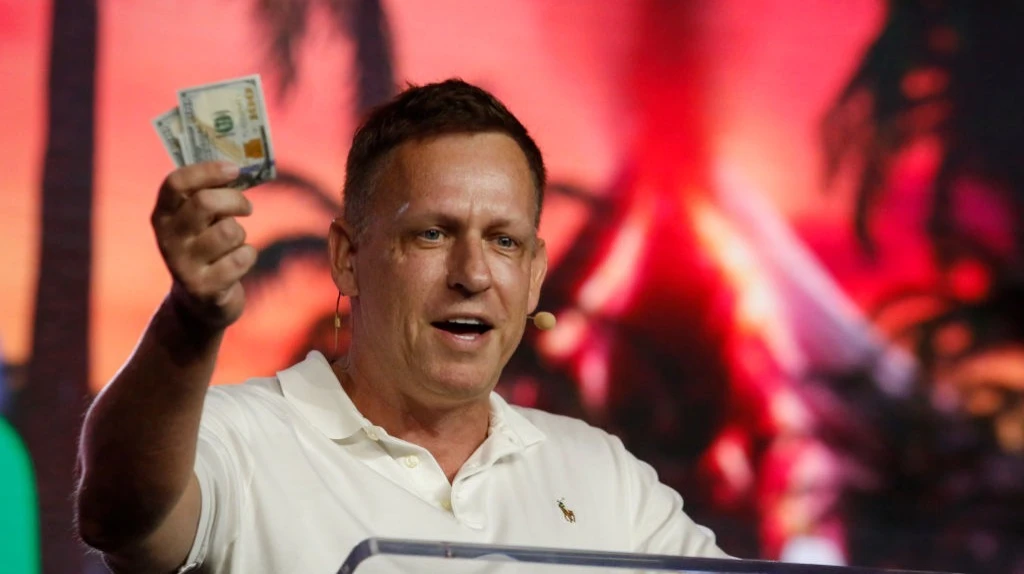
The longer-term portion of this investment is tied to nuclear energy. Thiel Macro invested $3.67 million in X-energy, the developer of the Xe-100 small modular reactors. This is the fund’s smallest holding, accounting for 0.9% of the portfolio. In the second quarter, Cathie Wood also bought X-energy shares: ARK acquired 5.4 million shares for approximately $99.4 million. As of the end of June, they accounted for 0.6% of her fund.
Investors are also drawn to former crypto miners who are gradually transitioning their infrastructure to AI computing. These companies already have facilities and data centers connected to the power grid, so they don’t have to start from scratch on one of the most time-consuming stages—gaining access to large amounts of power.
In the second quarter, Druckenmiller added three mining companies—Bitdeer, Hut 8, and Riot Platforms—to the Duquesne portfolio. In total, the fund invested approximately $122 million in these companies. Other major investors also showed interest in these stocks. The most notable bets were on Hut 8: in the second quarter, Steven Mandel’s Lone Pine increased its stake in the company to 4.1% of its portfolio, while Daniel Loeb’s Third Point increased its stake to 3.6%. Lone Pine also increased its position in Bitdeer; Howard Marks, Steve Cohen, and Ken Griffin also held shares in that company.
As of the end of June, Hut 8 reported 949 MW of contracted capacity for AI projects and estimated the base value of these agreements at approximately $26.6 billion. Bitdeer signed a 16-year, $4.7 billion contract to provide 121 MW of capacity from its data center in Norway.
Money in the Clouds
Billionaire investors have significantly increased their bets on CoreWeave and Nebius: these companies provide access to one of the most in-demand components of AI infrastructure—computing power. They are building specialized clouds based on GPU chips and leasing this computing power to AI developers and large corporate clients.
The business growth of both companies confirms strong demand. CoreWeave’s revenue doubled in the second quarter to $2.58 billion, and its contracted revenue reached $104 billion. At Nebius, revenue from its AI cloud division jumped 514% to $574.9 million. The company also signed four major agreements to provide cloud-based AI services, with an average value of over $1 billion.
In the second quarter, Steven Mandel’s Lone Pine purchased Nebius shares for the first time: the new position accounted for 7.2% of the portfolio and became its largest holding. Griffin increased his stake in Nebius by 27%, bringing it to 0.4% of his fund, while Cohen increased his to 0.2%. Tepper bought CoreWeave for the first time: the position accounted for about 1.4% of the Appaloosa portfolio. Wood and Griffin also increased their positions in this company.
Medical AI
In Cathie Wood’s ARK portfolio, several notable holdings are related to the application of AI in medicine and drug development. She believes this sector is undervalued: the medical field has accumulated vast amounts of clinical and genomic data, and AI makes it possible to analyze this data on a scale that was previously unattainable. ARK expects this to accelerate the discovery of new drugs and the development of personalized medicine.
Tempus AI, which operates in the field of precision medicine and uses AI to analyze clinical and molecular data, is among ARK’s top five holdings. As of the end of June, this portfolio was worth approximately $580 million.
Recursion Pharmaceuticals, which uses AI, automated laboratories, and large sets of biological data to develop drugs, and Absci, which uses generative AI to design proteins and therapeutic antibodies, each account for 1% of the fund’s portfolio. Schrödinger, which combines computational modeling, chemistry, and AI in the discovery and development of drug molecules, accounts for an additional 0.2%.
AI for Conservatives
For some investors, the concentration of capital in AI has prompted them to seek opportunities in other sectors. Pershing Square founder Bill Ackman articulated this logic most clearly: in his view, investors’ increased focus on AI infrastructure has made other parts of the market more attractive. That said, he has not completely abandoned his bet on AI. In the first quarter, Pershing Square opened a position in Microsoft, and in the second quarter, it increased that position by nearly 10% by purchasing approximately 553,000 shares. Microsoft currently ranks third in the fund’s portfolio, accounting for about 12% of its holdings. Ekman himself has called it one of the key assets and one of the most attractive opportunities in corporate AI. In his view, the market has overreacted negatively to competition in this sector, the prospects for Azure, and changes in the company’s relationship with OpenAI.
For Himalaya Capital founder Li Lu, nearly his entire AI exposure is in Alphabet: the company’s two classes of shares account for about 48% of the fund’s disclosed assets. In the second quarter, Daniel Loeb reduced his exposure to chip and AI equipment manufacturers and also invested in Alphabet, increasing his position nearly sixfold.
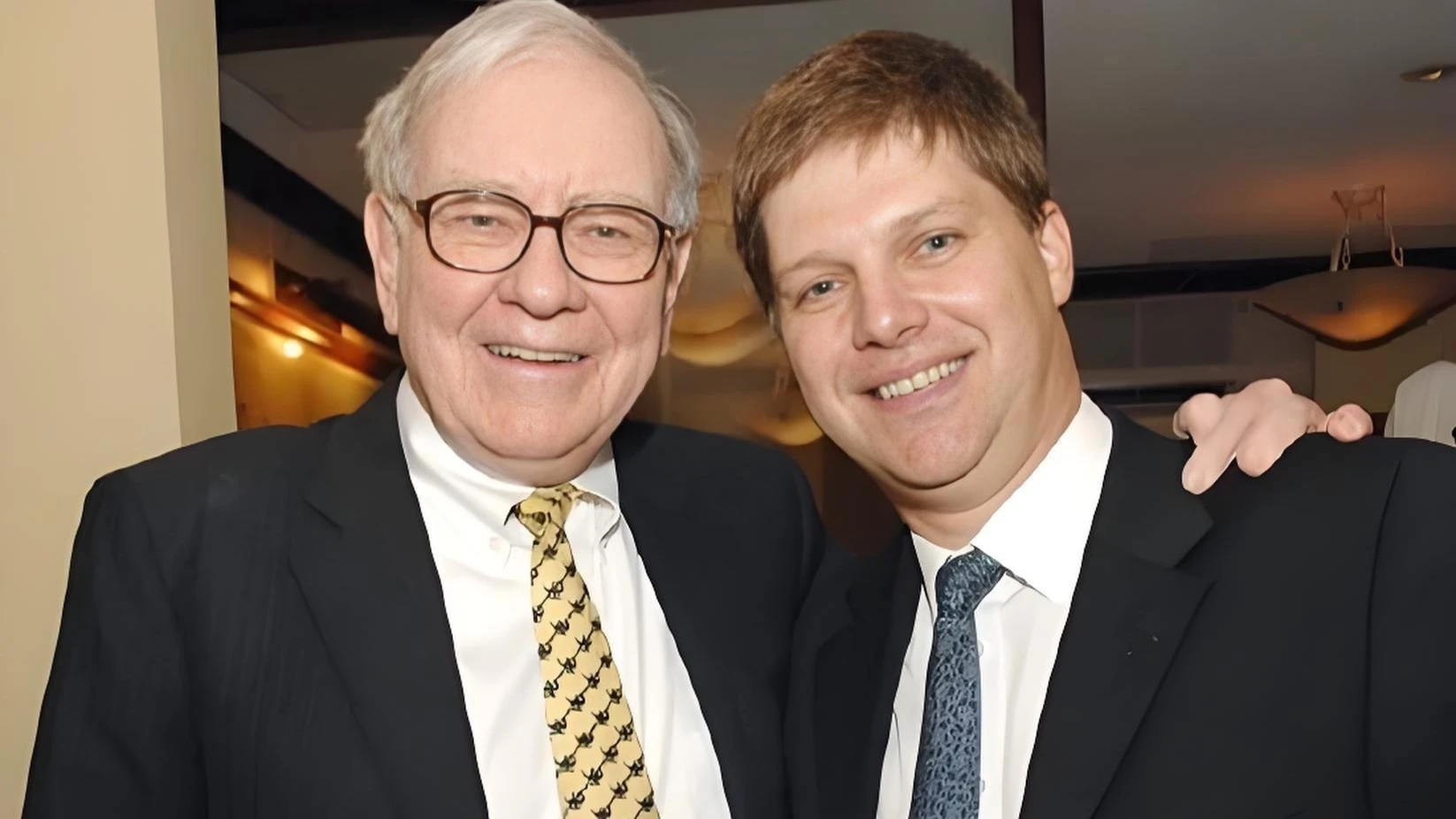
Berkshire Hathaway, which had long avoided the technology sector, also chose Alphabet. The company first purchased these shares in the third quarter of 2025. Warren Buffett admitted that he personally initiated this purchase, even though he had previously stated on multiple occasions that he did not understand AI and would not venture to predict its future development.
Under Buffett’s successor, Greg Abel, Berkshire continued to increase its stake in Alphabet: by the end of the second quarter, it had become the investment firm’s fourth-largest holding, accounting for 9.4% of the portfolio. Abel attributed the investment in the tech giant specifically to its successes in AI. “We have a pretty good understanding of how companies within Berkshire use AI and how it benefits them. That sparked our initial interest, and then we saw that Google is a significant player,” he explained.
—————
In the “Guru Portfolios” section, you can track the holdings of the world’s largest investors and funds and see how they change over time. Based on 13F filings, the service displays the largest holdings, new purchases, and changes in the weightings of individual assets, and also allows you to compare portfolios across different time periods.
This article was AI-translated and verified by a human editor