Alphabet has lost $500 billion in market capitalization. Its stock is heading for its worst day ever.

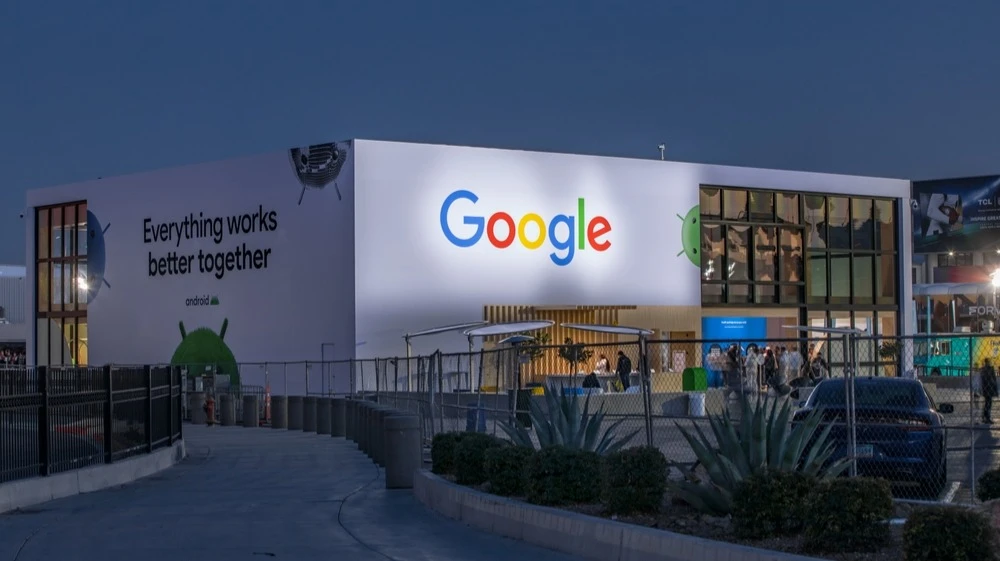
Analysts Lowered Ratings and Price Targets Following Alphabet's Earnings Report / Photo: RYO Alexandre / Shutterstock
Shares of Google’s parent company, Alphabet, fell 13% after the market opened on October 29, causing the company’s market value to drop by a record $500 billion, according to the Financial Times. Yahoo Finance notes that the company’s stock is heading for its worst day ever—Alphabet went public in 2004.
Investors are reacting to the company’s financial results released yesterday. In the report, Google’s owner stated that it spent more money than it earned last quarter and acknowledged that “AI-powered” search queries threaten the profitability of its core advertising business.
What Analysts Are Saying
— Investors have taken a critical view of the company’s massive investments in artificial intelligence. These concerns prompted Citizens analysts to downgrade their recommendation on Alphabet stock from “buy” to “hold,” according to CNBC. “Although the growth in search queries has reached a five-year high, monetization appears to be facing challenges, and search will have to contend with a high base,” Citizens analyst Andrew Boone wrote in a note to clients. In his view, Google is well-positioned to launch services based on AI agents; however, effectively shifting monetization from AI-powered search results to these agents will require careful execution. The company expects to launch a consumer AI agent by the end of the year.
— Bank of America maintained its “buy” rating on Alphabet stock but lowered its price target from $430 to $380. This implies upside potential of 17% from Wednesday’s closing price. According to BofA estimates, Alphabet’s third-quarter revenue growth from the search segment, excluding currency fluctuations, slowed by 3 percentage points compared to the previous quarter. Analysts noted that this is partly due to a higher basis for comparison, even as year-over-year growth in the number of search queries accelerated. “Google indicated that the shift of traffic to AI-powered search results was a minor negative factor in the reporting quarter, and in international markets where advertising in these results is just beginning to appear, this effect is likely to be stronger. The high comparison base will persist through the second quarter of 2027, so Google’s story may unfold in the second half of 2027,” BofA suggested. However, given the launch of ads in AI-powered search results in international markets this quarter, the implementation of more advanced AI models, and the company’s statements regarding the effectiveness of such ads, analysts acknowledged that search revenue growth could accelerate as early as the first quarter of 2027.
— BMO maintained its “outperform” rating on the company’s stock but lowered its price target for Alphabet shares from $480 to $425, implying a 31% upside. “Although search revenue was weak, the number of search queries on an annual basis grew at the fastest pace in five years—as Google expands its AI search mode globally and emphasizes its confidence that most search queries in this mode are incremental,” the analysts note. In other words, according to BMO, AI search does not take away from traditional search but adds new queries.
— UBS, which has a “hold” rating on Alphabet shares, lowered its price target from $380 to $332, implying an upside potential of just 2.2%. Analysts noted that search revenue for the past quarter totaled $63.4 billion, compared with a consensus estimate of $64.9 billion, while YouTube generated $11.2 billion for the company, versus the expected $11.4 billion. In addition to the unexpectedly weak results in these segments, Google’s management, according to UBS, was cautious about how quickly the company would begin to monetize new AI-powered search queries. “In our view, this points to a lower growth trajectory for advertising revenue than we had expected,” wrote UBS analysts.
However, despite the report disappointing investors, the most common recommendation on Wall Street for Alphabet stock is “buy”: 65 out of 72 analysts hold this view. Seven recommend “hold.”
Context
Revenue from search advertising—Alphabet’s largest source of revenue—rose 12% in the third quarter to $63.35 billion, but fell short of analysts’ expectations, putting further pressure on the company’s stock, according to CNBC. According to Alphabet Chief Commercial Officer Philip Schindler, the weakness in the search business is partly due to lower monetization in AI mode. The company is currently scaling up advertising in AI-powered search results and AI mode, including in international markets, he added.
Google's search business is facing challenges amid the rise of AI chatbots such as OpenAI's ChatGPT and Anthropic's Claude: users may be increasingly turning to sources outside of Google for information. At the same time, the company’s own chatbot, Gemini, is not keeping pace with its competitors, the TV channel notes.
This article was AI-translated and verified by a human editor