Christine Lagarde will step down as head of the ECB ahead of schedule. What should investors expect?

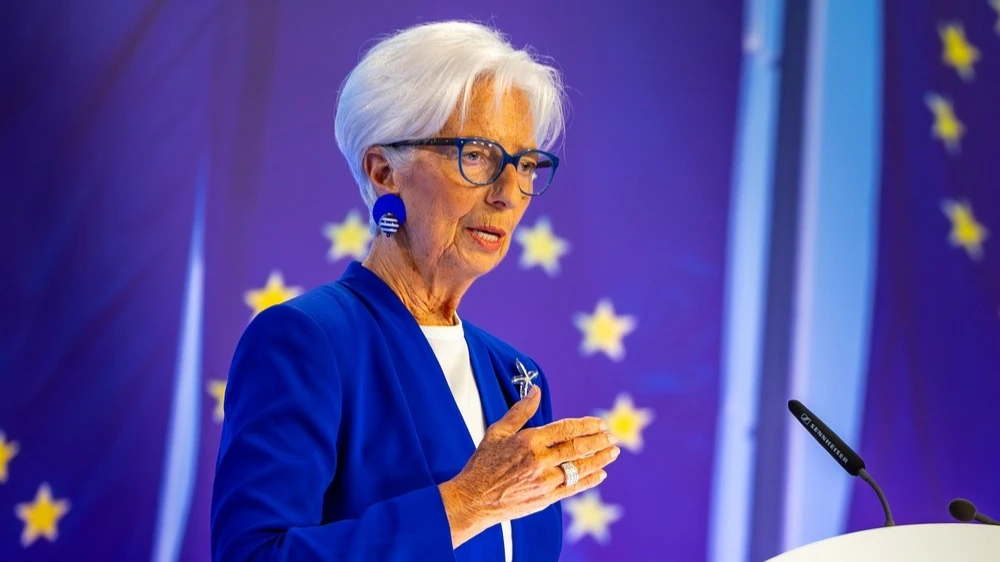
European Central Bank President Christine Lagarde announced her resignation in February / Photo: RichieSanders/Shutterstock
European Central Bank (ECB) President Christine Lagarde will step down from her post early next year, according to a statement from the regulator. Her term was set to expire in October 2027, Bloomberg notes, adding that this decision has intensified the race for one of the most influential monetary policy leadership positions in the world.
Details
Lagarde will step down on February 7, even though her term was not due to expire until October 2027. She took the helm of the ECB in 2019, succeeding Mario Draghi, and became the fourth president of the European Central Bank in its history and the second French national to hold the position.
Lagarde told the ECB’s Governing Council that she is stepping down to be able to play a more active role in matters such as events in France, Bloomberg sources reported. Lagarde has not officially announced her future plans, The Wall Street Journal notes. She had previously discussed the possibility of becoming chair of the World Economic Forum, the newspaper reports.
The resignation comes at an extremely difficult time for the regulator, Bloomberg adds. Amid geopolitical instability, turbulence in debt markets, and massive spending by European countries on defense and infrastructure, the ECB is forced to contend with high inflation triggered by the war in the Middle East.
Nevertheless, the markets reacted calmly to the ECB president’s statement: the European Stoxx 600 stock index rose 0.6% on October 29. German bonds rose slightly in price: the yield on 10-year Bunds fell by about one basis point to 3.36%. The spread on French bonds remained unchanged at 154 basis points. The euro weakened slightly during the day.
What's next?
Lagarde’s departure sets in motion one of the most important leadership searches in Europe: her successor will be responsible for setting interest rates for the 21 eurozone countries, with a combined population of over 350 million, according to Bloomberg. European Council President António Costa has already thanked Lagarde for her dedication and stated that the bloc will immediately begin the process of selecting her successor.
The possibility of Lagarde’s early departure has been the subject of discussion in the industry over the past few months. In October, Bloomberg conducted a survey of economists regarding potential candidates for the position of ECB president. The favorite was named as Pablo Hernández de Cos, the former head of the Bank of Spain, who currently heads the Bank for International Settlements. Klaas Knot, the former president of the Dutch central bank, is also in the running for the ECB presidency.
Although Lagarde’s early departure did not come as a major surprise, the main question for the markets—and especially for the euro—is now how “hawkish” or “dovish” the new ECB president will be, and whether the current monetary policy course will continue, noted Audrey Child-Freeman, chief currency strategist at Bloomberg Intelligence.
Lagarde’s decision coincided with a period of monetary tightening: The ECB raised rates in June and September, and markets expect borrowing costs to rise further, according to Bloomberg. Lagarde herself stated that, according to forecasts, inflation is expected to return to the target level by around the end of 2027.
The situation is complicated by nervousness in the bond markets. Yields on government bonds have risen sharply around the world, with French government bonds causing particular concern among investors. The spread they demand for holding 10-year French bonds compared to German ones recently reached its highest level since 2011. This has sparked discussions about possible intervention by the ECB.
Lagarde’s early departure also risks accusations of political interference in the ECB’s independence, Bloomberg notes: French President Emmanuel Macron will now have time to influence the selection of Lagarde’s successor before his presidential term ends. The head of the Bank of France also resigned early, and Macron appointed his chief of staff, Emmanuel Moulin, to that position.
Context
The process of selecting the ECB president is highly politicized, the WSJ reports. Lagarde’s own nomination for the ECB presidency came as a surprise at the time, the newspaper notes: it was agreed upon at the last minute as part of a deal that resulted in Germany’s Ursula von der Leyen becoming president of the European Commission. Unlike her predecessor, the Italian banker Mario Draghi, Lagarde was not a professional economist. However, she had many years of practical experience: she headed the International Monetary Fund and served as France’s finance minister.
Critics believe that Lagarde’s lack of experience at a central bank led to mistakes early in her tenure: they attribute the market crash at the height of the pandemic specifically to her remarks. Investors interpreted her statements during that period as a signal that the regulator would not intervene to support the rapidly falling Italian bond market. The sell-off was ultimately halted after the ECB launched a new emergency debt-purchase program.
This article was AI-translated and verified by a human editor