Tefal owner SEB is restoring profitability. What does that mean for the stock?
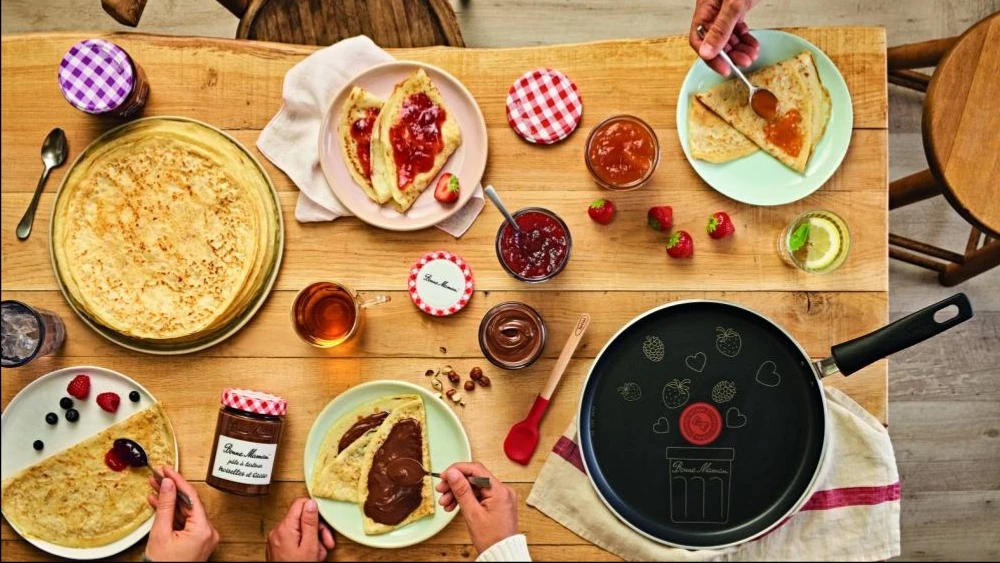
Groupe SEB shares have gained around 8% year to date / Photo: Groupeseb.com
France’s Groupe SEB is best known for its Tefal frying pans, but it also makes coffee machines for Nestlé and hair straighteners with L’Oréal. The owner of Moulinex, Rowenta, and dozens of other brands is restoring profitability through cost cuts, but sales are barely growing. Analysts see around a third upside in the stock. Oninvest looks at what supports that view and the risks investors should consider.
History of the business
French industrial group Groupe SEB traces its roots to 1857, when tinsmith Antoine Lescure opened a workshop in Selongey, Burgundy, making buckets, watering cans, and kitchen utensils. The SEB acronym came later, from Société d’Emboutissage de Bourgogne, or Burgundy Stamping Company. Its first major breakthrough came in the 1950s with the launch of the Super Cocotte pressure cooker, which boosted sales and helped the company expand internationally.
SEB’s expansion through acquisitions began with its purchase of Tefal in 1968. Founded by French engineer Marc Grégoire in 1956, Tefal became known for its nonstick frying pans. Jacqueline Kennedy gave the brand a further boost: according to Tefal’s history, a photograph of her buying one of its pans helped make it famous worldwide.
Groupe SEB shares began trading on the Paris Stock Exchange in 1975, and the company continued to expand by acquiring established brands.
In 2007, SEB acquired a controlling stake in Supor, a leading Chinese cookware and small-appliance maker. The deal strengthened the group’s position in China. As the French daily Le Monde reported, SEB was drawn by the potential of domestic demand and production costs that were substantially lower than in France.
In 2016, SEB entered the professional equipment market by acquiring Germany’s WMF. The deal, based on an enterprise value of EUR1.585 billion, immediately made SEB the world leader in professional automatic coffee machines.
Falling profitability and Rebound plan
Acquisitions helped SEB expand, but its scale did not shield it from falling profitability. In 2025, SEB’s operating result from activity (ORfA) fell 25% to EUR601 million, despite organic sales growth of 0.3%. The company attributed the decline to U.S. tariffs, currency fluctuations, and a high comparison base in its professional equipment business.
To return to profitable growth, SEB announced its Rebound plan. Among other measures, it calls for greater use of AI to engage with consumers and a EUR200 million cost-cutting program.
In the third quarter of this year, ORfA came in up 8.7% year over year at EUR161 million. The company attributed the improvement to a higher gross margin, continued tight control of operating expenses, and the benefits of the Rebound plan, which delivered EUR15 million in savings in the quarter.
SEB’s quarterly revenue came in at EUR1.96 billion, virtually unchanged year over year on an organic basis, down 0.1%, but up 2.5% on a reported basis thanks to favorable currency effects, as the company explained. Meanwhile, the Americas were the main driver of the consumer business, with sales up 10.8% and double-digit growth in both North and South America.
Alongside its own brands, the group has partnerships with other well-known names. “Accounting for between 5% and 10% of revenue, partnerships are major drivers of growth for the Group,” SEB stated. Partners with long-standing distribution and joint-development agreements included Nestlé, for Nespresso and Dolce Gusto coffee machines, and L’Oréal, for Steampod hair straighteners.
One of the longest-running partnerships is between Tefal and British chef Jamie Oliver, who rose to fame through the cooking show "The Naked Chef." In addition, Rowenta’s partners in hair care include the brand of fashion designer Karl Lagerfeld.
Social media is helping SEB grow in China. “We are still the leader. We’re number one in culinary segment in TikTok, which now represents nearly 25% of our online sales,” Groupe SEB CFO Olivier Casanova said on the third-quarter earnings call. SEB aims to attract Gen Z consumers with its POP rice cooker, which has a compact size and a bright, appealing design.
Professional equipment remains a weak spot. Quarterly sales in the segment fell 9.1% on a like-for-like basis to EUR215 million, reflecting lower coffee machine sales to large customers, particularly in the U.S., and a slowdown in the Middle East.
SEB reaffirmed its full-year 2026 guidance while specifying the figures: the management now expects ORfA growth of 5-10%. Previously, it had merely projected growth.
Investment case
One argument in favor of SEB is its ability to restore profitability even as sales growth remains weak. In the view of TP ICAP Midcap, a specialist investment bank, the quarterly results confirm that the Rebound plan is working. The house maintained its “buy” rating at a target price of EUR69.50 per share, although it cut its 2026 organic revenue growth forecast from 1.8% to 1.0%. It also considers the group’s valuation attractive, arguing that the market assigns limited value to SEB’s businesses outside of China despite their potential for operational improvement.
Improving cash flow could provide further support. On the earnings call, CFO Olivier Casanova outlined a 2026 free cash flow target of EUR350-450 million. SEB also aims to reduce its net debt/EBITDA ratio to around 2 by the end of next year.
The management is also counting on a recovery in professional equipment sales. As Casanova said on the earnings call, the Peak and Elevation coffee machines for offices and small businesses are now sold in more than 30 countries, and production has reached full capacity. The management expects their contribution to revenue to increase starting in the fourth quarter, although it does not yet foresee a significant improvement in overall market conditions.
According to MarketScreener data, at the Friday, October 23, closing price of EUR53.80 per share, SEB’s enterprise value, including net debt, was around 5.5 times projected 2026 EBITDA. The annual multiple stood at around 6.4-8.7 in 2021-2024. De’Longhi, meanwhile, trades at around 7.7 times projected EBITDA.
Following the third-quarter results, BNP Paribas Portzamparc maintained its “buy” rating while lowering its TP from EUR94 to EUR87 per share. It highlighted resilient quarterly margins while warning of more difficult conditions at year end due to inflationary and currency pressures. SEB’s own 2026 ORfA guidance of EUR631-661 million falls short of the EUR672 million consensus.
The stock has eight “buy” calls versus three “hold” ratings. The average target price is EUR72.32 per share, according to MarketScreener data, implying around 37% upside from Monday’s close.
This text is for informational purposes only and does not constitute personalized investment advice.