Anthropic and OpenAI staff fear new AI models are too powerful to release safely
Some in the industry see a solution in keeping the most advanced AI models inside of leading companies, Axios reports

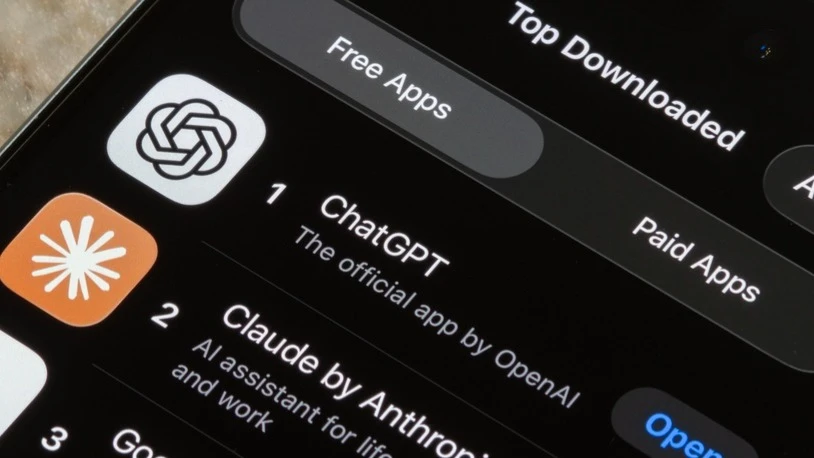
Anthropic and OpenAI limited access to their most capable cybersecurity models when they first released them, Axios noted / Photo: Tada Images / Shutterstock
Unreleased AI models at Anthropic and OpenAI have become so powerful that many employees at the two leading U.S. AI developers doubt they can be released safely, Axios reports, citing more than two dozen sources. Some in the industry see a solution in keeping the most advanced AI models inside leading AI companies, Axios writes.
The report rekindled fears in the markets on Tuesday about the safety of AI development, Bloomberg reports. Against that backdrop, Anthropic stock fell below its IPO price of $83 per share. On Tuesday, the shares were down more than 11% from the last close, touching a low of $75.60 apiece.
Details
More than two dozen people familiar with internal discussions at Anthropic and OpenAI told Axios that many employees at the two companies no longer believe their most powerful unreleased models can be made available to the public safely. The sources said the problem could significantly slow the AI boom as the gap widens between what the most advanced AI systems can do and what people can control.
Researchers have yet to find technical solutions for controlling the most advanced models. Some insiders believe the problem can be solved. Others are less sure and say companies should stop training new models altogether. Sources said recent gains in the models’ ability to reason about math, science, cybersecurity, and AI research at OpenAI and Anthropic made the models difficult, if not impossible, to contain or control in internal tests.
Both companies have unreleased models far more powerful than those already available to the public. The companies have struggled to establish that the models are safe enough to release, the sources said. Inside both companies and across the research community, debate has turned to whether future frontier models should be kept for internal use only. Some are also questioning whether to train new models at all. “If we continue trying to make models much smarter, such that they're actually smarter than us... they will in fact be able to trick us successfully,” one researcher told Axios. “And once you get to that point, many of the schemes that we've had at work up until now sort of go out the window.”
Several employees with firsthand knowledge of frontier AI development told Axios they felt executives had lost sight of the severity of the risks and were likely to put profits ahead of safety.
Response of OpenAI and Anthropic
An OpenAI spokesperson told Axios the company had adopted new safety requirements that could slow the pace of model releases. Meanwhile, “keeping a model internal doesn't make it safe,” an Anthropic spokesperson said. “Our responsibility starts in training and covers how we use models ourselves, not only what we release.” The spokesperson added that “the hardest safety work is still ahead, and we've been clear that we may slow down or hold back even when it costs us.” They also said Anthropic had delayed pretraining for one of its recent models to strengthen security.
Outlook
Some in the industry see a solution in keeping frontier AI models inside leading AI companies, Axios reports. The companies could give outside users access through products for business, science, math, and other fields while limiting how much of the models’ power those users could tap. Anthropic and OpenAI took that approach when they first released their models with the strongest cybersecurity capabilities. Some researchers warn that even testing and using extremely powerful models internally carries substantial risks.
Context
The debate over the safety of AI development has been going on for months. In its prospectus, Anthropic flagged, among other concerns, the “catastrophic or existential risks to humanity” that advances in AI could pose. Industry leaders have also warned publicly about such dangers on multiple occasions. On Sunday, November 22, OpenAI Chief Scientist Jakub Pachocki proposed industrywide limits on AI development. “This is the most important thing OpenAI has published in awhile,” OpenAI CEO Sam Altman wrote in response on X.
“The speed of development is quickly becoming too fast for us to keep safe,” Anthropic’s AI alignment lead wrote on X in September, citing an essay by CEO Dario Amodei on the pace of frontier model development. He reiterated the point when the AI company went public.