Anthropic has introduced an affordable AI model for everyday tasks

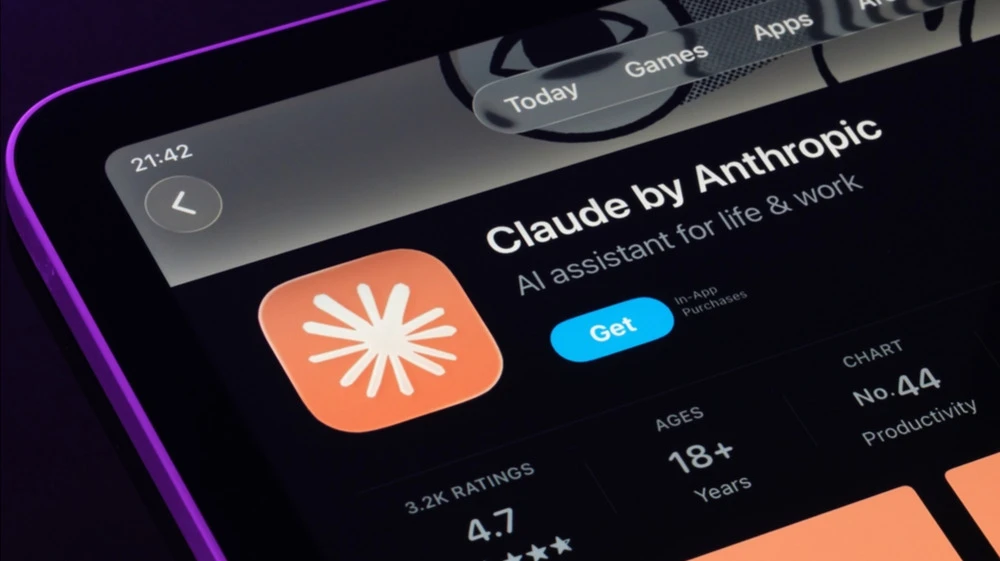
Anthropic expects Opus 5 to become the go-to option for many everyday office tasks / Photo: Ascannio / Shutterstock.com
AI startup Anthropic is launching a new artificial intelligence model designed to perform everyday work tasks at a low cost: Claude Opus 5. This is becoming a key advantage amid cost-cutting measures by some AI clients and intensifying competition from Chinese models, Bloomberg notes.
Details
According to Anthropic, in many categories, the new AI model comes close in capabilities to Fable 5—the most advanced of its widely available solutions—but costs half as much. Anthropic expects Opus 5 to become the go-to option for many everyday office tasks. Opus 5 is a general-purpose AI model with enhanced capabilities for self-assessment, performing research tasks, and optimizing programming—a lucrative market for AI. In addition, the model is nearly on par with Anthropic’s more advanced Mythos 5 in identifying cybersecurity vulnerabilities, though it “still lags significantly” behind it in exploiting those vulnerabilities, the company said. Anthropic had previously postponed the release of Fable 5 and Mythos 5 under pressure from the U.S. government. The Mythos 5 model was unveiled in June as the company’s most advanced neural network. According to the developer, the model is capable of identifying complex vulnerabilities in operating systems and other software. However, Mythos 5 was never made widely available. Both Anthropic itself and independent experts warned that such capabilities pose serious cybersecurity risks if the model were to be freely distributed. As a result, access to it was granted only to select corporate and government clients.
“As with its [Claude Opus 5] predecessor, Opus 4.8, we deliberately did not train Opus 5 on cybersecurity tasks,” the company said in a blog post. “Nevertheless, the model has significantly improved its performance on these tasks thanks to an overall increase in its capabilities.”
Currently, Claude Opus 5 costs $5 per 1 million input tokens and $25 per 1 million output tokens, compared to $10 and $50, respectively, for the flagship Claude Fable 5. Tokens are units of text. The cost of using AI is determined by the amount of text the user sends to the model and the length of the response it generates.
Context
A number of AI developers, including OpenAI, Meta Platforms, and SpaceX AI, are competing for users and striving to offer more cost-effective models as companies scrutinize their AI spending more closely. Some clients have recently tightened restrictions on employees’ use of AI after being hit with unexpectedly high bills, according to Bloomberg.
The focus on affordability may intensify as China shows signs of closing the gap with the U.S. in the AI race. Last week, the Chinese AI lab Moonshot released Kimi K3 —a more advanced model that, according to the company, outperforms all competitors except OpenAI’s Fable 5 and GPT-5.6 in terms of overall capabilities. Other Chinese companies, including DeepSeek, are also striving to offer lower prices than their American competitors.
At the same time, the cost of requests for the most advanced models designed to perform complex tasks continues to rise.
This article was AI-translated and verified by a human editor