A new Chinese AI model has reminded the market of DeepSeek. Who will win, and who will lose?
The investment and rating agency Morningstar called the sell-off of Alphabet, Amazon, and Microsoft shares following the release of the Kimi K3 model a mistake.

A low-cost AI model from the Chinese startup Moonshot could support chipmakers' revenue growth rather than undermine it / Photo: agustin.photo/Shutterstock.com
A new AI model from China, unveiled last week, has prompted investors to reassess the balance of power in the industry. The market reacted with a sell-off, similar to the one that followed the launch of the DeepSeek chatbot. However, the new model requires a lot of memory and, unlike DeepSeek, could drive demand for cutting-edge chips. Which players stand to benefit from the release, and for whom will it be a blow?
What happened?
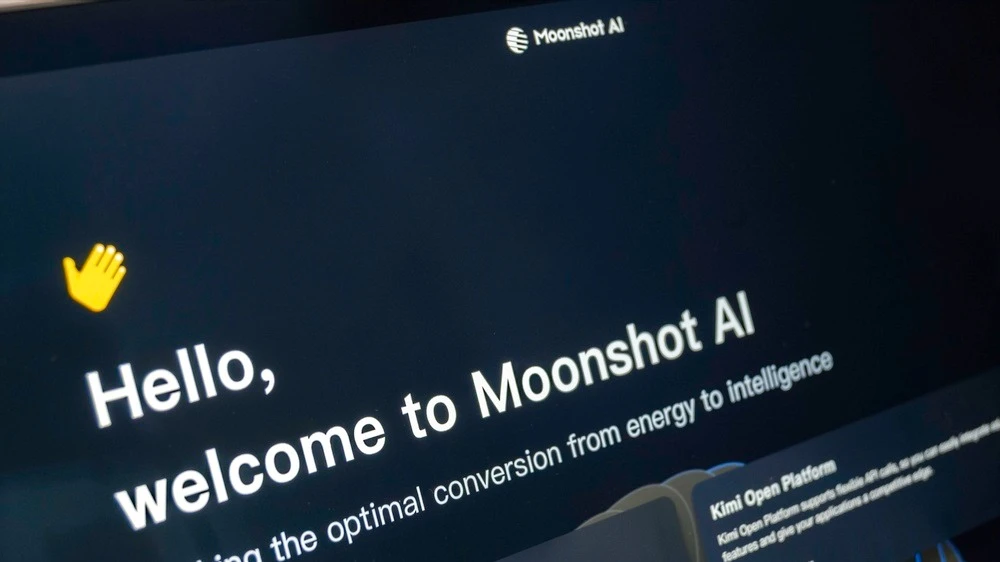
The startup Moonshot AI has unveiled Kimi K3—an open-source AI model with 2.8 trillion parameters and a context window of 1 million tokens. The company claims that K3 is comparable to models developed by OpenAI and Anthropic, but costs customers significantly less, according to Bloomberg.
The announcement triggered a sell-off of shares in chipmakers, Alphabet, Amazon, and Microsoft: investors feared that customers would increasingly opt for open-source models. The combined market value of OpenAI and Anthropic—whose shares are not yet publicly traded—fell by $314 billion, according to IG analyst Tony Sycamore.
Morningstar considered the reaction to be an overreaction. K3 is almost on par with Anthropic’s Fable 5 in synthetic tests, but the gap may be wider in real-world tasks: open-source models are often optimized for benchmarks, warned analyst Malik Khan.
American companies and government agencies are unlikely to switch to Chinese models to save money, and the falling cost of AI could increase demand for computing power. Therefore, “the investment case for cloud infrastructure remains virtually unchanged,” the expert said.
Why This Isn't the New DeepSeek
DeepSeek demonstrated that training and using models can be made significantly cheaper, and the market began to question the demand for computing power. Moonshot also improved efficiency, but did so in a larger model that requires more memory. Therefore, Bloomberg believes that its model will not weaken but rather support demand for products from chipmakers such as Nvidia, SK Hynix, and TSMC.
There is another difference. DeepSeek has heightened concerns that powerful models will quickly become more affordable and turn into a mass-market product. Moonshot, on the other hand, has made it clear that open-source development is converging with closed systems faster than expected, according to The Sydney Morning Herald.
Who will win?
Shares of Chinese chipmakers rose on July 20 despite a global sell-off: investors believed that competition among local developers would increase spending on AI infrastructure. Gary Tan of Allspring believes that Beijing’s support will accelerate the adoption of open-source models and boost demand for networking equipment and memory in China.
K3 has also reinforced the belief that, despite U.S. restrictions on the supply of advanced chips, local companies continue to improve the efficiency of their models. “A more affordable open-source model reduces the cost of application development and could accelerate the adoption of AI in programming, customer service, and manufacturing,” said Charu Chanana of Saxo Markets.
Memory manufacturers could also benefit. The market is divided among SK Hynix, Samsung, and Micron. As a result, their positions are stronger than those of other chipmakers, and the popularity of the K3 could accelerate the adoption of AI agents and sustain demand, noted Stanley Tan of Sumitomo Mitsui.
Who Will Lose?
The main threat is to Chinese AI developers. Shares of Zhipu—which was considered the local leader prior to the release of Moonshot—plummeted by 40%. Competition is heating up: Alibaba unveiled Qwen3.8 Max and described it as second only to Anthropic’s Fable in terms of quality.
“We’re still in the early stages, and there’s always a better model coming along,” says Stanley Tan. “Some of them may lose value, and I think the market hasn’t fully priced in that risk yet.”
What's going on with Nvidia and AMD?
The release has brought two questions into sharper focus: Will AI chip manufacturers continue to benefit from supply shortages, and will the massive investments in AI pay off? According to Mark Malek of Siebert Financial, every free release of a cutting-edge model reinforces investors’ doubts on this matter.
What's next?
Moonshot is preparing for an IPO in Hong Kong within the next six months and is wrapping up a funding round that could value the startup at more than $30 billion. DeepSeek plans to go public in 2027 and is raising capital to develop and market AI services at prices significantly lower than those in the U.S.
"This is a bullish signal for the entire ecosystem: a true bearish scenario for AI is when progress comes to a halt," Morningstar noted.
This article was AI-translated and verified by a human editor