Is the Rally Stalling? How a Fed Rate Hike Could Affect the Markets

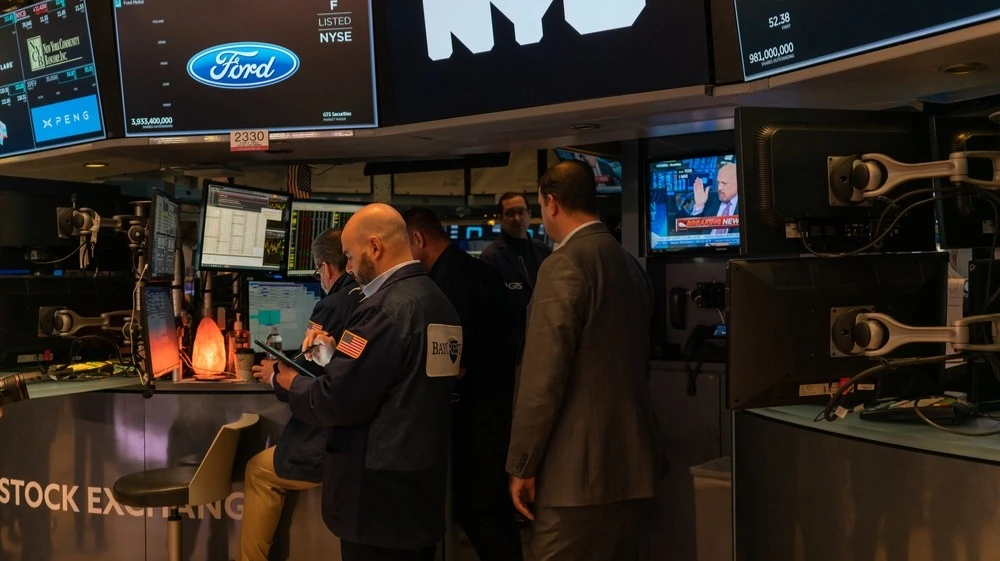
How a Fed Rate Hike Could Affect Global Markets / Photo: Steve Sanchez Photos / Shutterstock
A rate hike by the Federal Reserve (Fed) could keep global government bond yields elevated and put pressure on stock valuations and economic growth, CNBC reports, citing analysts. However, some of them agree that this pressure will be short-lived, and that the resilient U.S. economy—which has now allowed the Fed to raise rates—will ultimately support the markets, including those outside the U.S.
What Analysts Are Saying
A prolonged period of high interest rates could complicate the outlook for stocks and other risky assets, CNBC notes. Rising government bond yields are making fixed-income securities more attractive than stocks, while simultaneously increasing companies’ borrowing costs and reducing the discounted value of future earnings as estimated by investors today, the network notes.
— “The level of government bond yields may be less important than the pace and orderliness of their rise,” notes Liz Ann Saunders, chief investment strategist at Charles Schwab. According to her, the approach of 10-year Treasury yields toward 5% is generally justified by inflation, expectations regarding Fed policy, and strong nominal economic growth. “I think that if the movement in [Treasury] yields begins to become disorderly, then the stock market will have serious trouble digesting this factor; however, the economy and the market are quite capable of handling the situation to a certain extent if the process remains under control,” Saunders told CNBC. At the same time, she believes the pressure will not be distributed evenly across markets: higher interest rates are already hitting more cyclical sectors, while strong financial results could complicate the inflation outlook by supporting hiring growth.
— Investors may need to reassess asset valuations if the Fed maintains a hawkish stance through 2027, noted Tai Hui of JPMorgan. CNBC notes that this process could particularly affect tech stocks, which are relatively sensitive to interest rates.
— Nevertheless, the S&P 500 index may continue to rise—at least through 2028—despite the Fed’s interest rate hikes, according to Jane Gibbons, an equity strategist at Jefferies. Although historically, U.S. monetary tightening “has not had a positive impact on stock returns,” this time around, Jefferies forecasts that future rate hikes will be less significant and occur more gradually than in the past. By December 2027, the market is already pricing in two more such tightening moves, according to MarketWatch. Historically, Gibbons concluded, the information technology and energy sectors have, on average, posted the best market performance one year after an interest rate hike (specifically, the energy sector averaged a 22.4% return over the 12 months following a rate hike, while the IT sector averaged a 15.4% return). In light of this, Jefferies’ year-end target for the S&P 500 index remains unchanged at 8,000 points, which is approximately 5% above its closing level on Wednesday.
— Tom Lee, head of research at Fundstrat, also expects U.S. stock markets to rise, though now—due to the Fed’s rate hike—with a slight delay. He stated that the rally in U.S. stocks he predicted in September could still happen, but now a little later. The Fed’s first rate hike in three years and the subsequent press conference by Fed Chairman Kevin Warsh, during which he hinted at another rate hike in the coming months, the analyst called the “peak of the regulator’s ‘hawkish’ policy.” But positive “dovish” signals are emerging, such as the new methodology for calculating the Consumer Price Index (CPI), which is expected to be released at the end of the month and could lower the annual rate by 0.4 percentage points, Li added.
— The market’s “hawkish” interpretation of the Fed meeting’s outcome “may put some pressure on Asian currencies and bond markets in the near term,” agreed Navin Saigal, head of BlackRock’s global bonds division for the Asia-Pacific region. However, higher U.S. interest rates are far from the only factor driving global market trends, notes CNBC. Strong U.S. economic growth should continue to boost business activity, trade flows, and corporate financial performance across Asia, even as higher rates create pressure in the short term, Saygal stated.
What's Happening in the Markets
In premarket trading on September 17, U.S. stock futures rose: Dow Jones futures gained 1.2%, S&P 500 futures rose 1.3%, and Nasdaq-100 futures climbed 1.7%. Treasury yields, in turn, declined: the yield on 10-year Treasuries fell below 5%, dropping more than 5 basis points to 4.951%. On Wednesday, following the Fed’s rate decision, yields on these Treasury bonds rose again above this key level.

This article was AI-translated and verified by a human editor