Architect of the AI Boom Fired: What Huang's Resignation Means for the Future of the Entire Industry
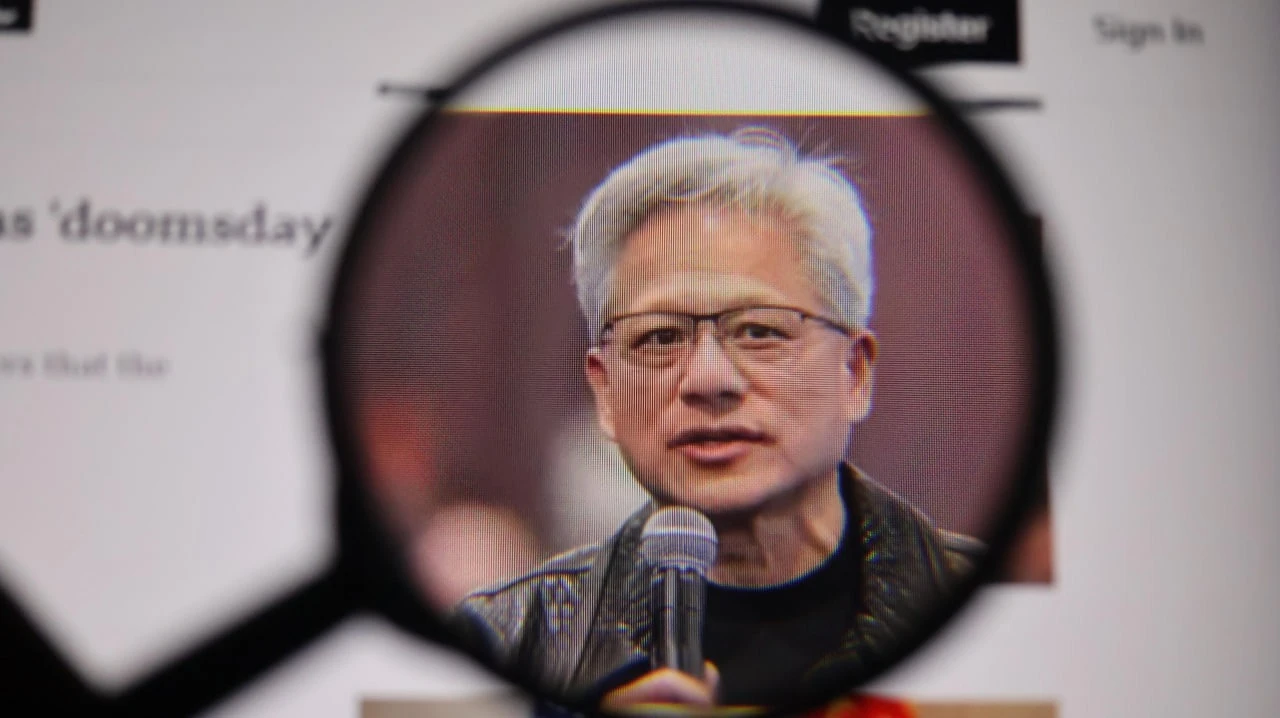
As head of Nvidia, Huang set the strategic direction for the development of computing technologies and helped fund it


Nvidia is called the "artificial intelligence bank" because it provides loans to its customers for the purchase of AI chips / Photo: Primakov / Shutterstock.com
After Nvidia CEO Jensen Huang stepped down, investors’ main concerns turned out to be less about the company’s future and more about whether it would be able—and willing—to continue funding the artificial intelligence boom, Reuters reports. If Nvidia, under new leadership, abandons its current strategy, it could slow the development of the entire AI industry, the agency warns.
What Will Happen Next with the AI Boom?
Huang has often been criticized for so-called circular transactions, in which the company invests in its clients, who then use the money to purchase its products. But this is precisely what has driven the entire industry forward, notes Reuters.
The now-former head of Nvidia helped numerous companies that purchase its graphics processors grow and built a vast customer base beyond the circle of hyperscalers. The chipmaker used its own financial resources to back guarantees for chip leases and sales and became a central player in the industry, serving as a technology provider, customer, investor, lender, and partner to dozens of AI companies.
— “He’s Mr. AI. He speaks on behalf of the entire industry,” Jeff Christian, CEO of the recruitment firm Christian and Timbers, told CNBC. — “He has financial ties to everyone: either through partnership agreements or by providing funds for the purchase of chips.”
“Wall Street’s main concerns revolve around the company’s long-term prospects, since it was Huang who set the strategic direction for computing technology,” explains Shay Bolur, chief market strategist at Futurum Equities. “Replacing that strategic vision is an extremely difficult task,” Reuters quotes Bolur as saying.
— “Nvidia is calledthe ‘artificial intelligence bank.’ It sells you chips and, at the same time, provides the money to buy them. If the company has to scale back this activity because of current events, won’t that deprive small startups that need it of funding?” Joe Saluzzi, a partner and co-head of equity trading at Themis Trading, told Reuters.
— “It is precisely Nvidia’s credit support that makes it possible to finance a significant portion of deals with hyperscalers in the AI sector through debt,” noted Christopher Brown, senior vice president of investments at Synovus Securities. — “Lenders will wonder what will happen to this support if a change in Nvidia’s leadership or a deterioration of its standing with regulators negatively impacts the company. At the same time, Nvidia itself may find its ability to provide additional guarantees limited.”
— “Nvidia’s numerous interconnected deals with companies across virtually the entire industry raise the question of whether they make the system more resilient or, on the contrary, more vulnerable,” said Steve Sosnik, chief market analyst at Interactive Brokers in Connecticut.
“Large companies that purchase Nvidia systems for artificial intelligence training and data center operations are unlikely to sharply cut ‘their capital expenditures amid the uncertainty surrounding Nvidia’s CEO position,’” Brian Colello, a senior equity analyst at Morningstar, told CNN. However, he cautioned that the cost of raising capital for future investments could rise if the most influential CEO in the AI industry is no longer coordinating such deals.
— Given the company’s importance to the AI ecosystem and its extensive deal-making activity, Huang’s departure could have a disproportionately strong impact on non-cloud providers offering computing power for AI, as well as on developers of open-source AI models with open weights, according to Bloomberg Intelligence analyst Mandip Singh.
Context
According to Reuters, Nvidia's financial commitments have reached $164.5 billion, including up to $105 billion for OpenAI's data center in Ohio and more than $50 billion in guarantees for leases and the provision of computing power. In addition, the chipmaker has invested $1 billion in South Korea’s Naver to expand data centers and has invested in the cloud startup CoreWeave.
CoreWeave and Naver shares plummeted 6.5–7% during Thursday's trading session.
In August, Nvidia announced a partnership with Apollo, BlackRock, Blackstone, and other financial institutions to raise more than $500 billion for AI infrastructure. Such interdependent deals create the risk that a reduction in financial support for Nvidia could slow down its customers’ development and reduce demand for its chips.
This article was AI-translated and verified by a human editor