Arms race: from MIC giants to small and medium-sized contractors

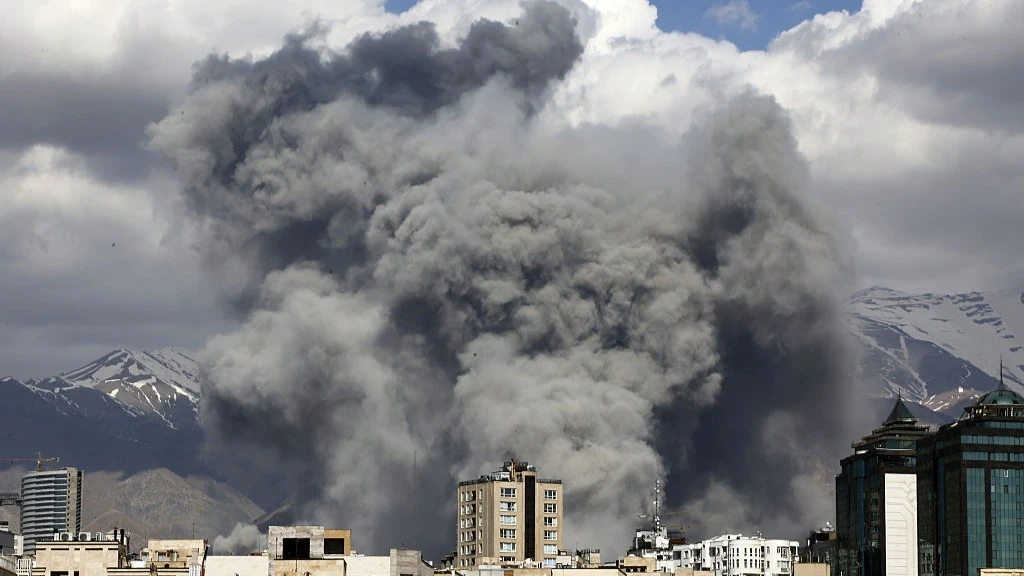
Not all defense companies are rising amid war in the Middle East, with Palantir shares falling 2.9% on the premarket. Photo: Fatemeh Bahrami/Anadolu via Getty Images
U.S. Secretary of State Marco Rubio said that Tehran produces about 100 ballistic missiles a month, while the Americans have only 8 THAAD interceptors in the same time. But the main problem now is Iranian drones that attack US allies across the Middle East. If the intensity of Shahed-136 launches continues at the current level, the stockpile of PAC-3 (Patriot Advanced Capability-3) missiles in the region could dwindle to a critical level within days, a Bloomberg source said.
Sergey Glinyanov, senior analyst at Freedom Broker, notes that the current conflict is changing the structure of demand, and this is what investors should pay attention to.
Support of an ally
About $3.8 billion of the U.S. defense budget was spent on Israel last year; in 2024, that figure was as high as $12.5 billion. The basic amount of aid annually is about $3-4 bln, but since the beginning of the current calendar year the states have approved sales of Joint Light Tactical Vehicles, AH-64E Apache helicopters, Namer armored personnel carriers and AW119Kx multirole helicopters for a total of about $6.7 bln, and it is possible that in case of a critical situation the US will be ready to supply additional aid, perhaps even outside the Foreign Military Sales and Direct Commercial Sales procedures. If we rely on the FactSet system, we will not find any public companies whose share of sales directly or indirectly to Israel would be significant, since Israel's defense industry is quite developed and includes such large companies as, for example, Elbit Systems Ltd . Nevertheless, we can identify a number of areas that best meet the challenges of the conflict.
What Israel and the countries that have been retaliated against by Iran need
These are mainly SAM systems and ammunition for air defense/IRBM systems. Although Israel uses domestically manufactured SAM systems, the Iron Dome also includes U.S. Patriot and THAAD systems. The US has previously moved additional batteries to deter Iranian strikes. These systems are supplied by RTX and Lockheed Martin.
The former is in a better position, as it also participates in the joint production of Israeli-made Tamir and Stunner missiles. Boeing participates in the production of Arrow-2 / Arrow-3 missiles, but in terms of business scale this is unlikely to be a trigger for the company's shares.
Patriot deficit and beneficiaries of the race
The situation is aggravated by the fact that the United States has been chronically short of stocks of PAC-3, THAAD interceptor and similar missiles with a caliber greater than 125 mm since the beginning of the Ukrainian crisis. Israel has a fairly rich fleet of previous-generation F-15s, F-16s and is gradually replenishing its F-35 fleet. And these fighters can carry both American-made and locally produced warheads. However, as far as we know, there is also a shortage of air-to-air missiles such as AIM-120 AMRAAM and AIM-9X (produced by RTX), which are also actively used in air defense.
The U.S. government intends to multiply missile production in the next couple of years, and in this regard, the authorities are simultaneously imposing restrictions on dividends and buybacks for defense companies. Therefore, the beneficiaries may include companies along the entire production chain, especially in the small-mid cap segment.
Metallus, for example, produces capsules for missiles. Companies such as Kennametal and ATI can supply tungsten impactors. Companies within our coverage may include Taylor Devices, which produces dampers, shock absorbers, and vibration/shock isolators for the Patriot and beyond. Other components that are more technically complex are likely manufactured by subsidiaries of prime contractors.
Among the non-obvious beneficiaries we can mention V2X - after strikes on a number of sites around Iran, the government will probably need to invest in reconstruction, and the company is just in the business of supplying US bases.
Non-U.S. companies include Elsight Ltd. which is deploying the Halo system to control various unmanned combat units.
Does not constitute an investment recommendation
This article was AI-translated and verified by a human editor