Bitcoin falls below $65,000, gold hits three-week peak due to Trump's duties
Investors take insurance in case bitcoin drops to $60,000

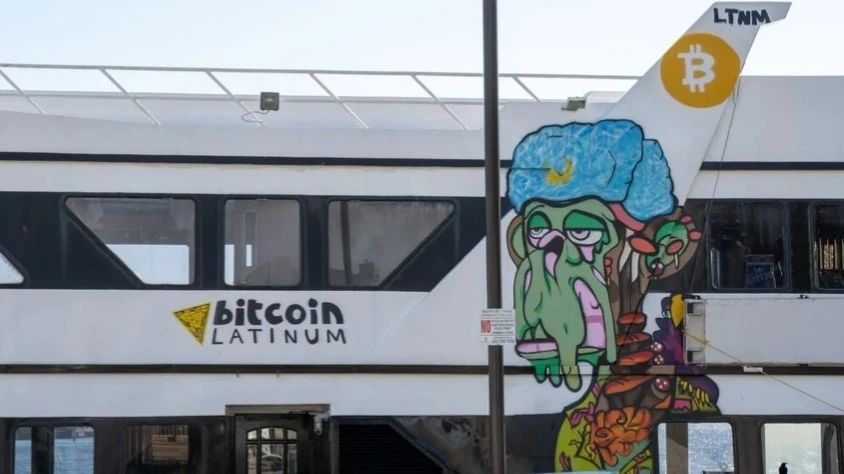
Bitcoin fell to its lowest price in more than two weeks during trading on February 23 / Photo: Shutterstock.com
Bitcoin exchange rate in the morning of February 23 fell to its lowest level in more than two weeks due to a new round of uncertainty in global markets caused by new duties of US President Donald Trump. At the same time, gold, which acts as a traditional protective asset, rose to a three-week high. And in Hong Kong, shares of Chinese companies, which may benefit from changes in U.S. trade policy, rose sharply in price.
Details
During Asian trading bitcoin cheapened by 4.8%, falling to almost $64,300 - the lowest value since February 6, Bloomberg reports. The second most capitalized cryptocurrency, Ethereum, showed even weaker dynamics, losing 5.2% of its value.
At the same time, spot gold prices, a traditional safe haven asset against volatility, rose 1.4% to $5176.6 an ounce and hit their highest since January 30, according to Reuters.
Index Hang Seng China Enterprises, which includes shares of the largest Chinese companies traded in Hong Kong, rose by 2.8%, writes Bloomberg. In particular, the securities of Internet giants Alibaba and Tencent rose by more than 3%, while Meituan securities added more than 5%.
Other Asian markets also reacted positively. The Kospi in South Korea, Taiex in Taiwan and FTSE Straits Times in Singapore all hit records during trading, The Wall Street Journal reported.
What about the duties
On Friday, February 20, the U.S. Supreme Court declared illegal the large-scale duties that Donald Trump imposed in 2025 after returning to the White House. In response, the head of state first imposed 10% duties on all American imports, and then decided to raise the rate to 15%.
The new measures rely on the so-called Section 122, a provision that allows the president to impose duties of up to 15% for up to 150 days (extending them would require congressional approval). So far, this legal mechanism has not been used by any U.S. leader, and its use threatens new litigation, notes Reuters.
China, India and Brazil were among the countries for which the duty rate decreased as a result of these events, Bloomberg noted. According to Morgan Stanley's estimate, which was cited by the agency, in the case of China, the average size of import duties will be reduced from 32% to 24%.
What the analysts are saying
"The crypto market remains fragile, and market participants expect [bitcoin] to be supported at the $60,000 level," Bloomberg quoted Orbit Markets co-founder Caroline Mauron as saying. - Macroeconomic uncertainty - from geopolitical tensions related to Iran to turbulence over U.S. duties - is now weighing on the market and could lead to another test of that level."
In February, bitcoin finally lost all of its gains on the wave of Trump's re-election in November 2024. Expectations of a more loyal to the crypto industry policy of the new White House administration raised the asset's exchange rate to a record $126,200. last October. However, this was followed by a massive sell-off from which the digital asset market cannot recover until now. Now investors are hedging the risks of further decline, concentrating protective positions near the $60,000 mark, Bloomberg reports, citing data from cryptocurrency exchange Deribit.
The U.S. Supreme Court decision has increased uncertainty on global platforms, forcing traders to turn back to gold as a safe-haven asset, KCM analyst Tim Waterer pointed out. "Whether gold can break back above the $5400 mark in the short term depends on how long the uncertainty surrounding the duties persists and whether the U.S. begins military action against Iran," Reuters quoted him as saying.
Despite the risk of new duties, the Supreme Court decision removes the threat of a worst-case scenario - it limits Trump's ability to impose huge indefinite levies using emergency powers, said Saxo Markets strategist Charu Chanana as quoted by Bloomberg. "Therefore, Hong Kong is seeing a classic 'relief rally' in the form of betting on betas (assets with high sensitivity to market movements. - Oninvest) and the technology sector," Chanana noted.
"The rebound in Asia, particularly in Hong Kong and technology-heavy indices, reflects relief that trade policy can become more structured and legally restrained, without sudden escalations," The Wall Street Journal quoted Chanan's commentary as saying. That said, duties of 15% still increase costs and leave trade uncertainty elevated, the Saxo Markets strategist noted.
"The threats of a trade standoff by the U.S. have not been eliminated and the agreements made could be unilaterally changed by the U.S.," warned Vishnu Varathan, head of macro research for Asia (excluding Japan) at Mizuho Securities (Singapore ) (quoted in WSJ).
This article was AI-translated and verified by a human editor