Boeing's loss was worse than expected. Why are its shares rising?

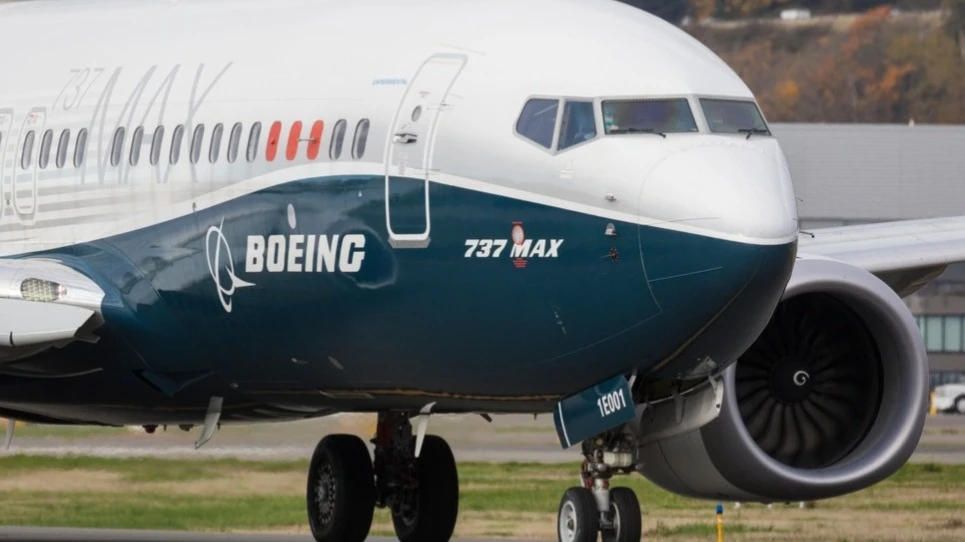
Boeing's loss exceeded forecasts due to write-downs related to the Air Force One aircraft design program / Photo: BlueBarronPhoto / Shutterstock
On July 28, Boeing reported a quarterly loss that exceeded forecasts due to new write-downs related to the troubled program to replace Air Force One. At the same time, the aircraft manufacturing giant posted a positive free cash flow. Against this backdrop, the company’s shares rose more than 5% during trading on July 28.
Details
Due to increased engineering costs required to ensure the problematic delivery in 2028 of two Air Force One aircraft—which are set to replace the U.S. president’s current aircraft—Boeing was forced to take a $280 million charge in the second quarter. This led to an increase in the aircraft manufacturer’s net loss for the reporting period to $428 million. Adjusted loss per share was $0.76, which was worse than analysts’ average forecast of $0.3 (according to LSEG), though less than the loss of $1.24 per share for the same period last year, Reuters reports.
However, despite the losses, Boeing reported free cash flow of $631 million. Last year, this figure was negative at $200 million. The company attributed the increase in cash flow in part to higher-than-expected payments from customers. The company also confirmed its free cash flow forecast for this year in the range of $1 billion to $3 billion (which would be the first positive result since 2023) amid ramping up production of its best-selling 737 MAX narrow-body jets, Reuters reports.
Boeing’s quarterly operating profit was $156 million on revenue of $24.6 billion. Wall Street had forecast an operating profit of $459 million on revenue of $24.2 billion, according to Barron’s. A year earlier, Boeing reported an operating loss of $176 million on revenue of $22.7 billion. The company has not posted a consistent profit since 2018—the year preceding the second tragic crash of a 737 MAX aircraft, Barron’s notes.
During the reporting period, the company delivered 171 aircraft, compared with 150 a year earlier. The company expects to deliver approximately 670 aircraft in 2026, compared with 600 in 2025. By 2028, the corporation expects to deliver more than 850 aircraft per year and generate over $10 billion in free cash flow.
The aircraft manufacturer is currently producing 47 737 Max airliners per month at its facility near Seattle, with plans to eventually increase that rate to 63. Increasing production is key to restoring balance and monetizing the $715 billion order backlog, Bloomberg notes.
What Else You Need to Know About Boeing
According to Bloomberg, the aircraft manufacturer is one step away from receiving safety certification for the 737-7—the most compact version of its best-selling model—while the launch of the largest model, the Max 10, is expected around October. Obtaining these long-awaited approvals is crucial for Boeing to compete with Airbus in the lucrative narrow-body aircraft market, the agency notes. On Tuesday, the company confirmed that the launch of the 777X long-haul jet is still scheduled for 2027.
At the same time, the corporation is also working on the delivery of two 747-8 airliners to serve as the No. 1 presidential aircraft under a fixed-price contract worth $3.9 billion. These agreements were signed back in 2018—deliveries are four years behind schedule and have exceeded the initial budget by more than $1 billion, Reuters notes.
What about the stocks?
Since the start of the year, Boeing shares have risen by more than 2%. Following the release of the report, Jefferies analysts reaffirmed their “Buy” rating on Boeing shares and maintained their price target at $295. This implies a 39.5% increase from the closing price on July 27. Ken Herbert, an analyst at RBC Capital Markets, also reaffirmed his “buy” rating on the stock. The price target remained unchanged at $275. This target implies a 30% increase in the aircraft manufacturer’s stock price.
Overall, 21 of the 28 analysts covering Boeing stock recommend buying it. Six are neutral, and only one recommends selling.
This article was AI-translated and verified by a human editor