Airbus shares have soared. It may challenge Boeing in the battle for the largest airliners

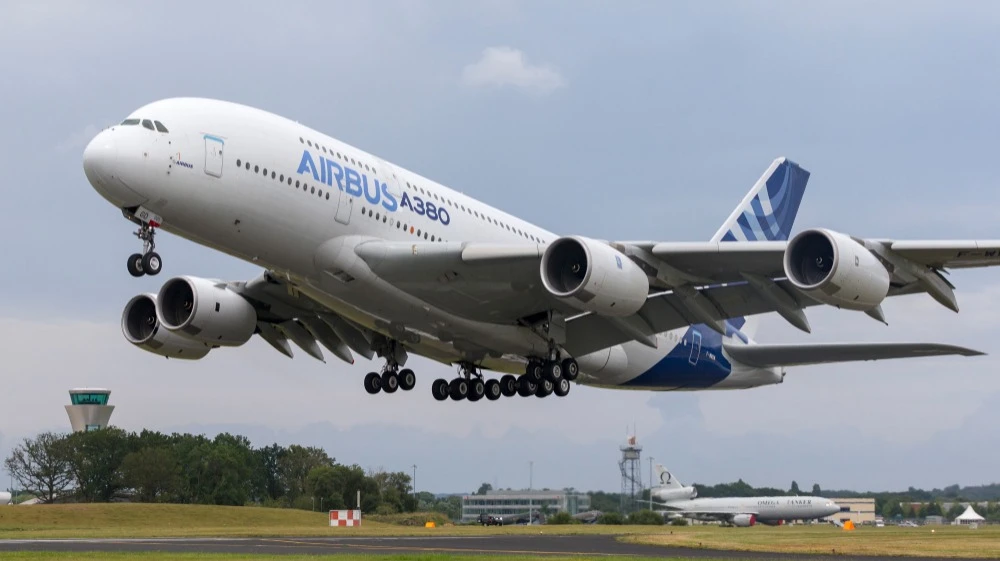
The company also raised its profitability forecast for the coming years / Photo: Ryan Fletcher / Shutterstock
Shares of the European aircraft manufacturer Airbus rose 7% in Paris after the company raised its profitability forecast for the coming years and approved a €5 billion share buyback program. In addition, Airbus is close to beginning development of a new passenger aircraft model, which could become one of the largest airliners in history and pose direct competition to Boeing’s 777X, which is preparing to enter service, according to The Wall Street Journal (WSJ).
Details
Airbus reported that it expects adjusted earnings before interest and taxes—its key profitability metric—to range from €12 billion to €13 billion ($13.68 billion–$14.82 billion) in 2029. This represents a 70% increase compared to last year’s results. The commercial aircraft division is expected to contribute approximately €10 billion ($11.4 billion) to the overall result, the defense and space segment will contribute approximately €1.3 billion ($1.48 billion), and the helicopter business will add about €1.2 billion ($1.37 billion).
Airbus expects to produce between 70 and 75 A320 aircraft per month by the end of next year; 13 A220 narrow-body aircraft and 12 larger A350 models each month in 2028; and five A330 aircraft per month in 2029.
The aviation group also announced that its board of directors had approved a share buyback program worth approximately €5 billion, to be carried out over a three-year period.
The company's shares rose 7% in Paris trading on July 22; they are up 5% year-to-date. Supply chain disruptions have weighed on investor confidence, the WSJ notes.
The Boeing Challenge
In addition, the WSJ reported that Airbus is considering launching a new passenger aircraft model, often informally referred to as the A350-2000. This model is set to become one of the largest airliners in history and will compete directly with Boeing’s 777X, which the American company plans to put into service in 2027.
As part of a new project, Airbus plans to lengthen the fuselage of its existing A350 airliner, which will allow airlines to carry more passengers, said Rolls-Royce CEO Tufan Erginbilgic, whose company is set to be the exclusive engine supplier for this aircraft. A decision on whether to proceed with the development of the new airliner could be made within the next 12 months, which—if the project goes ahead—would allow for the first delivery of the A350-2000 as early as the early 2030s, he added.
"I don't think they [Airbus] have made a decision [on this matter] yet, but we're working with them," said the head of Rolls-Royce, adding that it will take about six to seven years to develop the engine and airframe (the aircraft’s structural framework without engines or electronics).
An Airbus spokesperson stated that the company has not yet decided whether to continue developing a new version of the wide-body aircraft, but confirmed that it is exploring options for expanding the A350 family. “There is real market demand for large wide-body aircraft, and we are considering potential developments of the A350 to meet that demand,” she noted.
This move will bring Airbus back into the market for the world’s largest passenger aircraft—a segment the company left after discontinuing production of the double-deck A380 in 2019. Its discontinuation cleared the way for Boeing’s upcoming 777X, which can seat up to 450 passengers, the WSJ notes. This Boeing model, an upgraded version of the popular 777, has faced production and regulatory challenges that have delayed its entry into service by seven years; it is now scheduled for 2027, the newspaper explains.
What Analysts Are Saying
Analysts at Jefferies and Citi noted that the European aerospace group’s medium-term targets appear conservative. They cited the potential for further growth in the commercial aircraft business due to demand for wide-body jets, as well as the benefits to the company’s defense and aerospace segment from Germany’s increased defense spending.
Despite difficulties in sourcing engines for its best-selling A320 aircraft, Airbus has managed to increase the number of airliners delivered in recent months. Analysts estimate that the company is on track to meet its annual target of 870 aircraft. Previously, some experts feared that the company would be forced to lower this forecast due to supply chain disruptions, as had already happened in 2022, 2024, and 2025.
Airbus's medium-term profitability outlook proved to be strong, although signs of improvement in the supply chains have yet to translate into a significant acceleration in production rates, Jefferies analysts noted.
At the same time, the company has been experiencing problems with suppliers for several years now: most recently, the manufacturer complained about disruptions and shortages of components, and specifically about issues with its engine supplier, Pratt & Whitney.
Analysts at J.P. Morgan noted that Airbus’s share buyback program was likely smaller in scale than many investors had expected, but that it nonetheless sends a positive signal about the company’s intentions. Moreover, experts pointed out that further payouts to shareholders cannot be ruled out in the future.
Overall, analysts view the company's stock positively: 18 of the 24 analysts covering Airbus shares recommend buying them. The remaining six recommend holding.
This article was AI-translated and verified by a human editor