The star of "The Big Short" is betting on struggling retailers. Which stocks did he pick?
A well-known short seller believes that consumer company stocks could repeat the success of the early 2000s, when stocks that had fallen sharply in price turned out to be among the top performers

Lululemon's stock has fallen nearly 50% this year / Photo: nyker / Shutterstock.com
Investor Michael Burry, known as the inspiration for the character in *The Big Short*, is betting on a rebound in the slumping stocks of retail chains and consumer brands. In his blog, Cassandra Unchained, he wrote that he sees parallels with the situation in the early 2000s: Stocks of consumer companies, which had fallen sharply in 1999 and early 2000, turned out to be among the best performers once the market overcame fears related to the Iraq War. Burry expects the market situation to repeat itself and is building his portfolio accordingly.
Details
Burry invested in several retailers at once: the footwear brand Birkenstock; Deckers Outdoor, a footwear manufacturer that owns the UGG and HOKA brands; and the athletic apparel manufacturer Lululemon. In early October, the investor announced that he had purchased Deckers stock after selling his Lululemon shares. The purpose of selling Lululemon was to lock in a loss and reduce taxable income from other transactions. Burry chose Deckers as a temporary replacement for Lululemon because he considered the stocks of the two companies to be similar. He planned to buy Lululemon shares again once the tax restriction expired, but acknowledged that he might keep Deckers in his portfolio as well. Since the beginning of the year, Lululemon’s stock has fallen by nearly 50%, Deckers’ by 20%, and Birkenstock’s by 18%.
An investor has invested in the Sprouts Farmers Market grocery chain through long-term options. It is a small company—its market capitalization is less than $4.5 billion. Sprouts Farmers Market’s stock has fallen 40% this year.
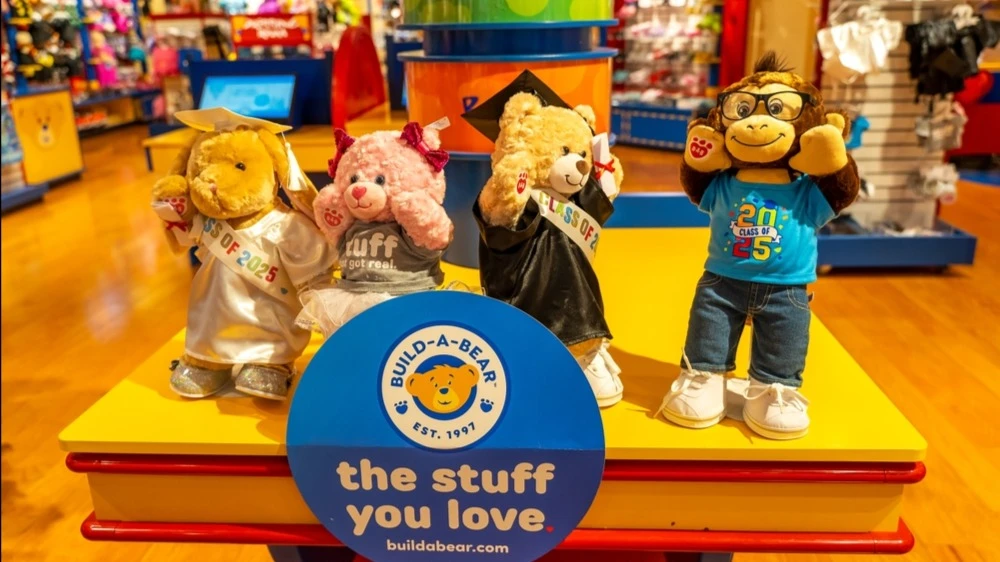
Another of Burry's investments is the toy store chain Build-A-Bear, whose stock has fallen 55% this year. Burry believes the stock is undervalued.
In addition, the investor said he is keeping an eye on the shares of the French luxury conglomerate LVMH, which owns the Christian Dior and Louis Vuitton brands. Their price has fallen by 40% this year. However, Burry does not yet consider them cheap enough to buy.
Burry acknowledges the risk that, due to high correlation, the stocks of all five companies in his portfolio could decline in tandem if demand continues to fall. Therefore, he limits the sector’s weight in the portfolio—keeping it below the 25–33% threshold he has set. Currently, cooling consumer demand in the U.S. is dragging down retailers’ stocks, Burry notes. The University of Michigan Index, which measures consumer confidence in economic activity, has recently been hovering even below the levels seen during the 2008 global financial crisis.
"I don't expect a quick recovery from this slump, but I see quite a few other factors that could lead to a revaluation of stocks, regardless of consumer demand," added Burry.
Given the current downturn in consumer sentiment, it’s difficult to expect growth in retail stocks, the investor says. But in the case of Build-A-Bear, for example, low valuations and the company’s capital allocation policy, in his view, mitigate this risk. Furthermore, Burry hopes for a recovery in U.S. consumer demand in three to five years, although he provides no basis for this forecast.
______________________
In the “Guru Portfolios” section on Oninvest, you can track the composition and changes in the portfolios of the world’s largest investors and funds. The service allows you to analyze the largest holdings, new ideas, and changes in asset allocations based on 13F filings, as well as compare portfolio performance over time.
This article was AI-translated and verified by a human editor