China's AI companies plummeted, while chipmakers surged due to U.S. measures related to Nvidia
Washington has decided to require licenses for the export of AI chips to customers in four countries neighboring China, as well as in Brazil

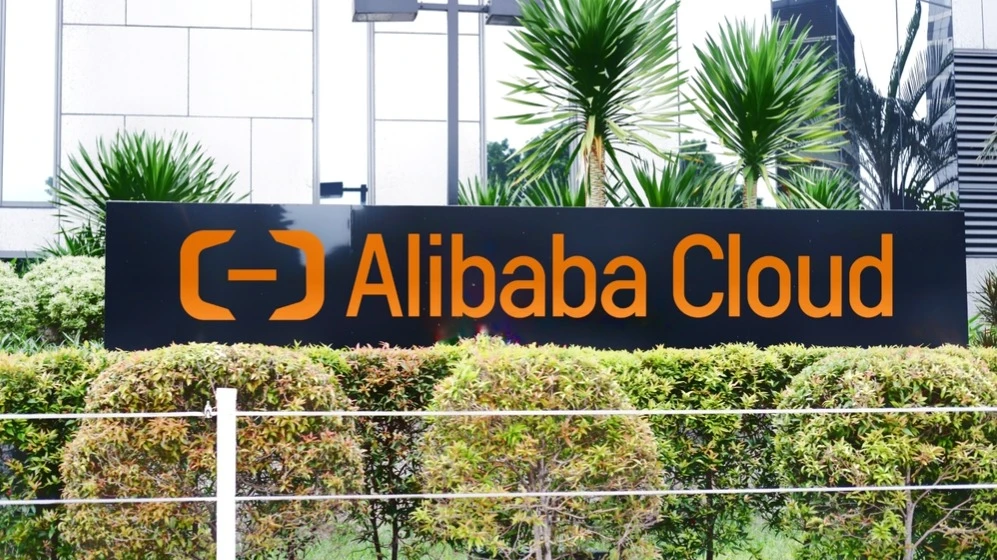
In recent years, China's Alibaba has increasingly shifted its focus from online retail to cloud technology / Photo: Poetra.RH / Shutterstock.com
Shares of Chinese companies involved in artificial intelligence fell during trading on November 17 after the U.S. decided to further restrict China’s access to advanced chips, Bloomberg reported. The country’s largest cloud computing companies and AI model developers were hit the hardest. Alibaba shares in Hong Kong fell as much as 5.6%, Baidu shares as much as 7%, MiniMax shares as much as 6.5%, and its competitor Zhipu shares as much as 6.8%. The Hang Seng Tech Index, which tracks Hong Kong-based technology companies, fell 2.3%, while shares of robotics manufacturer Unitree in Shanghai dropped 11%.
The sell-off also affected electronics manufacturers in other Asian countries. Shares of South Korea’s Samsung Electronics fell as much as 3.3%, while those of Advantest, a Japanese manufacturer of chip-testing equipment, dropped as much as 6.3%.
Shares of Chinese chipmakers, on the other hand, rose: investors expect that the tightening of U.S. restrictions will accelerate China’s transition to its own technologies. SMIC shares in Hong Kong rose as much as 9.6%, while Hua Hong shares rose as much as 12%.
Strike Along Bypass Routes
New U.S. regulations could increase the cost of accessing advanced computing power and shut down overseas routes that Chinese companies have been using to circumvent existing restrictions, according to Bloomberg. The proposal requires data center operators in Singapore, Malaysia, Thailand, Indonesia, and Brazil to obtain a U.S. government license to supply advanced chips to customers in those countries. Currently, Chinese technology companies are prohibited from purchasing advanced U.S. chips only through direct purchases.
The crackdown threatens several levels of China’s AI industry at once—from cloud giants to model developers striving to catch up with their American competitors, Bloomberg notes. “The restrictions pose a specific risk to revenue and access to computing power,” the agency quotes Charu Chanana, chief investment strategist at Saxo Markets, as saying. She called Washington’s decision “a significant escalation.”
Forced Sales
Taiwan’s main stock index, the Taiex, plummeted 6% on November 16, and Barclays, a British bank, cited forced selling as the main reason: Retail investors were forced to close positions they had opened with borrowed money, according to Bloomberg. The bank anticipates that such sales will continue and exacerbate the decline in the Taiwanese market. During trading on November 17, the Taiex was down as much as 3%.
The decline in Taiwan was part of a global sell-off of chipmakers’ stocks. Bloomberg attributes it to turmoil at Nvidia and the fact that the upcoming major IPO of AI model developer Anthropic is drawing investors’ money away. In the U.S., the Philadelphia Semiconductor Index plummeted 5.3% on November 16.

This article was AI-translated and verified by a human editor